In this, they may be like the rest of the world. St. Louis has always had an odd relationship with its educational landscape; it’s the only place in the world I know where the question “where did you go to school?” definitively means high school, and actually matters no matter how long ago you left the place behind. There’s undoubtably a dark side to this. Your answer generally reveals religion, income level, what your parents did for a living, and the part of town you’re likely live in. It determined who your friends were, and possibly even who you married. In a traditional society where few people move away, your answer labelled you and could restrict your movements for the rest of your life.

Reality might not have been as extreme as that, but it was something I felt intensely in my twenties and was a significant catalyst for me leaving town. But there’s a bright side to that strange high school-dominated environment, too. One of community, shared experiences and friendships forged so intensely that they remain even as the reunion scales tipped into our 4th decade since we went our separate ways.
I should explain that we’re not talking about those vast American high schools here that cross the Atlantic on film. There were 61 women in my graduating class. I’d been in school with a sizeable chunk of them since we were four years old. Like siblings, I don’t remember meeting them … they have just always been there. Almost the entirety of the class was in place by the time we turned 13, meaning most of us traversed the traumas and triumphs of young adulthood together. (Ironically, our only new joiner in our later years became, and remains, the dearest of all those friends, suggesting that even back then I was hungry to expand my horizons.)
It was a Catholic School, run by a religious order, as so many of the answers to “the Saint Louis question” would be. This will also be alien to British colleagues, as the country has some of the lowest levels of religious affiliation in the world. Religious-led education does exist in the UK, but it’s not the norm it was in my childhood experiences. And while I’d call our nuns, the Religious of the Sacred Heart of Jesus, quite light touch on the God front … I’ve always thought of them as the female Jesuits … as the years go by I realise they gave us a shared moral code that’s baked into our bones. Plus a bunch of goofy traditions that horrify properly Protestant friends, like placing notes in the lap of the Virgin Mary with special requests and praying to a vast array of saints based upon your need and their specialty areas. Honestly, who can deny the charm of Jude, the patron saint of hopeless causes, or slipping some cash under St. Anthony's statue for help finding something you've lost? (Find it, his poor box gets the money. It stays lost, take your cash back.)
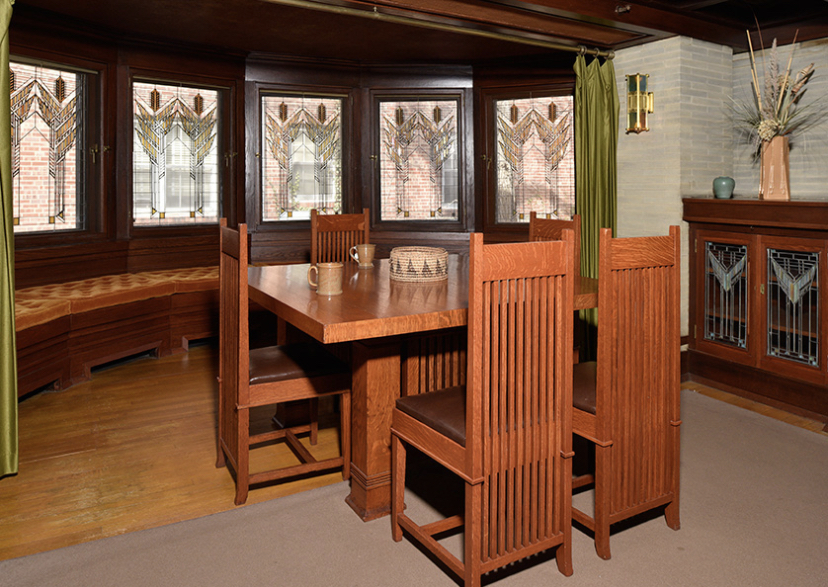
We were also given a profound sense of place, something you probably don’t realise influences you until long after you leave. Our school was fortunate enough to be surrounded by rambling acres of wooded parkland. The main building itself had been copied from a medieval French chateau. There were circular staircases and attics, secret access onto roofs with dramatic views, a woodland grotto with a statue of the Madonna we crowned in May, and outdoor hides for secret conclaves. There was even a series of formal “parlours”, furnished like an aristocratic French home, used for special meetings. (Sadly a reunion tour of the building showed that these have been re-purposed and mostly stripped of their grandeur since my days.) Just as Hogwarts functions as a character in the Harry Potter novels, the physical entity that is Villa Duchesne, the house of the oak, played a part in our story. I have no doubt it added fuel to all the loves that brought me to Europe.
I should explain that we’re not talking about those vast American high schools here that cross the Atlantic on film. There were 61 women in my graduating class. I’d been in school with a sizeable chunk of them since we were four years old. Like siblings, I don’t remember meeting them … they have just always been there. Almost the entirety of the class was in place by the time we turned 13, meaning most of us traversed the traumas and triumphs of young adulthood together. (Ironically, our only new joiner in our later years became, and remains, the dearest of all those friends, suggesting that even back then I was hungry to expand my horizons.)
It was a Catholic School, run by a religious order, as so many of the answers to “the Saint Louis question” would be. This will also be alien to British colleagues, as the country has some of the lowest levels of religious affiliation in the world. Religious-led education does exist in the UK, but it’s not the norm it was in my childhood experiences. And while I’d call our nuns, the Religious of the Sacred Heart of Jesus, quite light touch on the God front … I’ve always thought of them as the female Jesuits … as the years go by I realise they gave us a shared moral code that’s baked into our bones. Plus a bunch of goofy traditions that horrify properly Protestant friends, like placing notes in the lap of the Virgin Mary with special requests and praying to a vast array of saints based upon your need and their specialty areas. Honestly, who can deny the charm of Jude, the patron saint of hopeless causes, or slipping some cash under St. Anthony's statue for help finding something you've lost? (Find it, his poor box gets the money. It stays lost, take your cash back.)
We were also given a profound sense of place, something you probably don’t realise influences you until long after you leave. Our school was fortunate enough to be surrounded by rambling acres of wooded parkland. The main building itself had been copied from a medieval French chateau. There were circular staircases and attics, secret access onto roofs with dramatic views, a woodland grotto with a statue of the Madonna we crowned in May, and outdoor hides for secret conclaves. There was even a series of formal “parlours”, furnished like an aristocratic French home, used for special meetings. (Sadly a reunion tour of the building showed that these have been re-purposed and mostly stripped of their grandeur since my days.) Just as Hogwarts functions as a character in the Harry Potter novels, the physical entity that is Villa Duchesne, the house of the oak, played a part in our story. I have no doubt it added fuel to all the loves that brought me to Europe.

Sharing formative years, a distinctive place and a moral code creates an extraordinary sense of community. When my mother was ill and I couldn’t get home, I could trust the women of this circle to help her. When people are in need, the sisterhood steps up. When my parent's divorce threatened my ability to complete my education, an alumnae scholarship filled the gap. There's a connection that brings an ease of relationships, and conversations flow even if you haven't seen each other for decades.
But enough of the soppy stuff, I hear British readers muttering. What actually happens at a high school reunion?
Well, I’m embarrassed to admit that I missed the official gig: a celebratory mass followed by the annual alumnae luncheon and presentation of the year’s alumnae service medals. That's because while I love catching up with classmates on Facebook I hadn’t bothered to update my postal address in more than a decade, so all the formal materials went in some unappreciative stranger's bin. By Sunday morning we had already moved on to Oktoberfest in Hermann, Missouri. But I got to all the really fun stuff.
On Friday night, one of my classmates opened her house for us to join an already-planned reunion party for the Class of ‘82 from what we had generally considered to be our brother school, the Saint Louis Priory. (This Benedictine outpost in the American Midwest is a daughter house of Ampleforth in Yorkshire, a visit to which I wrote about here.) Our hostess had married one of their number, and the co-educational aspect leant this party more of a sense of what Brits might expect of a high school reunion. There was a lot of peering across the room, thinking someone looked familiar, trying to remember names. “Who are all these paunchy, balding, middle-aged men?” We asked ourselves. The boys were no doubt pondering a similar question about fat women and dyed hair, while we all fancy ourselves to be about 22. Inevitably, for most of the party the girls ended up in one room and the boys in the other … though I think we all look rather fabulous in the group shot below.
The highlight of the night for many was one of the men turning up with his male partner. Everyone was delighted he’d found joy and happy that a relationship that would have been unimaginable in our school days was now normal. Our world had moved on for the better.
On Friday night, one of my classmates opened her house for us to join an already-planned reunion party for the Class of ‘82 from what we had generally considered to be our brother school, the Saint Louis Priory. (This Benedictine outpost in the American Midwest is a daughter house of Ampleforth in Yorkshire, a visit to which I wrote about here.) Our hostess had married one of their number, and the co-educational aspect leant this party more of a sense of what Brits might expect of a high school reunion. There was a lot of peering across the room, thinking someone looked familiar, trying to remember names. “Who are all these paunchy, balding, middle-aged men?” We asked ourselves. The boys were no doubt pondering a similar question about fat women and dyed hair, while we all fancy ourselves to be about 22. Inevitably, for most of the party the girls ended up in one room and the boys in the other … though I think we all look rather fabulous in the group shot below.
The highlight of the night for many was one of the men turning up with his male partner. Everyone was delighted he’d found joy and happy that a relationship that would have been unimaginable in our school days was now normal. Our world had moved on for the better.

The next day held an open house at the school, which has managed to preserve most of its sylvan splendour while adding new buildings and parking. Preserved most, but not all. If I win the lottery I am donating the cash to plant a screen of trees and plants around the “front bowl” where the Madonna of Lourdes currently looks like she’s standing in a parking lot, casting a sly eye towards the hockey fields. The quiet contemplation this place held in my day is long gone. The sports facilities are a vast improvement, however, with a gorgeous field house overlooking a university-quality field hockey facility. It's something that no doubt goes hand-in-hand with an impressive array of state championships won since my day.
The lawns in front of the main castle building were dotted with tables and chairs, and booths on the front drive offered fun stuff for kids. People had been encouraged to bring their youngsters, always a good idea at a school where some families may be enticed into their fourth or even fifth generation of affiliation.
The lawns in front of the main castle building were dotted with tables and chairs, and booths on the front drive offered fun stuff for kids. People had been encouraged to bring their youngsters, always a good idea at a school where some families may be enticed into their fourth or even fifth generation of affiliation.
I was most interested, however, in what was going on inside the main building.
While the traditional architecture remains, technology is now obviously present in classrooms, as you’d expect. Teachers' and administrators' offices are now throughout the building rather than all clustered on the top floor, hinting at a more open style of learning. In a digital age, the library is smaller, with one wing of it now converted to a high-end lecture hall and conference centre. The stripping back of the parlours across the hall from that, I suspect, is a related development. An exhibition of old uniforms contributed much delight, and even a bit of horror as an old grey tweed smock brought back vivid memories of itchy discomfort. Display boards in the main hallway offered photo montages from the senior yearbooks of the various reunion classes, and bulletin boards showed off what was going on these days with different clubs and extracurriculars.
While the traditional architecture remains, technology is now obviously present in classrooms, as you’d expect. Teachers' and administrators' offices are now throughout the building rather than all clustered on the top floor, hinting at a more open style of learning. In a digital age, the library is smaller, with one wing of it now converted to a high-end lecture hall and conference centre. The stripping back of the parlours across the hall from that, I suspect, is a related development. An exhibition of old uniforms contributed much delight, and even a bit of horror as an old grey tweed smock brought back vivid memories of itchy discomfort. Display boards in the main hallway offered photo montages from the senior yearbooks of the various reunion classes, and bulletin boards showed off what was going on these days with different clubs and extracurriculars.

My greatest joy came from seeing that the school newspaper I founded in 1980 still exists, now as a full-colour magazine. (Back then I had already set my heart on the best journalism university in the country. Villa didn’t have a journalism programme or a regular school newspaper, so the 15-year-old me figured I’d better start one so I could have a competitive application. The nuns, bless them, went along with it.) Just as exciting was the fully-equipped broadcast studio that will be rounding out the current girls’ communications skills. I was delighted to see much more emphasis on our international network than in the old days, and more proof that current students were learning about … and getting to … the world well beyond St. Louis. And though I didn’t get to see it, classmates told me that the new theatre in what was our old auditorium also impresses.
That night was an impromptu, BYO affair for about 20 classmates who hadn't yet had their fill of each other. We sat around campfires in one of the cohort's back gardens, sharing war stories and laughing at the past. We are mature women now, with quite a collection of baggage. It's mellowed us, and made our shared history sweeter.
In our younger years this wasn't always the case. Jealousy crept into the early mix as we suspected the grass was greener over other fences. I know that I, who came late to love and marriage, felt an awkward outsider for years next to many of my ... as I saw them to be ... more beautiful, more affluent and more happily paired classmates. The years have knocked away illusions, and revealed that all of us were insecure about something. And special in our own ways. None of us have perfect lives. Instead, as a community we've seen it all: significant illness, relationship issues, addiction, financial trouble, death. What hasn’t killed us has made us, and the ties in this group, ever stronger. And I have no doubt the moral core that our nuns, mostly long dead now, shaped within us made that happen. In the warm glow of Saturday night’s campfire, I realised just how blessed and privileged I was to grow up with these women.
The one painful absence in the weekend was a lack of diversity. We had four African-American classmates, a slightly larger Filipino community and one Jewish girl (whose mother ran our art department and who was an invaluable addition to both Old Testament and comparative religion studies). That wasn’t a bad mix for a class of 61.

In the mean time, the St. Louis Cardinals play the Chicago Cubs in London on the 24th and 25th of June. I pledge here, publicly, that I'll organise a party for any of the sisterhood who make the trip. A communal London experience could add drama to our shared character-building experiences. Trust me, the Central Line on a hot day requires prayer and fortitude.