Walk under the main arch at Barcelona's Boqueria Market, and you're confronted with serried rows of colourful vegetables of a perfection worthy of a Chelsea Flower Show display. They're overhung by rows of dried peppers of bewildering variety. Baskets of exotic mushroom types just harvested from the forest floor sit beside piles of their carefully dried cousins. Nearby, a fruit vendor's rainbow display offers 15 types of freshly-pressed juice for a euro a glass.
Push on to the meat, where all things porcine take centre stage and vendors smiling out at you from between ranks of cured legs can advise on varieties of ham like a good wine merchant knows his grapes. Not to be outdone, fat chickens sit next to hanging game birds still in their autumn plumage, just down from a counter selling a dozen different varieties of foie gras. Prime slabs of beef glisten with a red so healthy you know you could mince any of into a tartare and eat in on the spot. At the centre of the market, aisles converge in a round circus of fish vendors. Whole tunas crown the stands, so fresh they're practically flapping their tails. Name your thickness and the machete-wielding old woman will send you home happy. Swimming down the mountains of ice below are shoals of every fish you know, and plenty you don't, eyes still gleaming with the memory of life.
Now on to seasoning. Best quality Spanish saffron glinting like gold from its little plastic boxes. Whole nutmeg. Cinammon sticks. A whole stand devoted to different flavours of sea salt. Then there's the freshly baked bread, the pastries, the chocolate vendors, the olive oil merchants. And if it's all too exhausting you can rest and revive at tapas bars sprinkled throughout.
Any gastronaut dropped into this heavenly larder will have one overriding thought: I want to cook! And if you don't have access to a kitchen, then it's: I want to eat! It's no wonder that people who know Barcelona best say the culture is fine, but it's the food that puts the place on the map. Start with raw ingredients of this quality, add the creativity and exuberance we felt throughout the city, and magic will happen.
We didn't have a bad meal. Nor did we have a truly expensive one. Even at our most prolific, indulging in pre-nosh cava, multiple courses and unrestrained choices from the wine list, our average bill was £50 per person. (Which, for us, is saying a lot.)
For value for money and a truly local tapas experience, the winner was Cal Pep, at which I got to double dip thanks to both a work dinner and Saturday lunch with the girls. There's a bar out front serving drinks and little plates, then a low door in the back you'd never know was there opens into a stone-walled, cave-like den with just six to 10 tables, depending on their configuration, below a wine selection on a balcony accessed by ladder. There are no menus. Most people are speaking Spanish. Sit down and eat what you're given, coming in a procession until you beg for mercy or reach dessert.
Here's a typical run. Start with fried anchovies. And the bottle of crianza that keeps getting replaced with a fresh one by nuestro amigo Juan. (Who recognised me from earlier in the week and gave us a table on Saturday, even though we hadn't booked and sailed blithely by all those other folks who were waiting in the bar.) Then some tuna tartare and croquettes de pollo just out of the fryer. Back to more fish with a plate of clams, both traditionally shaped and razor, in butter, lemon juice and chopped herbs. A bit of veg on the side? A heaping plate of green pimientos, lightly battered and deep fried lest you start feeling healthy. Next the fried calamari and prawns. Ready for some beef? Succulent cubes, browned, crisped and studded with sea salt on the outside but still rare within, surrounded by more pimientos and grilled mushrooms. Just to clear the palate, some creme caramel before Juan brings big snifters of Spanish brandy to help everything settle. Lunches don't get much more memorable than that.
Although, oddly, our other top meal was also a mid-day extravaganza. If Cal Pep is the local's old favourite, Monvinic takes that idea and mixes it up with the hip sensibilities of today's Barcelona. If Cal Pep is the in place passed along by the locals, Monvinic is the one tipped by international style magazines.
You pick up the fashionable vibe as soon as you walk in and are greeted by a long gallery: brown cow-hide panelled banquettes with small tables down one side, glass enclosed wine library with funky decanting-bottle light fixtures on the other. Up a few stairs to a clean, modern space with wooden floors, glass walls and long, communal tables, looking out onto a modern garden of architectural plants, gravel and sculpture. It's so damned hip all three of us missed the bathrooms the first time past, as they lie behind a flashing band of light I took for modern art, not realising it pointed me to the place I was supposed to wave my hand to make the apparently seamless wooden wall slide back. The modernity continues at the table, where the wine list comes not as the usual leather-bound tome but as a custom-programmed tablet with search capabilities by varieties, regions and growers, maps, pictures of the makers and wine labels.
All this, of course, would just be so much gimmick if the food and wine weren't up to snuff. The plates were indeed delicious; tapas, but taken up a gourmet notch. Pata negra, that finest of jamon iberico made from spoiled pigs who've never tasted anything but naturally foraged black acorns. Exquisite salt cod. Venison pate. Spinach croquetas. (Quoth Hillary: It's deep fried creamed spinach. What's not to like?) Poached figs with a gorgeous little dollop of something half way between ice and clotted cream. But, to be honest, my note taking on the food paled in comparison to the attention we paid to the wines.
There's an enormous by-the-glass menu here and the servers know their stuff. We used the wine list to select round one, got advice on round two and from the third (of six) let our waiter ... whose excellent English came from years in Houston between leaving his native Mexico and ending here ... prescribe the right matches for our food and our individual taste buds. Thus our tasting list, helpfully printed and presented to each diner with your receipt when you leave, ran to 10 different labels.
We discovered that the Catalans make their sparkling wine with both chardonnay and a local cousin called xarel-lo, which gives the wine a more rounded, biscuity and champagne-like feel than the usual cava. Hillary loved the mouth-puckering dryness of a white Rioja made with the malvasia grape from Bodegas Abel Mendoza. I was happier with more xerel-lo, this time still, from Can Rafols dels Caus. We were all pretty keen on the Crianza from R. Lopez de Heredia. And, really, we should have taken more notes. Because I can't tell you much about the rest of the list other than that we loved it all, and it was all so damned local we'll never see it again.
When I go back to Barcelona, I will each lunches out, and cruise the Boqueria for light dinner options to have back at a rented apartment. With wine picks from Monvinic. But not this trip. Operating on the "so many restaurants, so little time" philosophy, and armed with file folders of pre-trip research by Hillary and Lisa, there were dinner picks to be made as well. So we kept eating. And drinking. Carpe diem and all that.
Next entry ... the rest of the restaurant hit parade.
More than a thousand articles on travel, fine dining, good wines, art and culture. Mostly European, with some further afield. If you’re using a mobile device you’re probably only seeing a handful of the most recent posts. Switch to a desktop browser or scroll to the bottom and click “view web version” to see the search function, archives and location-specific collections of articles.
Wednesday, 14 November 2012
Tuesday, 13 November 2012
Beyond Gaudi: Gothic quarter and shopping reign
If you've had enough of the architecture of Antoni Gaudi, where next in Barcelona?
The obvious choice is the Gothic Quarter, or Barri Gotic, a warren of old streets dotted with medieval architecture spreading around the cathedral. Don't expect an architectural gem frozen in one time period like Bruges, or Venice. The 18th and 19th century buildings have spread even here, and there are as many modern boutiques as historic tourist spots. Overall, the area isn't as picturesque as you'd expect from the tourist guides. Many walls are covered with graffiti, most of the stores were shuttered when we were there (Saturday morning) and the "street performers" have the unwashed, drug-wasted look of the homeless. It's certainly a place to hold your belongings tight. But you'll have plenty of photo opportunities as you spot an ornate bridge spanning a cobbled street, a tiny street chapel tucked between houses, a carved St. George on his dragon above the studded wooden door of a crenellated gateway or ornate tile murals framing ancient stone fountain basins.
The star sight is the cathedral. It's a classic, early gothic, cruciform-shaped building, most notable for its ornate side chapels. Several, as with most Spanish cathedrals, show off the towering gilt altars that were the fashionable destination for so much pillaged American gold. Beneath the raised main altar is the Romanesque crypt of the city's patron saint, Eulalia. In the centre of the nave, standing almost like a building-within-a-building, is the early 16th-century choir. It was home to the Order of the Golden Fleece, a club for the Habsburg elite; the rich wood carving and painted stalls boast of the glory of long-dead members. A glass door shuts this off from the main body of the church, but don't let that discourage you. If a guard is sitting there, she'll take a couple of euros off you and let you wander around. We were seemingly the only tourists to figure this out, thus had a private viewing. You can also pay a bit extra to go up on the roof, where the view isn't as dramatic as from the Sagrada Familia, but the vision of the Gothic Quarter's roofs framed by the ornate filagree of the cathedral's roofline is picturesque.
The most distinctive feature of the cathedral, however, is its cloister, where the typical square of pointed-arched, covered walkways looks over a most a-typical tropical garden housing a flock of 13 geese. There are multiple theories as to the origin of this tradition. Whatever the truth, today they're as much a tourist attraction as the ravens at the Tower of London or the ducks at Memphis' Peabody Hotel.
Wandering southeast, the Gothic Quarter runs into El Born, where the streets wind with equal charm, the architecture is just as interesting (if less flamboyantly Medieval), but natives outnumber tourists and we're back to a cool and fashionable vibe. This is where we found our pick of the tapas bars (entry to come) and the most interesting shops. You'll discover boutiques of quirky housewares and unusual gifts, workshops of local designers and craftspeople, the Picasso museum (we were out of time, but it looked fabulous), vintage shops and mini-markets of craft tents in small squares. Given another day, we would have been back here.
Two other shopping experiences worthy of note are back on the more beaten tourist track.
Vincon is, without doubt, the coolest home decorating store I've ever browsed. It fuses practicality (magnificent kitchen section, a whole candle department with stuff to buy and supplies to make your own, great storage solutions) with high design (swirling bookshelves to maximise space while turning books into art, leather chairs as sculpture, chandeliers as art installations) and quirky touches (tapas menu placemats or a porcelain rhino head for your wall?). It's in a late-19th century mansion on the Gracia, and worth going just to ogle the interiors that have been preserved on the first floor.
The other is the Boqueria Market, which is absolutely the finest food market I've ever wandered through. If you love food as much as I do, this should probably be your first stop. Before Gaudi, before the Middle Ages. If you want to know why this town is such a culinary capital, start here. Which is a great place to start my next entry, as it's time to dig into the restaurant scene.
The obvious choice is the Gothic Quarter, or Barri Gotic, a warren of old streets dotted with medieval architecture spreading around the cathedral. Don't expect an architectural gem frozen in one time period like Bruges, or Venice. The 18th and 19th century buildings have spread even here, and there are as many modern boutiques as historic tourist spots. Overall, the area isn't as picturesque as you'd expect from the tourist guides. Many walls are covered with graffiti, most of the stores were shuttered when we were there (Saturday morning) and the "street performers" have the unwashed, drug-wasted look of the homeless. It's certainly a place to hold your belongings tight. But you'll have plenty of photo opportunities as you spot an ornate bridge spanning a cobbled street, a tiny street chapel tucked between houses, a carved St. George on his dragon above the studded wooden door of a crenellated gateway or ornate tile murals framing ancient stone fountain basins.
| Geese in the cathedral's tropical cloister |
The most distinctive feature of the cathedral, however, is its cloister, where the typical square of pointed-arched, covered walkways looks over a most a-typical tropical garden housing a flock of 13 geese. There are multiple theories as to the origin of this tradition. Whatever the truth, today they're as much a tourist attraction as the ravens at the Tower of London or the ducks at Memphis' Peabody Hotel.
| Shoe shopping in El Born |
Two other shopping experiences worthy of note are back on the more beaten tourist track.
Vincon is, without doubt, the coolest home decorating store I've ever browsed. It fuses practicality (magnificent kitchen section, a whole candle department with stuff to buy and supplies to make your own, great storage solutions) with high design (swirling bookshelves to maximise space while turning books into art, leather chairs as sculpture, chandeliers as art installations) and quirky touches (tapas menu placemats or a porcelain rhino head for your wall?). It's in a late-19th century mansion on the Gracia, and worth going just to ogle the interiors that have been preserved on the first floor.
The other is the Boqueria Market, which is absolutely the finest food market I've ever wandered through. If you love food as much as I do, this should probably be your first stop. Before Gaudi, before the Middle Ages. If you want to know why this town is such a culinary capital, start here. Which is a great place to start my next entry, as it's time to dig into the restaurant scene.
Monday, 12 November 2012
Gaudi's the king of Barcelona tourism
Top tip for Barcelona: There's more than one rambla in town.
The most famous is a broad, tree-lined avenue packed with tourists that leads from the Christopher Columbus monument at the harbour to the Placa de Catalunya. But "rambla" is Catalan for a type of avenue, generally tree-lined, with a park for promenading in the centre and streets on either side. And there are plenty of them in this city fond of strolling. It's a valuable thing to know when your taxi drops you off at 108 on the touristy Rambla when you actually need the Rambla de Catalunya.
That's a 40-minute walk, which gave me plenty of time to observe that the bones beneath Barcelona's hip, modern vibe are mostly 19th and early 20th century. That's when the industrial revolution, mining and other factors conspired to make this a very wealthy city. It still feels it today. A regular grid pattern of long, straight avenues between gracious architecture, surrounded by mountains and facing the sea.
The poster child for that modernity mixed with 19th century affluence is Antoni Gaudi. His is the name and the artistic influence you can't escape. Nor should you. His buildings are fantastical, fairy tale-like dreams, seeming to have grown out of the Earth rather than come from the hands of anything as pedestrian as builder or architect.
His work is all over the city, but by staying in the Eixample district, just off the posh shopping street of Passeig de Gracia, we were within an easy stroll of three of his blockbusters: Casa Mila, Casa Batllo and the Sagrada Familia. If you only have time for one, do the last, as the other two are arguably more impressive (and much cheaper) seen from the street than inside. But it's the interior of the last that needs to be seen to be believed.
It's as if you've walked into a stage set from Peter Jackson's Lord of the Rings films; if Rivendell had a cathedral, it would look like this. Magical, otherworldly, gleaming white, gold and gem tones. All sinuous curves and organic materials, based on medieval forms but inspired by sophisticated modern geometry, it's unlike anything I've ever seen. Take just one example: The dome above the altar is a parabolic one, covered with glass tiles laid on a base of polished copper and white wood, rising more like a rounded cone than the traditional shape, to a clear window. The vortex of golden light swirling down into the cathedral is jaw dropping in its intensity.
Go when the church opens (9am in winter) to get ahead of the crowds; it was getting uncomfortable as we left. Plan on at least two hours and take your time. In addition to that marvellous interior there's the fecund, stone foliage covered East front that tells the story of Jesus' birth; the brutal, cubist West front laying out the Passion of Christ under a canopy of giant bones; and a cloister that will eventually circle the whole church rather than being off on one side. We paid to take the lift up one of the towers, where you get an excellent look at the vivid mosaics and the colourful finials of giant fruit and grains that are topping various spires, along with a magnificent view of the whole spread of the city, its surrounding mountains and the sea. (If heights bother you, take the lift down rather than walking the stairs, which spiral down those honeycomb-like towers around a dark, nerve-jarring cavity.) You'll also want to pay extra for the audio guide, which provides context and details that add to the wonder of the place. You'll now be nearing 20 euro laid out, and you haven't even been in the gift shop; another reason to leave enough time to linger.
Casa Mila, also known as La Pedrera (the quarry) is in the same price bracket for admission and audio guide, and well over 20 if you stop for a coffee in the elegant upper-ground floor cafe that overlooks the Gracia boulevard. There's much less to see here, and I must say we felt a bit ripped off, but entry does give you the chance to compare Gaudi's domestic work to the church. Everyone heads for the roof here, with its strange chimneys and undulating lines. But for my money the inner courtyard was the thing to see, with its tropical vegetation, curving staircase and delicate frescos. If an apartment building could spontaneously generate from the jungle floor, you'd get this. There's an interesting museum up in the attics, which are architecturally significant in themselves with their rising and falling brick arches. The justification for the big ticket price, however, is the apartment that's been restored to give a picture of what living in a Gaudi building was like.
It's interesting to see how the curving lines and figure eight of the floor plan (the building has two light wells) works with domestic architecture, and fascinating to realise that even in a relatively small family home a big chunk of floorspace went to "below stairs" servant's rooms. But the place didn't feel complete; I suspect there should have been more furniture, rugs, wallpaper and other decorative objects in the real thing. And I was disappointed that the restored apartment was up on the fourth floor, presumably the least expensive during the building's active use. Why not restore the first floor rooms of the Mila family, who built the place? I suspect the answer is that the owners, local bank Caixa Catalunya, kept the best rooms for themselves, and that the way to really see the interiors is to get invited to their corporate hospitality.
I'm left to wonder if the interiors down the street at Casa Batllo would have been more interesting, but we ran out of time. So our best views there were at 1 in the morning, appreciating the tasteful lighting on the building's blue and green accents while the crowds on the Gracia hummed around us.
Sunday, 11 November 2012
Modern Barcelona is a dream for business exhibitions
Considering that it has founding myths going back to Hannibal, was a thriving Roman port and has a historic district called the Gothic quarter, it's ironic that my top impression of Barcelona is ... modernity.
Hip and trendy, elegant and cool, its dominant architectures are 19th century or modern tower. It's full of cutting-edge interior design that makes bold statements, but doesn't take itself too seriously. Its people, too, seem effortlessly chic, scrupulously tailored and well buffed. You certainly don't get the impression that you're in a country at the heart of the Euro crisis, with 25% unemployment. And, in a sense, you're not. Because Catalonia is a district that's always been distinct from the rest of Spain, whether in political reality or the native belief. There's a separate language, different culinary traditions and, exemplified by local boy Antoni Gaudi, an indigenous style.
It's a magnificent place to visit, and I can't believe I didn't make it sooner. (I spent 24-hours there on a business trip in the mid-'90s, but that barely counts.)
I've just returned from six days in this capital of cool, half work and half play. First, overviews of both halves before I settle in to the serious business of architecture and dining, which are the city's tourism crown jewels.
I started out about two miles north of the city centre, where a new, purpose-built convention centre sits on a featureless strip of Mediterranean coast with a power plant looming on the horizon. Gartner IT Expo moved here when Cannes' palais des festivals shut down for a major renovation, and I suspect it's not going back. Because while this facility might lack the stunning views of the croisette and the convenience of tripping down its stairs right into a historic district, from a trade show perspective it's a vast improvement. A gorgeous facility with plenty of space, light and connectivity. Much closer to the airport than that beautiful but pricey trek from Nice to Cannes. Plus a convention centre staff that was a good deal less surly than the Cannes team, and far better canapés at the show floor cocktail parties. (warm croquetas, jamon iberico and stuffed olives vs. stale vol-au-vent and cold mini pizzas.) Hotel options are also much better. Rather than trying to do business in one of the grand Victorian palaces or wedge your team into small places built for tourism, you're in purpose-built business hotels.
We set up at the Barcelona Princess, just across from the exhibition centre. High marks for free, fast WiFi in both rooms and public areas, a desk with a good view and plenty of conveniently-placed power outlets for recharging kit. Bonus points for all the natural light from one whole wall of windows and an innovative use of space. My room was in the sharp, triangular corner of the building, made most of by placing the bathroom there, with a triangular stone shower room with a rectangular window cut at eye level to look out over the urban scene. Points off for heating. Stone, tile, wood and glass come together for a sleek, high-design look, but they're cold materials. If you're going to dominate your space with them, you need to compensate with artificial heat. Which the Princess did not. Even kicking the in-room heat up to 30 degrees (that's 86 in American), undressing to use that shower was a bracing experience.
The only real drawback is that you are in a district without a lot of character. It's a 10-minute, 10 euro plus taxi ride to get anywhere distinctive. Which doesn't seem like a lot, but when you've been on your feet all day and have just wrapped 12 solid hours of corporate dynamism, the idea of room service and watching a film on your iPad competes favourably with grabbing the local colour. We stayed in the first night and went out the other two.
No wild nights, however. They eat late in Barcelona, which suits the trade show schedule. Although, interestingly, I think international business is changing things. On my first and only business trip in the '90s our 11pm dinner start was a concession to American visitors, and natives were regularly out until 2. This trip, starting dinner around 10 and wrapping just after midnight seemed the norm for visitors and natives alike.
By the time we got back to the hotel, with its austere and rather basic bar, everyone headed to bed. Unlike Cannes, where I am convinced the long tradition of British tourism inspired the French to build bigger hotel bars and keep them open to the wee hours, milking convention-goers out of their cash one 12 euro glass of beer at a time. Whatever the reason, despite the late dining hours I got a lot more sleep at a Spanish-hosted trade show than a French one. Leaving me much fresher for the long weekend to follow.
Hip and trendy, elegant and cool, its dominant architectures are 19th century or modern tower. It's full of cutting-edge interior design that makes bold statements, but doesn't take itself too seriously. Its people, too, seem effortlessly chic, scrupulously tailored and well buffed. You certainly don't get the impression that you're in a country at the heart of the Euro crisis, with 25% unemployment. And, in a sense, you're not. Because Catalonia is a district that's always been distinct from the rest of Spain, whether in political reality or the native belief. There's a separate language, different culinary traditions and, exemplified by local boy Antoni Gaudi, an indigenous style.
It's a magnificent place to visit, and I can't believe I didn't make it sooner. (I spent 24-hours there on a business trip in the mid-'90s, but that barely counts.)
I've just returned from six days in this capital of cool, half work and half play. First, overviews of both halves before I settle in to the serious business of architecture and dining, which are the city's tourism crown jewels.
| The view from the desk in my room, enlivened by a trendy lamp |
We set up at the Barcelona Princess, just across from the exhibition centre. High marks for free, fast WiFi in both rooms and public areas, a desk with a good view and plenty of conveniently-placed power outlets for recharging kit. Bonus points for all the natural light from one whole wall of windows and an innovative use of space. My room was in the sharp, triangular corner of the building, made most of by placing the bathroom there, with a triangular stone shower room with a rectangular window cut at eye level to look out over the urban scene. Points off for heating. Stone, tile, wood and glass come together for a sleek, high-design look, but they're cold materials. If you're going to dominate your space with them, you need to compensate with artificial heat. Which the Princess did not. Even kicking the in-room heat up to 30 degrees (that's 86 in American), undressing to use that shower was a bracing experience.
The only real drawback is that you are in a district without a lot of character. It's a 10-minute, 10 euro plus taxi ride to get anywhere distinctive. Which doesn't seem like a lot, but when you've been on your feet all day and have just wrapped 12 solid hours of corporate dynamism, the idea of room service and watching a film on your iPad competes favourably with grabbing the local colour. We stayed in the first night and went out the other two.
No wild nights, however. They eat late in Barcelona, which suits the trade show schedule. Although, interestingly, I think international business is changing things. On my first and only business trip in the '90s our 11pm dinner start was a concession to American visitors, and natives were regularly out until 2. This trip, starting dinner around 10 and wrapping just after midnight seemed the norm for visitors and natives alike.
By the time we got back to the hotel, with its austere and rather basic bar, everyone headed to bed. Unlike Cannes, where I am convinced the long tradition of British tourism inspired the French to build bigger hotel bars and keep them open to the wee hours, milking convention-goers out of their cash one 12 euro glass of beer at a time. Whatever the reason, despite the late dining hours I got a lot more sleep at a Spanish-hosted trade show than a French one. Leaving me much fresher for the long weekend to follow.
Sunday, 4 November 2012
Pre-Raphaelite show is too big, too clever for its own good
The Tate had managed to put me in a vile mood before I ever set foot inside their new exhibit.
Such was the popularity of this much-acclaimed show that we had to kill 90 minutes between buying our tickets and getting in. So we wandered the galleries of what was once one of London's great museums. Established to tell the story of British art, the original chronological hang is now a trendy hotch potch of rooms organised around themes. Some work. Some leave you scratching your head. None fulfil the mission of a national artistic retrospective.
Inexplicably, about half the galleries seemed full of modern art. Why, when the sister museum downriver is dedicated to the 20th century and beyond, do we have so much overspill here? Finally, in an attempt to lure new visitors, museum management was staging a family day which turned the galleries into playgrounds of screaming tots. I'm a passionate advocate of getting kids into museums early, and there are scores of ways to do this while having fun and educating. (It is, after all, what my mother did for a decade at The Saint Louis Art Museum.) But I saw no evidence of that here.
So it is possible that my mood pre-disposed me to be unimpressed. But here's my verdict on Pre-Raphaelites: Victorian Avant-Garde. It's big. (More than 200 items on display.) It's pretty. (You'd happily hang the great majority of this stuff in your guest bedroom.) But it's not new, it doesn't make you think much and it sure as hell isn't avant-garde.
Let's start with my last point first. Everything about the pre-Raphaelites looks backwards, from their name, to their origins in the German Nazarene group to their delight in medieval subject matter. We even get William Morris thrown into the mix, who was all about rejecting the industrial revolution and going back to an idealised world of Gothic craftsmen. These guys were the textbook definition of reactionaries (look it up). And while the curators make a fine academic argument that reactionary philosophies, if extreme enough, are radical in themselves, it was a pedantic distraction for me. Forget the re-positioning attempt. This is beautiful, calming stuff. Just come wander through it and appreciate.
Another big issue was how familiar most of this stuff is. Many of the show's blockbusters live in the Tate anyway: John Everett Millais' Ophelia drowning in her stream and Mariana in her blue dress stretching from her letters; John William Waterhouse's Lady of Shallot. Many of the rest you've seen reproduced on everything from tea towels to notecards to posters since your were a kid. As a movement they've turned up in other places recently, arguably done better: the excellent Cult of Beauty show last spring at the V&A; the BBC's 2009 miniseries Desperate Romantics.
Finally, a fair handful of this stuff crosses the line from pretty to insipid. (Or "twee", to use a marvellous British phrase.) That's particularly true with the religious pictures like Holman Hunt's The Light of The World or Millais' The Carpenter's Shop, which offer a chocolate box Christianity you're apt to put in a children's bible, but not to linger over.

Where this show works best is when the paintings are telling stories, or magnifying the beauty of women or landscapes. Therefore of the seven exhibition sections ... Origins and Manifesto, History, Nature, Salvation, Beauty, Paradise, Mythologies ... it's the second, third, fifth and last that get some magic going. Indeed, here's a show where bigger wasn't necessarily better; I suspect I would have been far more impressed had I been presented with only those works.
Then, you could spend a lot more time and perhaps drop your jaw a bit at Burne Jones' Perseus series (one's pictured up top), with all the magic and drama of fantasy novel cover but done in paints so vivid, and at a size so grand, you feel you could step through the frame and into the scene. Or at Holman Hunt's high drama Lady of Shallot, captured at the exact moment enchantment blows her world apart.
You'd linger over all the Shakespearean scenes, playing games with yourself to see if you could name the play before reading the label, then considering whether that's the way you'd seen the scene in your head. You'd puzzle for quite a while over the multiple depictions of Keats' poem Isabella, where the eponymous heroine imortalises her slain lover by putting his detached head in a pot and growing basil over it. (You'll never see pesto the same way again.) If you're a woman, you'd stand in front Rossetti's Lillith and think it's no surprise the man's gone down in history as the Casanova of the art world; a man has to be a master of sensuality to paint women like that.
And if you're like me, you'd gawp for ages at John Brett's Val d'Aosta. Here was the surprise of the show. An artist I'd never heard of, a painting I didn't know existed ... and it's one of the most beautiful things I've ever seen. He has taken nature and improved on it with a hyper-realism that gives every tree and rock detail, yet taken together creates a world too beautiful to be this side of heaven.
There is plenty to love about this show, if you look at the right parts. My advice? Forget the typical exhibition approach, where you're ready to learn and looking for a unifying narrative. Approach it instead like a shopping trip. Wander through the galleries in an acquisitive frame of mind. Unconcerned about taking in everything, but rather open to the bits and pieces that want to come home with you. Linger over those and forget the rest.
Such was the popularity of this much-acclaimed show that we had to kill 90 minutes between buying our tickets and getting in. So we wandered the galleries of what was once one of London's great museums. Established to tell the story of British art, the original chronological hang is now a trendy hotch potch of rooms organised around themes. Some work. Some leave you scratching your head. None fulfil the mission of a national artistic retrospective. Inexplicably, about half the galleries seemed full of modern art. Why, when the sister museum downriver is dedicated to the 20th century and beyond, do we have so much overspill here? Finally, in an attempt to lure new visitors, museum management was staging a family day which turned the galleries into playgrounds of screaming tots. I'm a passionate advocate of getting kids into museums early, and there are scores of ways to do this while having fun and educating. (It is, after all, what my mother did for a decade at The Saint Louis Art Museum.) But I saw no evidence of that here.
So it is possible that my mood pre-disposed me to be unimpressed. But here's my verdict on Pre-Raphaelites: Victorian Avant-Garde. It's big. (More than 200 items on display.) It's pretty. (You'd happily hang the great majority of this stuff in your guest bedroom.) But it's not new, it doesn't make you think much and it sure as hell isn't avant-garde.
Let's start with my last point first. Everything about the pre-Raphaelites looks backwards, from their name, to their origins in the German Nazarene group to their delight in medieval subject matter. We even get William Morris thrown into the mix, who was all about rejecting the industrial revolution and going back to an idealised world of Gothic craftsmen. These guys were the textbook definition of reactionaries (look it up). And while the curators make a fine academic argument that reactionary philosophies, if extreme enough, are radical in themselves, it was a pedantic distraction for me. Forget the re-positioning attempt. This is beautiful, calming stuff. Just come wander through it and appreciate.
Another big issue was how familiar most of this stuff is. Many of the show's blockbusters live in the Tate anyway: John Everett Millais' Ophelia drowning in her stream and Mariana in her blue dress stretching from her letters; John William Waterhouse's Lady of Shallot. Many of the rest you've seen reproduced on everything from tea towels to notecards to posters since your were a kid. As a movement they've turned up in other places recently, arguably done better: the excellent Cult of Beauty show last spring at the V&A; the BBC's 2009 miniseries Desperate Romantics.
Finally, a fair handful of this stuff crosses the line from pretty to insipid. (Or "twee", to use a marvellous British phrase.) That's particularly true with the religious pictures like Holman Hunt's The Light of The World or Millais' The Carpenter's Shop, which offer a chocolate box Christianity you're apt to put in a children's bible, but not to linger over.

Where this show works best is when the paintings are telling stories, or magnifying the beauty of women or landscapes. Therefore of the seven exhibition sections ... Origins and Manifesto, History, Nature, Salvation, Beauty, Paradise, Mythologies ... it's the second, third, fifth and last that get some magic going. Indeed, here's a show where bigger wasn't necessarily better; I suspect I would have been far more impressed had I been presented with only those works.
Then, you could spend a lot more time and perhaps drop your jaw a bit at Burne Jones' Perseus series (one's pictured up top), with all the magic and drama of fantasy novel cover but done in paints so vivid, and at a size so grand, you feel you could step through the frame and into the scene. Or at Holman Hunt's high drama Lady of Shallot, captured at the exact moment enchantment blows her world apart.
You'd linger over all the Shakespearean scenes, playing games with yourself to see if you could name the play before reading the label, then considering whether that's the way you'd seen the scene in your head. You'd puzzle for quite a while over the multiple depictions of Keats' poem Isabella, where the eponymous heroine imortalises her slain lover by putting his detached head in a pot and growing basil over it. (You'll never see pesto the same way again.) If you're a woman, you'd stand in front Rossetti's Lillith and think it's no surprise the man's gone down in history as the Casanova of the art world; a man has to be a master of sensuality to paint women like that.
And if you're like me, you'd gawp for ages at John Brett's Val d'Aosta. Here was the surprise of the show. An artist I'd never heard of, a painting I didn't know existed ... and it's one of the most beautiful things I've ever seen. He has taken nature and improved on it with a hyper-realism that gives every tree and rock detail, yet taken together creates a world too beautiful to be this side of heaven.There is plenty to love about this show, if you look at the right parts. My advice? Forget the typical exhibition approach, where you're ready to learn and looking for a unifying narrative. Approach it instead like a shopping trip. Wander through the galleries in an acquisitive frame of mind. Unconcerned about taking in everything, but rather open to the bits and pieces that want to come home with you. Linger over those and forget the rest.
Wednesday, 31 October 2012
With grapes and bronze, artists bring the world together
In between the two starry dinners of the last entry came the Caviste game night and wine tasting.
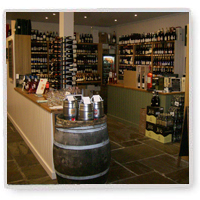
Wine is a highly personal thing, with an almost infinite variety of choice. The ideal is to have a trusted vendor who combines knowledge of their stock with an understanding of your tastes, thus being able to match you with interesting options. We undoubtably have this at Berry's warehouse shop, where we've bought most of our decent stuff since moving to Basingstoke. But Berry's is unashamedly a French specialist. I've always felt we were missing new world options there, and though they offer great deals on fine wines you almost feel embarrassed buying too much that's under a tenner. Enter, quite possibly, Caviste.
This little store within a store is effectively the wine counter at Newlyn's farm shop, so we've bought bottles sporadically from them over the past couple of years. But it's thanks to their union with Newlyn's cooking school ... first at the Spanish tapas night, and last Thursday night over game ... I'm getting the idea they may become our go-to consultants and providers in the future.
Mark Bedford, who ran the tapas tasting, was on hand again but this time for a more formal matching of food and beverage.
We started with a cremant de Bourgogne from Domaine Deliance which, in common with most of its Burgundian cousins, is a head-to-head competitor to really good champagnes for about half the price. An excellent consideration for holiday tippling at £14.95 a bottle.
On to dinner, prepared by head chef Hannah who's appeared in these pages before as chief instructor at the cooking school. First course, a game bird terrine with dense layers of partridge, pheasant and grouse bound together in minced pork with pistachio and cranberry, bound tightly in prosciutto. Vegetarians need not apply. We tried two whites with this, first a South African chenin blanc (AA Badenhorst Secateurs 2011), then the Domaine Cheveau Pouilly-Fuisse Trois Terrois 2010. The first was a great deal at £9.95, with a depth and richness you don't normally get in bottles under a tenner. But the second ... at just under double the price ... was a knockout, with rich fruits to stand up to strong flavours cut with a minerality that kept things clean and not too heavy. Six bottles joined the Bencard cellar, for very special dinners.
Second course a venison stew draped over Hannah's silky, creamy mash. The pungent flavours needed a bold wine for balance. Mark's first option won a smile with its Sicilian origin, but the high tannins made the Gran Feudo Paradiso Rosso 2010 too astringent for me. That contrast, possibly, made the New Zealand Pinot Noir that followed all the better. A magnificent glass exploding with berries, big, bold, smooth; just the kind of thing I'm always going for. The equivalent of a really fine, old Burgundy, Mark pointed out, but at half the price. (£17.95) So six of those came home, too.
With all the week's food and drink I needed some exercise. Sadly, the most I got was walking around the Bronze exhibit at the Royal Academy. But if brain waves trigger any caloric use, it was the equivalent of a big workout.
This is the first exhibition catalogue I've bought in more than a decade, because the show was so fantastic I wanted to bring it home with me to live over. It's only on 'til the 9th of December, but if you can fit it into this busy season you really should. It's one of the finest exhibits to hit London in years.
The concept is unique. Rather than focusing on one artist, time period or movement, the RA picks a medium: bronze. Something that most cultures have worked in. A material that has infinite variety and an almost spooky ability to convey movement and life. It wasn't much of a stretch to imagine most of the beings in this exhibit giving a good stretch and climbing off their plinths for a party when the punters go home.
And what an eclectic group that would be. Renaissance Christian saints, greek youths, Roman senators, Hindu gods and American cowboys, joined by a whole zoo of lions, elephants, horses, dogs and one particularly impressive Roman ram. Familiar icons of Western civilisation are here. In fact, any fan of Florence will feel in such familiar surroundings you'll swear you can feel the sun on your shoulders and the taste of pistachio gelato on your tongue. There's Ghiberti's St. Stephen, liberated from his niche on Orsanmichele; Giambologna's Mercury and his quirky turkey from the Bargello; il Porcellino, the magnificent wild boar whose snout you've stroked before shopping the central market; the Medici Riccardi horse and Cellini's Perseus and Medusa, which you've probably lounged beneath while shaking off tourist exhaustion in the Loggia dei Lanzi. And that's just the tip of the classical iceberg. This is one of those exhibitions where, at every turn, you see something familiar and famous.
But it's the unfamiliar that's perhaps most memorable. A 19th century Japanese incense burner held aloft by three almost-life-sized demons of terrifying but compelling fury. One of Remington's famous slices of the wild west, with four cowboys and their horses galloping toward you at full tilt. An elegant and streamlined horse pulling a cart with an intricately engraved gold and bronze disk from prehistoric Denmark, more than 3,400 years old! A 17th century Dutch pug, so lifelike you instinctively stand back to prevent the spray of drool you might get when he shakes his noble jowls. The beguiling dignity of the heads of African nobles of the Benin tribe. A hindu god and goddess, their multiple limbs entwined in a sensuous dance and their bodies polished to a golden sheen.
Taken together, this is a testimony to man's ability to create beauty. Through thousands of years, over multiple continents, in radically different cultures, artists have taken the same base metal and made magic. Drink it in. And then, maybe, kick back with some nice wine. The story of the grape isn't so different.
Saturday, 27 October 2012
It's a starry week as L'Ortolan delivers once again, and Murano changes my mind
I knew the week was going to be a Weight Watchers disaster when I brought up my diary on Monday morning. Here's what I saw.
Wednesday: Lunch with Martin (at Michelin-starred L'Ortolan)
Thursday: Game dinner/wine tasting at Newlyn's
Friday: Dinner for Lisa's Mom (at Michelin-starred Murano)
Saturday: Penny's birthday party (expect heavy drinking)
Sunday: Medill Dinner (Bumpkin, South Ken)
Oh, dear. Dangerous. But a great deal of fun. Let's start with the starry spots for this entry.
It was my third time at L'Ortolan, but my first on a business outing. I already knew the food was good, but now I can add that the venue is quiet enough to have undistracted conversations, it offers broad tables for spreading out documents and has a staff ready to work around the ebbs and flows of your business conversation. And who'll tuck you away in the conservatory with more coffee when your meeting goes on so long they need to start setting the place up for dinner. Additional kudos to the sommelier and head waiter who recognised me and treated me as a returning regular. (Either they have remarkable memories, or we made a very big impression at last month's anniversary dinner.)
The food on this third outing was consistent in quality of taste and presentation, but completely different once again in specific dishes. No resting on laurels here, rather a consistent rotation of food influenced by the seasons. Lunch is always the most cost-effective way to try a Michelin-starred place, and this is even more true outside of London. The five course tasting menu at L'Ortolan is £38, with no difference in quality from dinner. (But perhaps slightly smaller portions.)
We started with a plate elevating the humble beetroot to art: slices of red and white root, cubes of solid red accenting scorched, smoky goat cheese. On to a duck bon bon. A meatball of confit leg, rolled in strands of something delicate and crispy, fried and served on a bed of celeriac remoulade, with a couple slices of fir-smoked duck on the side. Absolutely exquisite. I could eat that for lunch daily! The fish course was a delicate morsel of plaice served with a finger-sized cannelloni stuffed with brown shrimp and chicken, brought together on the plate with ribbons of zucchini on a bed of very light red sauce. Finally onto a dish that heralded the oncoming winter: oxtail filled with mushroom mousse with a turnip puree. Hearty, substantial flavours made delicate by its small serving size. Just a few bites to satisfy.
And, of course, to leave room for pudding. Billed as a dark chocolate mousse, I would have described it as a lighter chocolate truffle rolled in dark chocolate shavings. Better, to my mind. Served with a sheet of salt caramel jelly draped enticingly over a scattering of toasted hazelnuts. Perfect. And, because my colleague Martin and I are as serious about our food as about our corporate copywriting, we had to order an extra dessert. Because we were both keen to experience squash ice cream. More delicate than pumpkin (which is, of course, very familiar to the American palate), served on gingery biscuit with hints of cinnamon and nutmeg. This would be an exquisite gourmet twist on Thanksgiving tradition.
That amazing meal would satisfy most people as their special meal out for months. Thus it was with just a hint of embarrassment that I crossed the threshold at Angela Hartnett's Murano 50 hours later. Don't blame me, blame Lisa. Her mother was visiting from Minnesota and we were giving her the star treatment. Readers may remember that Piers and I dined here for his birthday in July and, though we were impressed, I questioned whether the Michelin star and the price was worth it. Was Murano that much better then less-famous Italian spots in London? Then, the answer was no. This week, it was a definitive yes.
Perhaps it was that dinner there is superior to lunch. Perhaps we got lucky at Como Lario our first time around, since our return visit in September was decidedly average. Perhaps it was the fact that the maitre d' not only remembered us from July, but remembered Piers' tomato allergy. And perhaps it was that our hostess Lisa, one half of that dangerous duo of Northwestern Girl wine expertise, teamed up with the sommelier to keep a steady flow of unique and memorable bottles coming with each course. Whatever the reason, the combination jumped Murano into the pantheon of one of the best Italian meals I've had in London. Or maybe anywhere.
One of the innovations of Hartnett's place is that, though the menu is organised roughly into starters, pastas, fish courses, etc., you can have anything you want, in any sequence. The kitchen simply adjusts the size to match your order. We went for five courses at £85. Knowing two of those would be dessert and cheese, the five of us set to work choosing our trio of savouries.
I started with slow-cooked aubergine (eggplant) with tomato, mozzarella and basil, one of those dishes that shows off how, when you have the best ingredients, you don't have to muck them up with complexity. On to quail agnolotti (a type of ravioli typical of the Piedmont region) with white onion puree, rosemary jus and black truffle. Delicate pasta, rich meat, the foresty flavour of the fungus. Wow. Building up to monkfish on a potato puree with smoked bone marrow and glazed chicken wing, demonstrating that particular fish as worthy of
appearing on the meat menu as on the watery one.
There were many shared forks and eyes rolling in ecstasy around the table, though I can happily report that none of the samples I had of other dishes made me wish I'd ordered differently. (Although Piers' astonishing pork belly, pictured, came close.) There's the standard of a perfect meal, I'd say, when everyone has tastes of each others' plate, agrees it's all good, yet each individual is convinced she or he made the best choice.
Dessert was a heavenly pistachio souffle that managed to be light and airy while capturing a strong essence of the nut's flavour, spiked by the dark chocolate sauce poured down a hole poked in the souffle's centre. And then the cheese cart. Heavily French with a few Italian and English choices, notable for my favourite pouligny-St.-Pierre (a pyramid-shaped, crumbly goat's cheese) and a baked vacherin they brought out of the kitchen and served in steaming tea spoons.
The wine list here is a weighty, hard-backed tome, difficult to navigate without the sommelier because it's skewed towards tiny organic, bio-dynamic vineyards that supply the restaurant direct. Everything we tasted was a wonderful discovery, but this isn't stuff you're likely to find on offer in your local shop. The most memorable bottles were Sicilian and French. The first a frappato, a little known blending grape used exclusively in the 2010 from the Occhipinti vineyard. The light colour belied a deep, complex wine loaded with soft fruits. The second, from La Terrasse d'Elise, was the 2009 Le Pradel. Another red, this one spicier and moving to a port-like flavour, perfect with the diversity of the cheese course.
Most people don't eat this well in a lifetime, and I've done it twice in a week. Yes, life is good.
Wednesday: Lunch with Martin (at Michelin-starred L'Ortolan)
Thursday: Game dinner/wine tasting at Newlyn's
Friday: Dinner for Lisa's Mom (at Michelin-starred Murano)
Saturday: Penny's birthday party (expect heavy drinking)
Sunday: Medill Dinner (Bumpkin, South Ken)
Oh, dear. Dangerous. But a great deal of fun. Let's start with the starry spots for this entry.
It was my third time at L'Ortolan, but my first on a business outing. I already knew the food was good, but now I can add that the venue is quiet enough to have undistracted conversations, it offers broad tables for spreading out documents and has a staff ready to work around the ebbs and flows of your business conversation. And who'll tuck you away in the conservatory with more coffee when your meeting goes on so long they need to start setting the place up for dinner. Additional kudos to the sommelier and head waiter who recognised me and treated me as a returning regular. (Either they have remarkable memories, or we made a very big impression at last month's anniversary dinner.)
The food on this third outing was consistent in quality of taste and presentation, but completely different once again in specific dishes. No resting on laurels here, rather a consistent rotation of food influenced by the seasons. Lunch is always the most cost-effective way to try a Michelin-starred place, and this is even more true outside of London. The five course tasting menu at L'Ortolan is £38, with no difference in quality from dinner. (But perhaps slightly smaller portions.)
We started with a plate elevating the humble beetroot to art: slices of red and white root, cubes of solid red accenting scorched, smoky goat cheese. On to a duck bon bon. A meatball of confit leg, rolled in strands of something delicate and crispy, fried and served on a bed of celeriac remoulade, with a couple slices of fir-smoked duck on the side. Absolutely exquisite. I could eat that for lunch daily! The fish course was a delicate morsel of plaice served with a finger-sized cannelloni stuffed with brown shrimp and chicken, brought together on the plate with ribbons of zucchini on a bed of very light red sauce. Finally onto a dish that heralded the oncoming winter: oxtail filled with mushroom mousse with a turnip puree. Hearty, substantial flavours made delicate by its small serving size. Just a few bites to satisfy.
And, of course, to leave room for pudding. Billed as a dark chocolate mousse, I would have described it as a lighter chocolate truffle rolled in dark chocolate shavings. Better, to my mind. Served with a sheet of salt caramel jelly draped enticingly over a scattering of toasted hazelnuts. Perfect. And, because my colleague Martin and I are as serious about our food as about our corporate copywriting, we had to order an extra dessert. Because we were both keen to experience squash ice cream. More delicate than pumpkin (which is, of course, very familiar to the American palate), served on gingery biscuit with hints of cinnamon and nutmeg. This would be an exquisite gourmet twist on Thanksgiving tradition.
That amazing meal would satisfy most people as their special meal out for months. Thus it was with just a hint of embarrassment that I crossed the threshold at Angela Hartnett's Murano 50 hours later. Don't blame me, blame Lisa. Her mother was visiting from Minnesota and we were giving her the star treatment. Readers may remember that Piers and I dined here for his birthday in July and, though we were impressed, I questioned whether the Michelin star and the price was worth it. Was Murano that much better then less-famous Italian spots in London? Then, the answer was no. This week, it was a definitive yes.

Perhaps it was that dinner there is superior to lunch. Perhaps we got lucky at Como Lario our first time around, since our return visit in September was decidedly average. Perhaps it was the fact that the maitre d' not only remembered us from July, but remembered Piers' tomato allergy. And perhaps it was that our hostess Lisa, one half of that dangerous duo of Northwestern Girl wine expertise, teamed up with the sommelier to keep a steady flow of unique and memorable bottles coming with each course. Whatever the reason, the combination jumped Murano into the pantheon of one of the best Italian meals I've had in London. Or maybe anywhere.
One of the innovations of Hartnett's place is that, though the menu is organised roughly into starters, pastas, fish courses, etc., you can have anything you want, in any sequence. The kitchen simply adjusts the size to match your order. We went for five courses at £85. Knowing two of those would be dessert and cheese, the five of us set to work choosing our trio of savouries.
I started with slow-cooked aubergine (eggplant) with tomato, mozzarella and basil, one of those dishes that shows off how, when you have the best ingredients, you don't have to muck them up with complexity. On to quail agnolotti (a type of ravioli typical of the Piedmont region) with white onion puree, rosemary jus and black truffle. Delicate pasta, rich meat, the foresty flavour of the fungus. Wow. Building up to monkfish on a potato puree with smoked bone marrow and glazed chicken wing, demonstrating that particular fish as worthy of
appearing on the meat menu as on the watery one.
There were many shared forks and eyes rolling in ecstasy around the table, though I can happily report that none of the samples I had of other dishes made me wish I'd ordered differently. (Although Piers' astonishing pork belly, pictured, came close.) There's the standard of a perfect meal, I'd say, when everyone has tastes of each others' plate, agrees it's all good, yet each individual is convinced she or he made the best choice.
Dessert was a heavenly pistachio souffle that managed to be light and airy while capturing a strong essence of the nut's flavour, spiked by the dark chocolate sauce poured down a hole poked in the souffle's centre. And then the cheese cart. Heavily French with a few Italian and English choices, notable for my favourite pouligny-St.-Pierre (a pyramid-shaped, crumbly goat's cheese) and a baked vacherin they brought out of the kitchen and served in steaming tea spoons.
The wine list here is a weighty, hard-backed tome, difficult to navigate without the sommelier because it's skewed towards tiny organic, bio-dynamic vineyards that supply the restaurant direct. Everything we tasted was a wonderful discovery, but this isn't stuff you're likely to find on offer in your local shop. The most memorable bottles were Sicilian and French. The first a frappato, a little known blending grape used exclusively in the 2010 from the Occhipinti vineyard. The light colour belied a deep, complex wine loaded with soft fruits. The second, from La Terrasse d'Elise, was the 2009 Le Pradel. Another red, this one spicier and moving to a port-like flavour, perfect with the diversity of the cheese course.
Most people don't eat this well in a lifetime, and I've done it twice in a week. Yes, life is good.
Subscribe to:
Posts (Atom)