Sunday, 27 October 2019

DisneySea is a feast for the eyes, but a limited experience without planning and Japanese

Someone may demand the retraction of my U.S. passport for this heresy, but I honestly believe the Japanese may do Disney better than the Americans.

I grew up believing that my homeland had cornered the market on the giddy enthusiasm, excessive customer service, fanatical brand loyalty and ability to embrace fantasy that delivering the Disney experience demands. I've never been able to bring myself to visit the park in Paris. Talking mice, flying nannies and magic carpets are all more credible than French people staffing the Magic Kingdom.

But the Japanese? Those qualities are their sweet spots. The country resonates with care and respect for the customer. The skepticism that's challenged big brands in the West hasn't yet pushed aside a culture that still respects "company men", loves uniforms and joining in. And then there's the otaku.

The term was coined in the early '80s to describe a subculture of nerds addicted to manga and anime who often embraced dressing up. The phenomenon has grown to the point that it's often associated with any Japanese under 40. I first encountered it, and found it more than a little disturbing, at a Japanese festival in London thick with cosplaying 20-sometings. (I think it was the bearded men in baby-doll dresses that sent me over the edge.) When I set out my expectations for this trip, I admitted that I thought I'd be bothered by Japan's pre-occupation with the juvenile. In reality, though I saw a few weird cafes and the occasional group of young women dressed like 8-year-olds, the otaku didn't really make a dent in our awareness. Until we got to Tokyo Disney, when they made it a strange but wonderful delight.

Tokyo also holds a trump card for any Disney fan: a park that exists nowhere else in the world.

DisneySea is themed around water. Though some of the rides are repeated from other parks, the look of the "lands" is completely new and there are plenty of attractions unique to this location. Disney fans will thrill to the novelty, and find it all absolutely gorgeous. The Little Mermaid section is particularly striking, with design inspiration taken heavily from Gaudi, while the Aladdin area gives us a complex of minarets, domes, Islamic arches and geometric patterns worthy of a billionaire sultan's capital.
Admittedly the "sea" connection is often tenuous. I remember deserts in Aladdin. Oceans not so much. Nemo is a natural fit, but the American Waterfront in which he swims ... with bits of New York and Cape Cod ... isn't a clear link with any part of the Disney canon I can remember. Despite this, they've managed to slip in the Tower of Terror (adjusting the plot to be the haunting of a New York archeology treasure plunderer), a Toy Story attraction and an American music hall.

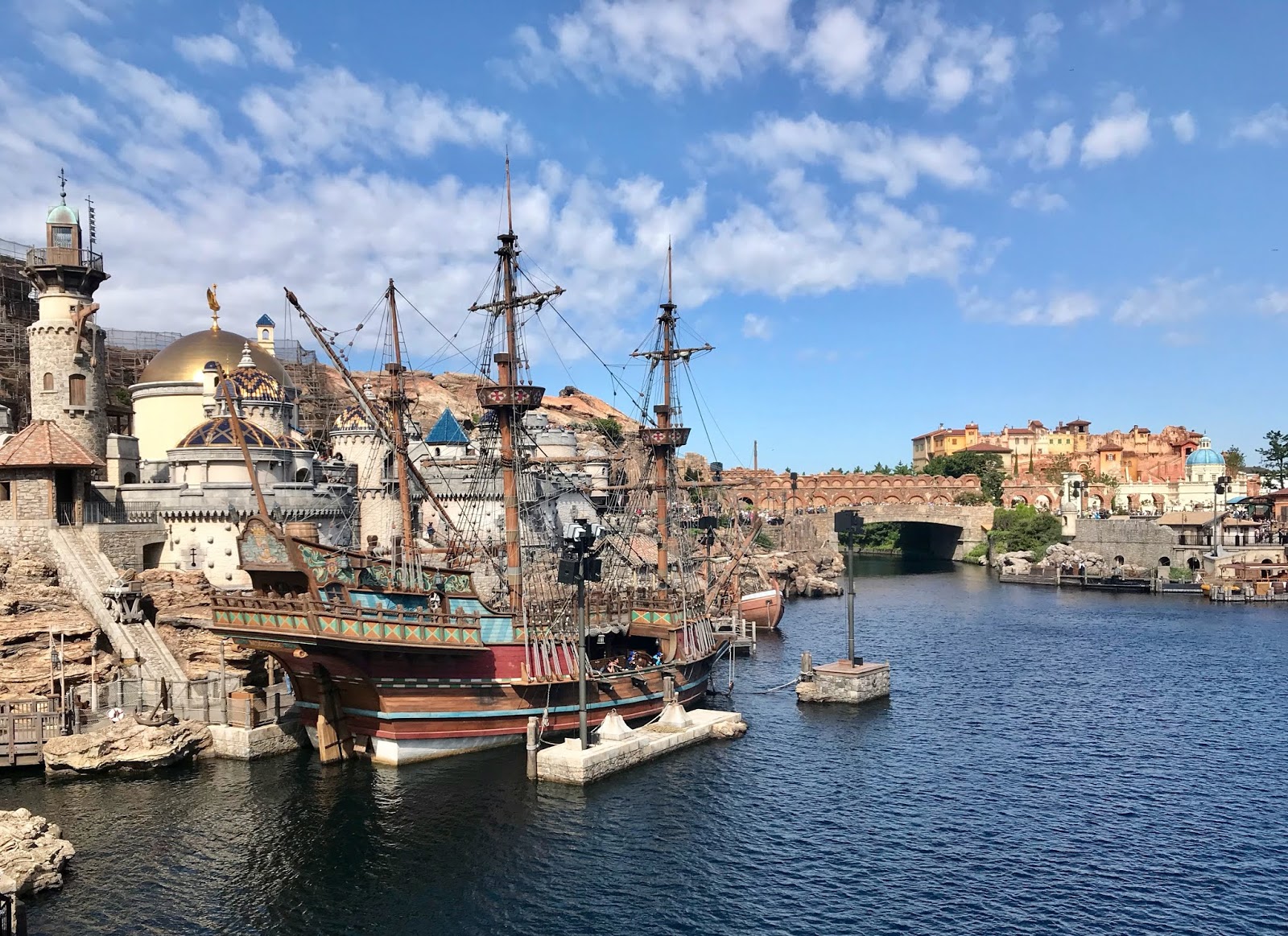
Even more perplexing is the Mediterranean lagoon that forms the heart of the park. I can't think of any Disney plot beyond Pinocchio with Italian connections, and he's not referenced here. A shame, since he had an underwater adventure and was swallowed by a whale, giving plenty of scope for a new attraction. But who cares, frankly, when you see how undeniably gorgeous the whole area is, providing a delightful pastiche of Venice and the Italian Riviera. There's even a sailing galleon moored beneath an atmospheric castle. Captain Hook makes an appearance here, evidently having drifted in from Neverland. This Italian harbour sits at the foot of a volcano which rumbles and smokes ominously and has the occasional small, red eruption after dark. This dramatic scene takes the centre role filled by the castle in the Magic Kingdom parks.
On the Mediterranean harbour you'd probably call the peak Vesuvius, but it plays a more intriguing role on its back side as the mountain looming above an area called the Mysterious Island. I was delighted to see the 20,000 Leagues Under the Sea ride resurrected here. It was a favourite of my childhood that's been replaced by a Little Mermaid ride in the Anaheim and Orlando Magic Kingdoms. In Tokyo it's been reimagined in new steampunk glory, with a magnificent spiral entry and a queuing system through Captain Nemo's HQ before you clamber into 6-person subs to take your journey. The Mysterious Island extends the Jules Verne theme with a Journey to the Center of the Earth ride just across the volcanic lagoon from 20,000 Leagues. (Disney had nothing to do with either the 1953 or 2008 film versions; one wonders if the attraction here suggests that the studio will someday contemplate another adaptation.)  It was my greatest disappointment that this combination ride through exotic underground worlds and roller coaster was closed during our visit, as it's the park's blockbuster attraction and only exists here.

In the very back of the park you'll find the Lost River Delta (which presumably flows into a sea) with two jungle-ensconced Mayan temples ... one containing a roller-coaster and one with an Indiana Jones-themed adventure ... across a river from a Mexican village and landing with shops and a Mexican restaurant. The Indy ride is excellent, with a fun plot line that mixes up several films and highly atmospheric interiors. And, frankly, it's worth the queue just for the laugh of Indiana Jones delivering his lines in Japanese.

Everything is created to typical Disney standards: design details, landscaping, costumes. The illusion in each world is complete. The cosplay-accustomed Japanese seem to relish their "cast member" roles, whether they're playing Mexican senoritas, Venetian gondoliers or turn-of-the-century American servers in the Teddy Roosevelt bar & restaurant. If anything, the architectural touches here are even more lavish than in the Orlando parks. Roosevelt's is within the cruise liner moored in the American section, rich with dark woods, leather, stained glass and polished brass. There's an enormous marble fireplace and carved wooden bears holding up the bar. There are paintings and display cases with memorabilia dedicated to the 26th American president, with detailed historical descriptions in Japanese and English, to celebrate the history of a hero of the modern age. (One assumes this would never get built in the States, as pressure groups would probably insist that we mustn't lionise someone who started a dodgy war in Cuba and conducted some irregular politics. The Japanese seem happy with the myth.)

The only surprise? No Moana. It might not have made the same cultural impact as Frozen, but the 2016 tale of the South Pacific made money, was critically acclaimed and is the only Disney animated film other than Finding Nemo and The Little Mermaid to be set at sea. Disney's imagineers could have re-purposed designs from the Magic Kingdom's Tiki Room or their Polynesian Resorts. A section set in the South Seas would, frankly, make far more sense than the American Waterfront. But maybe it's a little too close to Japanese cultural reality so doesn't provide the same hit of escapism as the other lands.

And make no mistake, Tokyo Disney is escapism for the locals, or visitors from neighbouring Asian countries, not targeted at Western tourists interested in a bit of familiar entertainment culture. With hundreds of thousands of Westerners in the country for the Rugby World Cup, I was surprised by just how few white faces there were at Disney. It was a weekday, and kids were at school, but the Japanese ... especially those in their 20s and early 30s ... were out in force. Disney is an otaku paradise.

I spotted them on the public transport system before we even arrived. Packs of young women who'd clearly coordinated their clothing so they'd be dressed as a matched set for their day out. Elegant and restrained types went for all-black ensembles with sequinned Minnie Mouse ears. A pack wearing Winnie The Poo hats went for brown. They were the subtle ones. Grown-up versions of Disney princesses were out in force. I even saw what I assumed to be a mother-daughter team dressed as Snow White and the wicked witch. Alice in Wonderland was also enormously popular, though the Japanese have infused her with a steampunk vibe.

Appearing in photos, in costume, with your mates seems to be as important to the locals as going on any rides. We quickly discovered how much fun it was to offer to take their photos, sharing smiles as they flashed the ubiquitous peace sign at us. (Evidently, this is what you do when photographed here.) If you want to step your photo shoot up a level, it appears you can actually procure a service from Disney to source a full, official costume and a photographer to accompany you around the place to give you a professional shoot. I spied a complete Cinderella from the monorail doing this as we passed in the morning, and we trailed two Jasmines around the Aladdin section for a while covertly marvelling at how seriously they were taking it all.

The most amazing sight, however, was young couples out in the park in matching costumes. They were far less common than the packs of girls, but far from unusual. We ate lunch two tables over from a group having a magnificent, boozy lunch, dressed as Cinderella and Henry, Belle and her (transformed) beast and a magnificently sexy Cruella de Vil ... bonus points for carrying off a fur coat in that heat ... and her date dressed as her chauffeur. I'd love to know more about that relationship.

Watching the otaku at play is one of the joys of DisneySea. It's a good thing that, between them and the fabulous sets, there's so much to look at. Because one of the drawbacks of this ... and probably any Disney park these days ... is that you won't be enjoying many attractions without military-style organisation.

In these days of Fast Passes, show pre-bookings and in-park restaurant reservations, you need to be entering the park when it opens and attacking the first hour with a plan researched in advance. Which Fast Passes will you grab? Which restaurants will you eat at? Which shows do you want to see? If you saunter into the park as the clock approaches 10, and wander pleasantly with only the intention of enjoying your day, it's unlikely that you'll get onto more than four rides all day. I miss the old days.

There were a couple of other drawbacks to the day. It's easy to forget how language-dependent most Disney attractions are. The stories they set up while you're queuing, the lines characters say during rides, the entire run of the shows. You can still enjoy the park without understanding Japanese. All the restaurant menus and signage is also in English. But be prepared to miss a big chunk of the experience. It's also worth remembering that Japanese people are much smaller, on average, than Westerners. The rides we did get on had no leg room at all ... we only fit in the 20,000 Leagues capsules because we could swivel our legs sideways ... and there's a roller coaster on the the Lost River Delta where a helpful attendant spots large Westerners, advises them about the snug cars and offers a chance to test the fit in a sample car in a quiet jungle alcove. We didn't ride that one.
I hope that someday DisneySea turns up in the Anglosphere. It's a spectacularly beautiful place with some exciting new rides. It would be even better with full understanding and generously-sized seating. I might even put the required attention into a plan of attack. But only if they add Moana.


Wednesday, 23 October 2019

Tsukiji Market is a foodie's delight; appreciate it with a local guide

Traditional markets are a sightseeing magnet for me, and I can seldom resist the temptation of a leisurely exploration. Whether it's the simple pleasures of farmers spreading their wares in a French village square, the sophisticated offerings in Barcelona's Boqueria or my home turf in London's Borough market, I love breathing it all in and imagining what I could cook. I've explored some exotic variations on this theme with locals ... notably Muscat's fish stalls and a sprawling tropical bazaar in Mauritius ... but I'd never felt that I required a guide until I reached Tokyo's famous Tsukiji.

Thankfully, we had Yuko. She turned what could have been a bewildering and aimless morning into a transformative experience. We thought we knew Japanese food, but after more than two weeks in the country we had to admit that our understanding was limited. And because all of our experience besides one cooking class earlier in the trip had been in restaurants, we were woefully ignorant of many of the raw ingredients that went into this alien cuisine. Yuko explained what different elements were, from where they were sourced, how they were used and what made for the highest quality. In most cases, she knew the shop owners and coaxed them into offering us samples. Her service extended to getting to know everyone's interests, both for shopping and eating, and making sure we were all satisfied.

You'll find a lot of Tsukiji tours on TripAdvisor. We selected one combined with a sushi-making class and lunch, sourced through cooking class portal Cookly. We only had 5 people in our group so it was an intimate, personalised experience.

This is not a covered or enclosed market, like all of those mentioned in my introduction, but rather a district of narrow lanes in an area just 150 metres by 250 metres, packed with about 300 different small shops. There are butchers and vegetable stalls and, as you'd expect from Japan, a lot of fishmongers.

This, in fact, was what Tsukiji used to be most famous for. Until October 2018 the district was divided into an inner and outer market, the inner being a wholesale mecca notable for its daily auctions of bluefin tuna. That market has moved 2km east to a new facility called Toyosu which, though built with visitor galleries, usually gets described by tourists as sterile and uninspiring. Other than the auctions themselves, all of the character, most interesting shops and good food stands seems to have stayed in the old place.

Part of the former inner market building is still in operation, where you can walk down an aisle of wholesale fishmongers selling a wider variety than I've seen anywhere, including a fair number of species that are still wriggling with life. (I love Tokyo-style grilled eel, with its distinctive sweet and umami brown sauce, but the sight of them writhing in styrofoam boxes sends tremors of horror up my snake-phobic spine.)

The most distinctive parts of Tsukiji are back in the outer market, however, particularly the shops selling specialist products. We stopped at one place that did nothing but katsuobushi, the paper-thin shavings of dried tuna used as a final topping or flavour enhancer. We learned that there are many grades of the stuff, differentiated by quality of fish, size of shaving and age.
Several shops offered a wider range of dried fish, from whole octopus dehydrated almost flat and preserved in vacuum pack to pinkie-nail-sized whole fish dried, salted, flavoured and sold in bags as snack food.
There were shops for green tea, spices, seaweed (the variety is staggering), dried fruits, sweets and pickled vegetables. There are also a couple of excellent knife stores, though the majority of kitchen and table ware is better sought out on Kappabashi Street.

Whether you're on a tour or on your own, if you want to enjoy Tsukiji, get here before 9am to avoid the worst of the crowds, and come hungry. The market is thick with street food stalls. The expected takoyaki (fried balls of octopus and dough) and  okonomiyake (savoury filled pancakes) are abundant. We saw several shops selling wide varieties of Japanese omelette (I didn't even know they came in flavours). Healthier visitors can opt for beautiful skewers of strawberries or melon, though most people seemed to be taking their fruit in the form of ice cream. It was a relief to see so many options beyond the ubiquitous green tea. Flaming grills offer up octopus on a stick, chicken teriyaki or Kobe beef.
The last, though still expensive, is half the price of a restaurant portion and comes sliced thinly and packaged; you buy it and then give it to the lady to cook for you, over high heat and quickly so that the flames render the fat, leaving almost-buttery meat behind.
We deeply regretted having breakfast. We should have skipped it and come here hungry. But had we snacked too much at the market we would have made even less of a dent into our enormous sushi lunch.

Getting out of Tsukiji as it reaches peak crowd to go to a posh restaurant in Ginza was a good move. Tourists and locals alike pack the streets by lunch time, making moving around quite challenging. Cookly's class is in a sushi specialist in the basement of a building on Chuo Dori, the main street in the posh shopping district of Ginza, a short taxi ride away. With its subtle signage out front and humble entrance, I suspect it's not a place tourists often find their way into without pre-arrangement. Certainly the other diners in the rest of the restaurant looked Japanese and were observing the traditions of removing their shoes at the entry and sitting at floor level. We were in a lovely private room with loads of Japanese atmosphere but the comfort of western chairs.
At this point our group of five met up with several other tours ... primarily of Americans and Brits in Japan for the Rugby World Cup ... who'd been elsewhere with their own guides. We all donned sushi chef jackets and got down to business.

My only two quibbles: this is more a sushi "assembly" than a sushi "making" class, you don't get much on how to select and cut the fish or how to make the rice, which is the really tricky stuff, and; each guide translates for his or her own group. While I admire the dedication to customer service, multiple English translations made for quite a distracting babble. Still, it was great fun as a respected sushi chef came in, demonstrated his filleting skills, then stepped us through the process for both rolls and traditional strips of raw fish over tightly-packed ovals of rice. Success at home a few weeks later confirmed that we'd mastered the basics.
The result of your work is a generous sushi feast, which gets even better as the members of different groups start talking to each other and exchanging stories of their travels. On one side of us was the family of one of the American rugby players, having a magnificent time even though their team was sure to go out of the tournament by that point, and a couple of English lads who'd misjudged their timings on Fuji the day before and had to cover more than 20 miles at speed so they wouldn't get left on the mountain. They were limping like old men, but had a story for life.

I suspect such conviviality develops naturally in most classes, but the common link of rugby greased the conversational skids. I'll talk soon about the magic that travelling under the umbrella of a global sporting event brings. But first ... I really need to tell you about the bizarre and wonderful way the Japanese do Disney.

Sunday, 20 October 2019

Edo & Tokyo National Museums dazzle & delight

After two weeks in Japan, I'd come to realise that it was a country of profound and regular contradictions. Thus I wasn't surprised to find one of the world's best and most attractive city history museums tucked inside one of Tokyo's ugliest buildings.

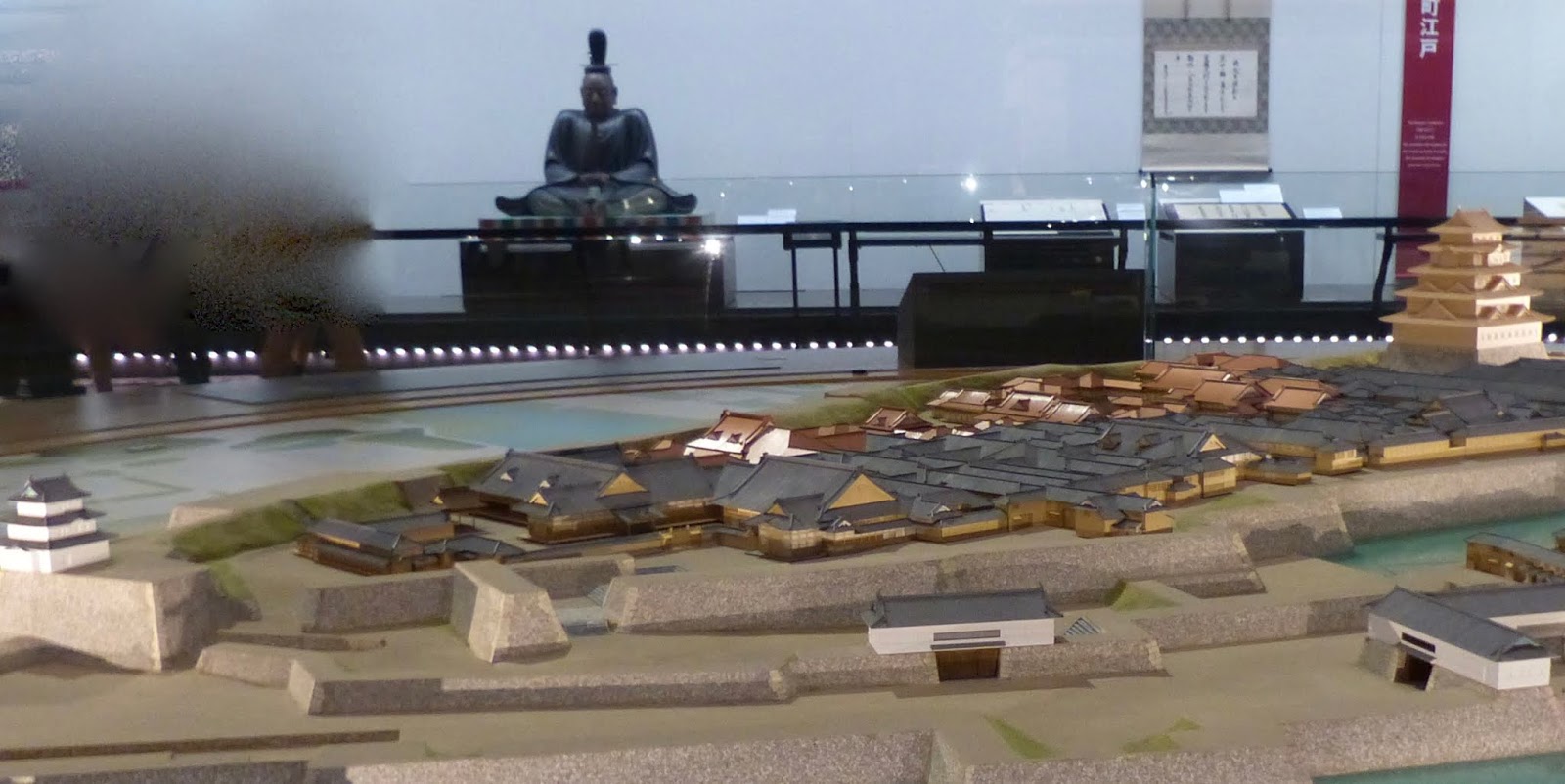
The Edo Museum is dedicated to the history of Tokyo which, until 1868, was known as Edo. It is the ideal first stop for any visitor to the city, since it will put everything from why the city looks the way it does to the fashion choices of its inhabitants into a broader context. It's also great fun. The bizarre exterior shape ... like giant Lego roof blocks tipped on their side and suspended precariously on spindly legs ... makes for a cavernous interior space that's spread over two levels with plenty of room for full-sized recreations of buildings from all eras. You enter over a copy of the wooden Nihonbashi bridge that once spanned the nearby river, look down over an 18th century Kabuki theatre and a 19th century bank, and could soon find yourself wandering streets of common people's houses from the 17th or 20th century.
Exhibits run in chronological order from the city's initial rise in the 16th century to its renaissance as a post-war tech leader in the late 20th. In a country where we saw little use of modern, multi-media approaches at cultural sites, the Edo Museum is a star. There's an audio guide with self-selected commentary in a range of languages, video screens, interactive displays and stuff to touch and play with. You can try to hoist an incredibly heavy ceremonial banner, climb into an aristocratic palanquin, try being a water carrier or grab a photo opp working at a sushi stall.
Almost nothing exists from earlier incarnations of Tokyo, so much is recreated here in fantastically detailed models from a great daimyo's villa and garden of the 17th century to the pleasure grounds and Western-influenced business streets of the 19th. Needless to say, this is a fantastic place for kids.
Being fun, however, doesn't diminish the worthiness of this collection. There are beautiful artefacts in addition to the models and hands-on stuff, particularly lovely things from the Tokugawa shogunate including armour, swords, tea sets and a striking statue of dynasty-founding Ieyasu. There's a fascinating display of how woodblock printing works, complete with original blocks and prints. Gorgeous kimono in the section explaining Tokyo style, and how it differentiated itself by being more sober and practical than the imperial style from Kyoto. World War II is brought to life by ration books, wreckage and military memorabilia. My favourite item from the late 20th century was a combination abacus and calculator; an item that seemed to convey in one small package the unique way the Japanese have of embracing both the ancient and the new.
The Edo Museum has excellent museum shops, both at ground level and in the galleries, with a fascinating range of goods from toys to high-end jewellery inspired by classic Japanese design. The top (7th) floor boasts a full service restaurant with a range of tasty set meals and magnificent views westward over the Sumida River and the city beyond. The urban sprawl is disconcerting, but this was such a clear day we could see all the way to the mountains and enjoyed a drink as we watched a golden sunset. The Japanese, we've learned, like regular dining times and it can be tricky to get lunch or dinner outside of "regular" hours ... essentially noon to 1:30 and 7 to 8:30. We found museum restaurants to be not only of excellent quality, but established to serve as long as the museum was open irrespective of the usual meal times.
The surrounding area of Sumida was originally the nightlife and entertainment area of early Edo. It sat over a river and outside of the walls, similar to Southwark and London. It remains the Sumo wrestling district, with the main arena just next to the museum. The arena is one of Tokyo's better bits of modern architecture, translating traditional shapes into bold, contemporary materials. Sumida is filled with "stables" where different schools of wrestlers practice, and with restaurants catering to both wrestlers and fans. The bits we saw had a vibrant energy that wasn't as garishly overwhelming as neon-drenched Golden Gai, which I hated, and I would have happily explored more here if we'd had time. The area is also trying to set itself up as more of a cultural destination, with a museum dedicated to the print maker Hokusai and another dedicated to the Japanese sword.

Given my husband's passion for all things Samurai, we included the Japanese Sword Museum on our day in Sumida. We both agree that we probably would have spent our time more better getting to know the area better by wandering the streets around the Sumo stables. The problem was that this museum doesn't quite do what it says on the tin. We were expecting a museum on the history of the sword, with lots of examples including matched pairs of katana and wakizashi complete with handles, scabbards, accessories and perhaps a bit of armour. But this "museum" is actually more of a modern art gallery devoted to contemporary swordsmiths' masterpieces.
The collection is in a single, large room at the top of yet another brutalist concrete bunker of a building, and it's almost all blades displayed in their pristine beauty without handles. I appreciate a good sword, and there's no denying the beauty of the patterns that show up in the beaten steel, but after the first 10 or 20 it takes a real aficionado to stay interested. And, frankly, I found myself wondering why we'd paid 1,000 yen ... as opposed to the 600 yen to get into the much more impressive Edo Museum ... to see something we saw for free at Tower Knives, if in a shorter form.

The most interesting part of the museum is a small room off the entry hall, where they have one case with historic swords ... this time fully assembled ... and some armour. There's also a fascinating film showing the traditional forging process. It's in Japanese, but you don't need language to appreciate the beauty and complexity of what's happening.

A much better bet if you want to appreciate the art of Samurai swords, and so much else, is the Tokyo National Museum. This complex of museum buildings at the edge of Ueno Park is a bit like a combination of the British Museum and the Victoria and Albert, stuffed with sculpture, decorative arts,  armour, clothing, paintings, screens and any other representations of Japanese culture through the arts that you can think of. It would be impossible to see everything in a day; your best bet is a walk through both floors of the main Honkan Building, then check out the gallery of Horyo-ji Treasures. Though the museum's displays are very old school, it has an excellent mobile phone app that allows you to take virtual tours in advance. I recommend this strongly so you have a better idea of what you're looking at when you visit. Like the Edo Museum, there's a pleasing full-service restaurant here with a variety of set menus that come out in beautifully lacquered, multi-compartment boxes. The room looks over a grassy bank and small woodland, making it hard to believe that Tokyo is bustling just outside the gates.
The Honkan building itself is a delight. Like our ryokan in Kyoto, Yoshida Sanso, it's a rare bit of architecture from the period between the World Wars, combining a revival of interest in traditional Japanese style with modern materials and an Art Deco sensibility. The effect, particularly in the great entry hall, is beautiful.
Inside, displays on one floor are supposedly thematic and on another chronological, though the two flow into each other so much that it's hard to tell the difference. Thus you end up with a room of swords downstairs, representing the wars of the 13th - 15th centuries that prompted the rise of the samurai, and a gallery upstairs on the attire of the military elite. After the bust of the Sword Museum, we weren't complaining. You'll find something exquisite in every room. I was particularly moved by a collection of Buddhas and bodhisattvas rescued from defunct temples. The costume galleries presented dazzling examples of kimono and there's a whole room of netsuke, or cord fasteners, that could keep you busy paying attention to their miniaturised beauty for an hour or more.

I was perhaps most intrigued by a gallery dedicated to promotion of Japanese arts after the Meiji Restoration. I was well aware of the craze for all things Japanese in the late 19th century, often discovered at great exhibitions or World Fairs and sucked into contemporary culture. The Mikado, Madam Butterfly and Monet's bridge over his water lily pond are all examples. What I hadn't realised, given my Western bias, was that the West didn't "discover" Japan ... the Meiji government launched an active campaign to promote the sophistication of their culture around the world. This gallery told the story and displayed a range of beautiful items that had been produced at the time for the global outreach.
Nearby is another fascinating display, on how the museum secures its collections from earthquake. Storehouses hold treasures in sprung wire baskets, in cages, each sitting on coasters that bounce and roll. Major sculptures are on their own suspension systems.

There was one big attempt at modern museum technology with the VR experience, a separate £7.50 ticket ... quite steep compared to £4.50 for access to the whole site. The "virtual reality" set the bar for something exciting, but was really just a lecture with a film. The topic was the Japanese sword, and the only VR in sight seemed to be the blade rendered into 3D computer aided design so that the filmmakers could manipulate it at will to illustrate their lecture. (Which, thankfully, was offered in English on a headset.) I learned a bit, but probably wouldn't have spent the time or money had I realised the reality. Enjoying the swords in the main collection was more than enough for me.

We skipped collections from other Asian countries, Japanese archeology and special exhibitions to head for the Horyu-ji Homotsukan. This small, purpose-built gallery proves that the Japanese can do exquisite modern architecture when they want to; the shallow pool, marble slabs, glass walls and slim columns seem to perform a dance of sliding rectangles as the sun bounces off the various surfaces.
Ironically, the most modern architecture in the complex hosts some of its oldest works. This is the treasury of a defunct temple called Horyu-ji, and many of its masterpieces come from the earliest days of Buddhism in the 8th and 9th centuries. The same artistic touch used on the exterior continues inside, where pools of light in a mostly dark interior highlight statues, scrolls and ceremonial objects with high drama. Few museum visitors seem to get over here, and the emptiness makes the experience all the more dramatic.
The Tokyo National Museum has an enormous gift shop with all the usual museum shop goodies: postcards, books, reasonably priced gift items, kids' toys, collection-inspired jewellery and high-quality reproductions. My only complaint about the museum? The only air conditioning here is for priceless treasures in air conditioned cases. On a hot and sticky day there's little respite and few places to sit, so you do need to pace yourself.

There are scores of other museums in Tokyo to attract your attention, but if you want to get a broad view of the city, its history and its culture, the Edo Museum and the Tokyo National Museum are where you should start.


Friday, 18 October 2019

Ultra-urban Tokyo is hard to love, though there are hidden jewels beneath the cement

Tokyo is like a dystopian novel given urban form; a warning of what could happen if humanity screws up badly. If Japanese gardens are about controlling nature, the Japanese capital is about banishing it from existence. It begins 45 minutes from your arrival at Tokyo station. The last of the greenery slips away and the landscape becomes one unending stretch of cement. Mile after mile of undistinguished tower blocks, jammed roads, jarring advertising hoardings and grim overpasses. There are parks on the Tokyo city maps, but little evidence of them as you move through town. I kept remembering how Blade Runner's sets had been based on Tokyo. I always figured it was just some ugly bit of town. Nope. It's the norm.
The day had started well. Getting to Tokyo is a delight. The sleek and elegant shinkansen train slips into the pristine white platform at Kyoto as boarding music plays and a conductor in tidy uniform with hat and white gloves directs the scene. People get on and off in 90 seconds. Then you glide away on tracks so smooth it's hard to believe you're on a train. Especially if your frame of reference is the UK. Only the rapid flash of bridges and light standards outside indicates the crazy speeds you're actually travelling at. The free WiFi is also fast and efficient. Every so often a hostess with a trolley of drinks and snacks comes through. She bows to the carriage before she exits. The windows are enormous and spotlessly clean, a delight since much of the journey runs through the foothills of wooded mountains; you even get 10 whole minutes of Mount Fuji looming on the left. Japanese visitors to the UK must think we are barbarians when they use our public transport, I thought.

And then Tokyo's urban sprawl began, and I realised how lovely, green and spacious London is in comparison. I'll can cope with rotten infrastructure if I get trees in exchange.

To be fair, much of this isn't Tokyo's fault. Japan is prone to natural disasters, and its traditional architecture to fires. By the middle of the 20th century there wasn't much of historical beauty left, and what remained was obliterated by American fire-bombing in World War II. Modern architects have focused on resilience and efficiency. Our hotel, the Tokyo Hilton, and its surrounding area of Shinjuku may have all the character of a corporate office park (with some trees!), but it was a great place to weather a super typhoon. With an earthquake in the middle of it. In the more beautiful countryside, villages flooded, hillsides collapsed and at least 89 people died. In Tokyo, people retreated to their concrete, glass and steel fortresses and watched the rain.

Such efficiency is probably the secret for coping with life here. Everyone follows a shared set of rules to make the crowds and ugliness tolerable. Everything is spotless. No litter. No graffiti. Eating or drinking while walking is not done; you might spill something. Subway trains are silent, even lacking the what I'd thought was the universal scourge of over-loud music buzzing out from people's headphones. Lanes are painted on train platforms to create logical traffic flows, and everyone follows them. People even look better. Workers tend to wear snappy uniforms and, if serving the public, white gloves. People in general dress more formally; trainers, tee shirts, shorts and sweats are reserved for the gym and tolerated from tourists. All of this makes Tokyo a bit easier on the eye. And I saw just two homeless people around the city in 11 days, which is fewer than I typically pass making it out of Waterloo Station on a morning commute.
All those things combined to make the city palatable, but in 11 days I never warmed to it. In part, it's because it's just so damned big. New York may sprawl over 5 boroughs, but most of what a first time tourist will want to see is in lower Manhattan. Big as London is, you can cover most of the important sites on foot. Other European capitals are even smaller. In Tokyo, most things seemed to be at least a half an hour away on public transport, with that space again between different sites. Even with marvellously efficient trains, it makes tourism hard work ... especially late at night when you just want to get back to your hotel.

There also seemed to be very little differentiation between neighbourhoods. Shibuya, Golden Gai and
Ueno all looked similar enough to discourage desire for further exploration. Did I really want to spend my evening travelling more than half an hour to discover jet another jumble of boxy, tall buildings, stacked panels of glaring neon signs and characterless underground shopping malls? After our excursion to the underwhelming Shibuya Crossing, the answer became "no".

Tokyo isn't completely without beauty. Stretches of Ginza, Roppongi Hills and the streets around our hotel were lovely. But it feels they could be anywhere in the world. It's ironic that the most salubrious bits of Tokyo seem to be the most lacking in any sort of local flavour. The people who gave us Todai-ji or Nijo Castle now seem to excel at shopping malls that would fit perfectly in Orange County, California.

I haven't totally written off Tokyo. Though 11 nights felt far too long, I'll admit that's not much time to discover a city that big. There are four entries to come on destinations in and around the capital that were special enough to deserve their own spotlight, and that I wouldn't have missed. (Tokyo's exceptional museums, DisneySea, Tsukiji market and Nikko) Here's a round-up of other experiences that brightened the dystopian gloom.

GINZA CORRIDOR, TAKUMI AND ITOYA
Most tourists will find their way to the posh shopping area of Ginza during a visit. It is undoubtably one of the most attractive bits of town. Though it could still use more parks and trees, this is an area where architects seem to have made a real effort in the past decade. There are a lot of noteworthy modern buildings to appreciate. That includes luxury shopping malls built around exquisite atriums. The problem? Most of Ginza is just a procession of the same names you see in every premium shopping district in the world.

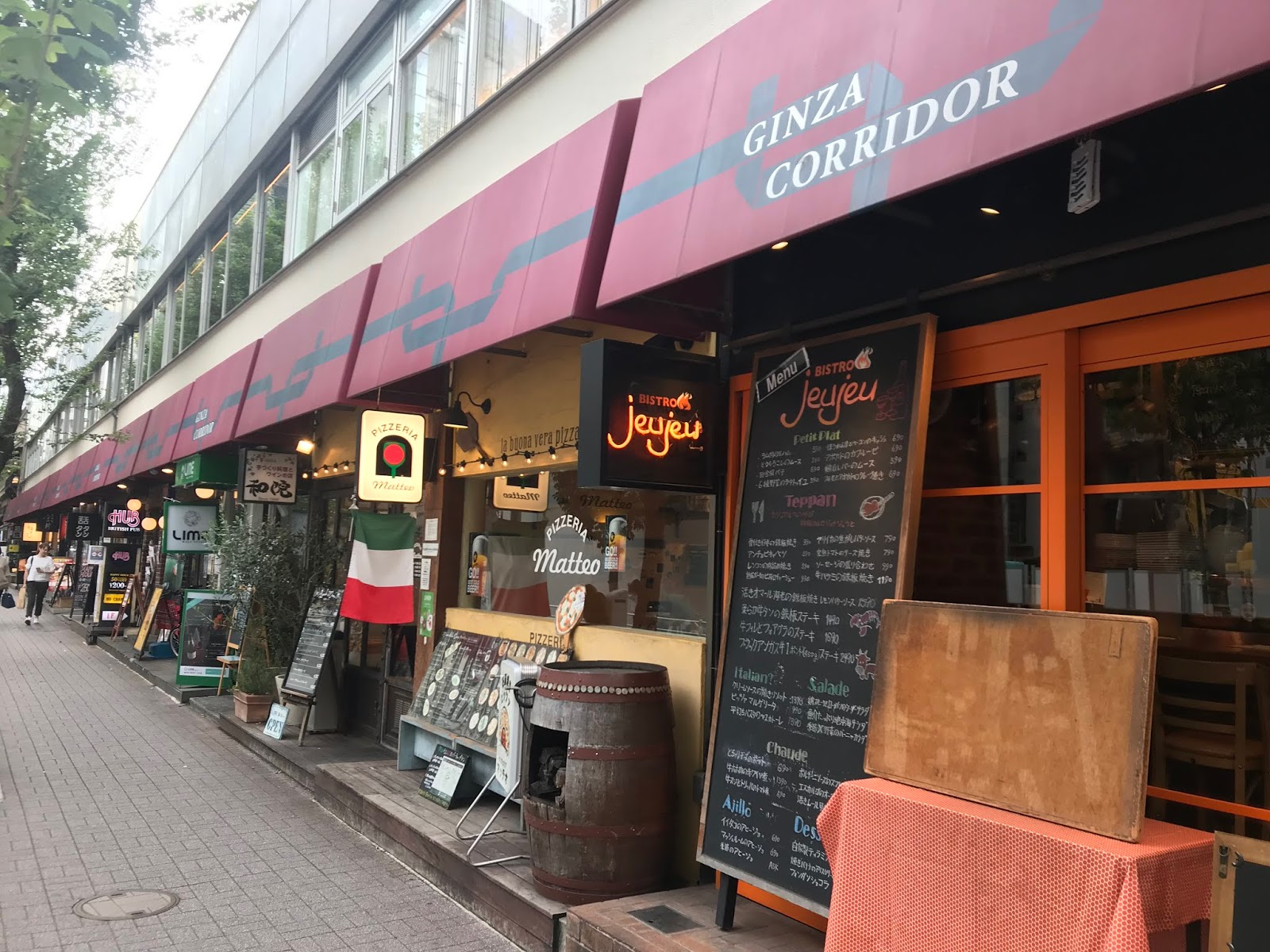
One exception is Ginza Corridor, a street running under the elevated rail tracks between Shimbashi and Yurakucho. Small restaurants burrow beneath the arches, offering a range of cuisines and places to drink. Trees line the street and many of the establishments have decorations out front. It's a place full of character that I understand is heaving with both locals and visitors in the evening. It was quiet and welcoming at 2pm, when we wandered into Pizzeria Matteo Ginza for a break from our Japanese diet. Authentic pizzas came out of a proper brick oven, Italian pop played, they served Italian beer and wine ... and the set menu came with miso soup and green tea ice cream. Ethnic restaurant authenticity goes only so far in Japan.

When it comes to Ginza's shops, Takumi and Itoya are the notable exceptions, established at opposite
ends of the district. The first is a small gallery-style shop space over two floors that specialises in hand-made Japanese crafts. If you want to come home with a custom-dyed silk obi (waist sash) for a kimono, a hand-turned wooden sake cup or a one-of a kind ceramic version of a temple guardian tile end, this is the place for you. Their range of fabrics and ceramics was particularly good. Takumi is also surprisingly reasonable, with a range of gifts possible at the £10 mark.

Itoya is a much bigger place, and a well-known brand in Japan. If you're partial to a stationery store, this is heaven. Nine floors of exquisitely designed goodies, from pens and notebooks to calendars, desk accessories and any bit of fine design you'd ever want to put in your office. It's interesting that the digitally savvy Japanese still seem to be wedded to paper datebooks, as there was a whole floor for Filofaxes and related paper day planners. Other floors offer exquisite greeting cards of multiple layers of cut paper. Racks of beautifully printed tissues and exotic wrapping papers. Patterned sticky tape. A craft section to make a scrapbooker weep. And a paper concierge you can consult on those tricky printing jobs, at the back of an entire floor lined floor to ceiling with different papers for your printer arranged by colour, as if you've suddenly been miniaturised and dropped next the the paint swatch cards at your local DIY store. Only the size of my luggage and the fact that my shopping was limited by the time I was meeting my husband prevented me from spending stupid amounts of money.
The wonders don't stop with stationery. Itoya's top (12th) floor is a full-service restaurant that will feed you, mix you a cocktail from their custom-crafted list, or let your husband sit quietly and nurse a beer while you shop. On the floor below you can peer through glass walls at a hydroponic farm where they grow all their own salad greens. Presumably Cafe Stylo gets busier at peak meal times, but at 5:30 on a weekday it was an intimate, cosy place where a handful of visitors sat at tables and appreciated the sunset and night creeping over the city. After dark, from on high, is when I thought Tokyo was at its best.

TOKYO METROPOLITAN BUILDING
One of the best places to get a panoramic view of Tokyo must be this government building in Shinjuku. Its twin towers rate as one of the city's better pieces of modern architecture, there's an observation deck in each and admission is free. Both have cafes and gift shops, and alternate which side is open. If you can't make it out to Mount Fuji, you can see it from here on a clear day. We timed our visit to arrive just before sunset (plan to wait in a queue for 20-30 minutes) so we could get the transition from day to night. There are a handful of tables and chairs and beer available from the cafe, so you can use this as a happy hour venue as the lights of Tokyo come up.

SENSO-JI AND KAPPABASHI STREET
Senso-Ji is Tokyo's oldest temple by date of establishment. The complex features two ceremonial gates, an impressive main temple, a pagoda and a variety of subsidiary buildings. They look venerable, though they're mostly reproductions from the 1960s. There was no scrimping on artistic detail, however. Senso-Ji has the same flamboyant roof tiles, scary guardian figures, serene Buddahs, dramatic ceiling paintings and vast pots of incense I became so familiar with in Kyoto. Just add a lot more people, apartment blocks and offices looming over the complex margins and giant lanterns hanging in the gateways and the entrance to the main prayer hall.
Senso-Ji's most famous feature is the processional avenue between the two gates, packed with small shops. It's fun, but this is mostly cheesy tourist stuff, a lot no doubt made in China, and the crowds don't encourage browsing. Elbow your way to the main temple building, gawp at the architecture and the gorgeous ceiling, then leave down the steps to the left as you face the altar. Here, in the shadow of the pagoda, there's a small garden, a variety of small shrines and funerary memorials. You're only 100 metres from the main avenue and temple, but few tourists wander in this direction. If you're hungry, a line of pop-up vendors sells a variety of food and drink along the complex's side entrance. If you go out this way, you'll end up in a shopping arcade that's far more interesting than the famous avenue, full of shops selling traditional Japanese clothing and accessories that it looks like Japanese people might actually wear.
From here it's a 20-minute stroll to Kappabashi Street, Tokyo's famous kitchenware district. This area is called Asakusa and was the first, and only, place I went that felt like a proper neighbourhood with a distinctive, quirky feel. Many of the buildings are still low-rise two to six stories, with a few wooden structures and a handful of architectural features that actually look pre-war. It isn't necessarily beautiful, but is does have character. There are a lot of craft workshops and boutiques on the smaller side streets, selling things like ceramics, hand-printed paper products, leather goods, fabrics and glass beads. Kappabashi Street itself, however, is a long stretch of retail targeting the restaurant industry. There are stores for every kind of pot and pan, chopsticks, bento boxes, ceramics, knives ... even chef and waitress uniforms. Though it's set up for professionals, regular people are welcome here and it seemed to be a major destination for locals on a Sunday afternoon.

ROPPONGI HILLS
The luxurious shopping centre attached to the Ritz Carlton is a rare example of the Japanese combining their flare for designing modern retail spaces with local flavour. The elegant, restrained architecture has an organic feel that echoes traditional Japanese buildings. There's wood evoking sliding panels, a glass roof allowing sunlight to stream in, copper wall reliefs that have the look of hand-painted silks and a bamboo grove springing from the pavement at the bottom of the atrium. Even better, at least 30% of the brands here actually seemed to be Japanese. In addition to another outlet of the marvellous Itoya (this one branching out from stationery into quirky gift items and tremendously comfortable, made-in-Japan slippers), there's an intriguing little place stuffed with a range of chopsticks and chopstick rests, a ridiculously upscale store of Japanese knives and an impressive ceramics place. There's also a range of clothing brands I've never heard of selling high fashion, but as it's targeted at Japanese women only the very small should consider crossing the thresholds.

Other than Itoya, a look at the prices will quickly indicate that, as delightful as window shopping may be, buying here is reserved for the super-rich. The best example of that is a store on the bottom level called Sun Fruits. This temple of white marble displayed fruit like couture jewellery, celebrated the large and the precision-shaped. There were bunches of grapes the size of walnuts, so perfect in colour and form they looked carved from marble. Apples the size of normal cantaloupes. Pears like softballs. And, most remarkably, perfectly square watermelon which could be yours for just £117.

The top floor of the complex holds the Suntory Art Museum, a small gallery with rotating exhibits and an excellent museum shop. It stocks quality stuff of Japanese inspiration, like fans, silk scarves and miniature reproductions of old screens, for prices in line with other museum shops.

Though Roppongi looks the same as most of the rest of Tokyo when standing outside at street level, guidebooks talk about at least one other mixed leisure complex, small gardens, additional galleries and one of Tokyo's best observation decks. The whole area, dubbed Tokyo Midtown, was only developed in 2003 and I sense this may be Tokyo's attempt to clear away some of the uglier post-war modernism in favour of architecture and design they can be proud of.

It would be a place worthy of further exploration and maybe even a home base for a future trip to Tokyo. There's an affordable Ibis as well as that Ritz Carlton. While I never warmed to Tokyo, You really can't say you've visited Japan without stopping here.

We spent 11 nights at the Tokyo Hilton as part of our package with England Rugby Travel. We enjoyed the generously-sized room, a spectacular view and complete safety during Typhoon Hagibis. It also doesn't seem to have been built to cope with a full house, requiring queuing for the lifts and breakfast buffet and with an indoor pool curiously undersized for such a big place. The surrounding streets of Shinjuku are tree-lined and quiet outside of rush hour; the area seems to be a giant office park. It's convenient and well-connected to transport lines, though lacking any local character or charm.

Monday, 14 October 2019

Take the side road for Nara's secret treasures

Was Nara really necessary? Kyoto's arsenal of historic temples, shrines and palaces can overwhelm even the most dogged sightseer. Daunted by the combination of my "must see" list, energy-sapping humidity and just four and a half sightseeing days, I couldn't help asking myself the question.

Surprisingly it was my husband, who usually accuses me of trying to pack too much in to holiday itineraries, who prompted me to buck up and stay on plan. Everyone he'd talked to who'd been there had said Nara was magnificent. And they were right.

Nara is primarily known for two things: the world's largest bronze Buddha and an enormous herd of tame deer. While those are both star sights, our day escalated from good to great thanks to an off-the-beaten track route that led us to my favourite garden in Japan and a magical secondary temple with larger-than-life-sized guardian figures that were probably the most memorable statues I saw anywhere in Japan, followed by one of the trip's most memorable meals.

In a country dominated by the modern, Nara is where you can touch true Japanese antiquity. This was the capital of Japan and home to the imperial court before Kyoto. Though the Nara period lasted for less than a century, from 710 to 794, that time coincided with the introduction of Buddhism into Japan. The religion's most important supporters were various Nara-based emperors and empresses who spent enormous ... and many historians would say unwise ... amounts of the national treasury on impressive temple complexes to promote adoption. Artistically, I get the sense that the Nara period is to Japan what the Renaissance is to Italy. Artists seemed to be cranking out masterpieces throughout the 8th century. Any item displayed in a museum from this period seems to be given a sense of reverence.

As with so many historic sites in Japan, there's more here than you'd think at first glance. The "historic monuments of Ancient Nara" that make up the UNESCO World Heritage Site include eight temples, the ruins of an imperial palace and a primeval forest. In a refreshing change from what we saw elsewhere in Japan, most of Nara's temples are in a sprawling park, providing a far more soothing backdrop than the usual urban clutter. It would take you days to see it all. Most people, here on a day trip, head directly for Todai-ji, home of the giant Buddha.

You won't even need to research the main route. Just exit the train station (it's about 90 minutes from Kyoto) and follow the crowds. You'll be walking uphill along the side of a major street that, at first, is lined with modern buildings. But there are immediate hints that this place is different. The venerable old monk collecting money by the fountain. The greenery. The temple and pagoda roofs glimpsed over treetops. And the greedy deer.

Legend says that the god Takemikazuchi arrived riding a deer soon after the capital was built, sworn to protect it. Deer have been sacred ever since, and the kami spirit of the deer ... represented as a chubby boy with a mischievous grin and antlers sprouting from his forehead, has become the informal mascot of the town. Note that these are shinto deities in a place known for its Buddhist shrines. The two religions sit comfortably side by side and the Japanese tend to mix and match bits of both. While I noticed nothing god-like about the deer, they're certainly smart enough to make the most of a good thing. Ladies along the route sell stacks of sika senbai, or deer crackers, for the equivalent of a couple of British pounds. The deer are well aware of where the selling points are and what the crackers look and smell like, developing an instant, dog-like adoration for any tourist who may provide food. Many have learned to bow in order to get their treat.

There are said to be more than 1,200 in the flock and I suspect they're well maintained by the tourists, since by the time we left in the late afternoon most had lost interest in the humans and were sleeping off their full stomachs in the shade.

After a few minutes the path uphill dips into an underpass. When you emerge, you'll see the enormous museum of Nara to your right (sadly, we didn't have time to check it out). Most tourists will continue straight ahead. We turned left, and then right, following signs for Yoshiki-en and Isui-en gardens. (Which I wrote about in this earlier story.) This takes you into a small, beautifully maintained district of traditional homes, many of which seemed to now be used as ryokan, shops or restaurants. As so often happens, the minute we turned off the main route the crowds dropped away. Though a few deer remained.

At the end of the road, on the crown of a modest hill, sits Kaidan-in. This small temple was the ordination hall for the priests who worked across the larger complex. It is a place of enormous peace, with a single temple building sitting in a sea of white gravel, raked into zen patterns and enclosed by high, whitewashed walls.
Inside, after shedding your shoes, you climb up to a wooden walkway that circles a central area where a buddha and protective kannon are enshrined beneath a miniature pagoda. But the star sights here are the guardian figures at each corner.

They are towering depictions of the four heavenly kings, popular guardian figures reminiscent of the Christian archangels. Traditionally, there's one for each point of the compass, and each has his own attributes and weapons. They are spectacularly lifelike and appear as if frozen in a moment of violent action. Swords and spears are poised to strike, demons writhe beneath their feet and their faces show a range of lifelike emotion from terrifying rage to a benign calm. Most amazingly, they are terra cotta, a particularly difficult material to work with at this scale, and more than 1,200 years old. They'd have reached the ripe age of 650 before any artist in the Western world came close to this proficiency with the same material.
Once you've paid your respects to the kings, it's a short walk and deer dodging of a few hundred yards to reach the main temple building of Todai-ji. This is a building on an entirely different scale; one of the largest wooden structures in the world. Approaching it this way will deprive you of the monumental entry through the massive Nandaimon Gate,  with more giant guardian figures glowering in its porches, and a long, processional walkway with lots of subsidiary temples visible across parkland. Don't fret, you can leave that way. The side approach might not be as dramatic, but it will save you from shoulder-to-shoulder throngs of jabbering tourists and traffic jams as people stop to feed the deer. You'll rejoin the crowd once you pay to enter the main temple, but coming by the quiet side route will put you in a more thoughtful mood for the sacred sites ahead.

Todai-ji's main temple building sits at the centre of the back of an enormous rectangular cloister, the centre front forming yet another ceremonial gate. Stalls beneath the covered walkways sell the usual assortment of prayer boards, written requests and lucky charms, plus a fair amount of Nara-themed tourist tat. It's unlikely you'll have eyes for any of that, of course, because you'll naturally head down the paved path through the centre of the cloister and ascend the main temple steps. The building is magnificent, with dark decorative timbers interspersed with white panels, and bright red grills decorating the underside of the swooping roof eaves. Many people won't even notice, so fixated are they on getting to the main event.

The Buddha who looks down upon you through a haze of incense as you enter is 49 feet tall, and he's sitting on a lofty lotus-leaf pedestal which raises him much higher. His golden halo is 87 feet around his shoulders and head, clustered with smaller Buddhas on their own lotus thrones, like a host of angels circling the scene. He is the pure black of worked bronze, making his gold background all the more striking. He's flanked by two golden Bodhisattvas that are almost as big as him; it's the trio taken together that really makes the scene jaw dropping. In front of them are a variety of offerings, from pots of enormous bronze lotus to real pine trees, bowls full of incense sticks and racks of flickering candles. It may be a tourist attraction, but most of the Oriental visitors stop to pray here, in the same way a Catholic might do at St. Peters before exploring the sights. You can walk around the backs of the figures, where you'll encounter more giant guardians and a fascinating model of the complex as it once was. Though this building is impressive, it was three times bigger before being destroyed by fire and rebuilt in the early 17th century.
There are many more temples to see in Nara but by the time we'd finished with Kaidan-in and Todai-ji, we'd had our fill. We needed sustenance of a different kind, so returned by the more well-trodden tourist route to the main street that led down to the train station. There we stumbled into a fabulous sushi place that was part of a complex of restaurants and snack bars around a courtyard with a small, traditional garden. It might have been called Kotonoha, but I'm relying on Google maps after the fact to spot it. The building featured traditional Japanese architecture with a small ante-room and shoe racks before stepping up to a counter to be greeted. To the left, people sat at floor level on tatami mats along long tables and seemed to be tucking in to ice creams and cakes, on the right were rooms with more Western tables and chairs where they were still serving lunch despite the clock pushing 3.

We ordered a set meal sushi combo that came on a spectacular three-tiered stand and came with tools, instructions and the materials to make your own hand rolls. We did a fairly poor job, but had a great time playing about and enjoyed the delicious range of fish, salad and pickled vegetables presented for our delight. For two thirds of the meal we were also the only people in the room behind the sliding paper screens, giving us just a hint of the regal luxury I described when we dined at Yoshida Sanso. Then a bunch of French rugby fans came in and the atmosphere was broken.
By the time we finished it was late afternoon and with at least 90 minutes to get back to Kyoto we admitted that, even though we'd barely scratched the surface of this remarkable place, we had to be getting back to home base. Had Nara been necessary? Absolutely.

Thursday, 10 October 2019

Kaiseki at Yoshida Sanso is an elegant feast for the senses

Our first Japanese destination, Osaka, celebrated street food, casual dining, and an all-out approach to profligate consumption called kuiadore (eat 'til you drop). Kyoto's food philosophy is at the opposite end of the spectrum. More than one thousand years as a sacred imperial capital elevated refinement, sophistication and nobility into the artistic world of kaiseki.
Kaiseki is a multi-course meal, with a procession of small dishes that each give fanatical attention to taste, presentation and tradition. The closest Western equivalent is a lavish, multi-course chef's menu at a Michelin-starred restaurant. But with kaiseki you're less likely to recognise what you're eating. Don't panic, none of it is too weird and most of it is tasty, though there was one bowl of what might have been fish intestines to which we both returned the lid rapidly. You'll be ploughing through with chopsticks, the array of ceramics on and in which things are served will dazzle you and ... if you're lucky ... you'll be served by ladies in ravishing kimonos.

There are a lot of places to have kaiseki in Kyoto, and a lot of travel writers offering lists of the best options. The most highly-rated ryokans tend to be celebrated for their kaiseki as well, however, so we thought we'd kill two Japanese birds with one stone. Thus we experienced two nights of dining like members of the imperial court at Yoshida Sanso. (For more about what it's like to stay here, read my last article.)

Kaiseki at Yoshida Sanso consists of nine courses: an appetiser selection of sashimi, cold salads and small bites; a soup course; a full sashimi course; four more savoury dishes that are mostly fish, though beef or a vegetarian course may turn up; the traditional kaiseki conclusion of miso soup, rice and pickles; and, as a concession to Westerners, a final dessert course. This last is probably just fruit, however. Extravagant sweets are not part of this tradition.

Apon arrival at Yoshida Sanso you'll be offered a choice between three levels of kaiseki. The regular (top photo) is £134, the gourmet (pictured below) £225 and a third level some astronomical price for a degree of epicurean excess that our kind hostess discouraged us from pursuing. (I suspect it's for profligate business dinners where people want to show off to the point of wastefulness.) We opted for the regular our first night and the upgrade on the second. While interesting to see and taste the different menus, if I had to do it again I would have stuck with the standard. There is no difference in the numbers of courses, the quality of their taste or the staggering effort put into presentation.
The additional £91 basically gets you more, and higher quality, animal protein. Back tuna in the sashimi course becomes the fattier belly cut (toro). A cooked fig with salmon milt upgrades to a delicate lobster tail in broth. The Japanese, unsurprisingly, don't make the mistake of overcooking lobster and turning it rubbery, as so many Western chefs do. Steamed sea bream becomes grilled beef. Perhaps most importantly, the mountain yam salad with crunchy pops of pomegranate seeds becomes buttered abalone. This mollusc is one of the most expensive seafoods in the world, with a texture between a scallop and squid and a taste that's gently salty and with a richness that's almost buttery. I'd never had it before, and it was delicious, though I think I still prefer the less exalted scallop.

Overall, kaiseki is a celebration of the bounties of the sea, presented both raw and cooked. Over two nights ... in addition to the fish already mentioned above ... we had Pacific saury, sea bream, squid, tachiuo (silver belt fish), Pike eel, red snapper, mackerel, shrimp, salmon and flounder. Japan in general would be tough for anyone who doesn't eat fish. Kaiseki would probably be impossible.

If the foundation of fine French food is its sauces, the same seems to be true of broths for kaiseki. And indeed, for Japanese cuisine overall. Nearly half of the courses were swimming, whether in a full-on soup or a small puddle, and therefore served in bowls. Naturally, this makes much of the food quite wet and pushes texture towards soft rather than crunchy. In retrospect, I find myself wondering if this is a natural consequence of a cuisine without knives and forks. Lacking the ability to cut anything yourself, it makes sense that everything is soft enough to be severed by teeth and that bowls can be picked up to slurp in all the bits and pieces of goodness your chopsticks leave behind. There is plenty of variety in the soups, with flavour originating from bean pastes, fish or vegetables, but they're all enormously subtle.

Overall, the kaiseki food is a lot like Japanese gardens: deceptively simple. There may only appear to be two or three things in your bowl, but each has been prepared with multiple, complicated steps and developed to the extremes of its natural flavour.

Alcohol isn't included in the price of your meal, but selected from a separate wine and spirits list. We went for the house's premium sake, prepared exclusively for them by a local maker. It was lovely stuff, served cold in small jugs that are roughly the same as a half-bottle of wine. The taste was crisp and a bit acidic to cut through all that fish, with a slightly harder, more alcoholic edge than your average white wine. Thus the wisdom of consumption from small cups. We spent about £35 each night on fairly liberal consumption.

People eat with their noses as much as their taste buds. Here, your eyes are also integral to the process. Every course comes out on different pottery. Some is elegant with sophisticated glazes and delicate painted patterns. Some rough and homespun. There are little boxes and lidded bowls to open up to reveal treasures inside. Shapes vary from simple circles and squares to dishes in the shape of leaves or sea shells. One particularly pleasing crescent resembled an overturned samurai helmet. There must be a large room in the house just for storing all the ceramics. Through 18 courses over two nights I never saw anything used twice.

That visual pleasure extends to both your surroundings and the ceremony with which you're served. The first night we were in a room overlooking the gardens, the second in perhaps the finest room in the house, with windows on three sides giving you a panorama of the hills as the sun faded and twinkling electric light took over. (Perhaps dining in this room is also part of the upgrade?)
It is an unprecedented luxury to get top-restaurant quality service when there are just two of you in the room, and this is probably the most luxurious element of the kaiseki experience. Our servers were different over the two nights, both in exquisite kimono and with a grace of movement that illustrates why Japanese ladies have become legendary for their elegance. The vegetable hotpot on our second night was more extraordinary for its segmented, three-tiered pot and the way our hostess unstacked it and poured broth from the top piece than it was for the taste. (Which was also very good.)

The food experience at Yoshida Sando extends to extraordinary breakfasts. On our first morning, the staff was horrified to realise that they'd misread our instructions and had prepared a Japanese rather than Western breakfast. While they could swap out the tea for coffee, the food itself takes too much preparation time for a last-minute change, so we experienced one full-on, gourmet Japanese breakfast in the panoramic dining room. Another profusion of plates and bowls (eight), different again from the night before, brought us grilled fish left to cool to room temperature, broth you were meant to enhance with tofu, seaweed and spring onions, pickles, rice and fruit. I'm a fan of sweet stuff at breakfast and like some differentiation between the first meal and the others of the day, so I wouldn't make a habit of this. But the variety was great fun and the English-language Japan Times waiting on the table for us a nice touch.

The second morning's Western breakfast proved that Yoshida Sanso's kitchen can handle foreign food as well as their native cuisine. Buttery scrambled eggs, sausage with crisp skins and soft interiors, meaty bacon, artfully cut fruit and a basket of still-warm pastries that could go head-to-head with anything in Paris or Copenhagen.
Eating at Yoshida Sanso was tremendous fun and satisfied our desire for fine dining while we were in Japan. While we loved the experience, we were content to go for much simpler meals for the rest of the trip, usually sushi or multi-element set menus that give you a small sense of the variety of kaiseki but are much humbler in scope, sophistication and price. I join the chorus of travel writers, however, in encouraging everyone to try kaiseki at least once if you're visiting Japan. And if you can afford to splurge on Yoshida Sanso, you'll be doing it at a level of quality fit for royalty.