What makes Champagne special?
It’s not the bubbles. Many beyond the designated area of Champagne use the méthode traditionelle to produce sparkling wine from the same grape varieties. Many are just as good as what can officially be called “Champagne”, and some are both better and less expensive. Cynics might say the differentiation comes simply from the marketing that preserves the word Champagne for the production of just one region in France. But people who really know wine will talk about terroir: a unique combination of soil composition, growing conditions and weather patterns that imprints a distinctive taste onto the grapes.

But is Champagne’s terroir unique? Winemakers along a swathe of Southeast England argue a definitive “non”!
The exact same ridge of chalk that lies beneath the Champagne region extends across the English Channel and becomes the Downs of Kent, Sussex, and Hampshire. That mattered little when summers across the Downs were cold and wet. But in the past 20 years climate change has brought the conditions in Southern England much closer to those in Northern France. Longer, hotter summers bring grapes more reliably to their sweet maturity and drier autumns allow them to be harvested before they can be waterlogged or start to mildew. This leaves only the talent of the winemaker as a differentiator, and, as small vineyards across the Downs are proving in critical reviews, wine competitions and their places on top restaurant wine lists, they are the equals of their French cousins.
I had the joy of exploring two of them within a week of each other recently, giving me the chance for a delightful “compare and contrast” exercise.
Gusbourne and Hambledon share an obsession with quality, small batch production, private ownership and a coveted place on Berry Bros. & Rudd’s shelves. Both use only their own-grown grapes and see growing, harvesting, production and ageing as inseparable pieces of a continuous process; each depends on the other, no one step is more important. Both adopt marketing strategies more familiar to Napa and Sonoma than the French, with carefully-crafted visitor experiences and wine clubs to build allegiances. Both produce wines that, in a blind taste test, would be indistinguishable by all but the most sensitive palates to fine Champagne. And both price their wines accordingly. These, like their French cousins, are special occasion wines, not cheap substitutes to be found on grocer’s bargain shelves.
In taste and visitor experience I give the slightest edge to Gusbourne, though its location in Appledore, Kent means it’s not close enough for me to be a regular visitor. (A highly convenient stop for anyone who’s going to and from the channel tunnel, however.) The vines date back to 2004 and the first wines appeared in 2006, though it’s in the ‘10s that the winery made its reputation. Gusbourne’s biggest differentiator is its decision to make only vintage wines. Though there is a house style, every year is slightly different, reflecting the weather and growing conditions. Their Blanc de Blanc is generally considered their masterpiece by critics and management alike, a Chardonnay-only sparkling wine with deep minerality, green apple and citrus notes and that wonderful essence of toasted toasted bread so typical in classic Champagnes.

My favourite, however, was their distinctive 2016 rose, which is an extraordinary, almost luminescent salmon pink colour and a gorgeous combination of soft red fruits on the tongue that hits a perfect balance between sweet and dry. I was also impressed by Gusbourne’s playful sense of experimentation. While Blanc de Blanc, rose and Brut Reserve are their perennial money spinners, they play around with still wines, or wines from just one field, when conditions suggest there might be something special worth creating.
While their tourism ambitions are newer than their wines, Gusbourne is clearly making a go at turning their vineyards into a “destination”. A modest but beautifully-designed building called The Nest is a visitor and tasting centre next to the working winery. A semi-permanent marquee next door is serving as a pop-up restaurant, with hopes for a permanent building to come. Throughout the vineyards they’ve installed … and continue to create … decks and open-sided marquees with space for picnics and special events. Visitors can bring their own picnics, buy a bottle and disappear into the vines on a self-guided tour, buy a picnic with wine or sign up for a full-on dining experience.
While the views over sloping vineyards are pleasant at Gusbourne, they’re verging on the spectacular at Hambledon. The Cotswolds get the international nod as picture-postcard England, but I can make a strong argument for my adopted home county. Hampshire’s valleys are deeper, the forests thicker, the undulating countryside’s rolls gentler. The drive from Basingstoke to Gusbourne’s vineyards just north of Portsmouth is almost entirely rural, shade dappled lanes alternating with expansive views. The vineyard itself fills a gentle, green valley, with the house and winery near the crest of the hillside to take in the best views.

Hambledon’s wines are a little less quirkily distinctive than Gusbourne’s, possibly because they don’t follow the vintage strategy. They’re also cheaper. If I wanted to serve a basic English sparkling wine made from the classic trio of Chardonnay, Pinot Noir and Pinot Meunier at the start of a dinner party I would go for Hambledon’s classic cuvée at £30 rather than Gusbourne’s similar Brut Reserve at £39.
Hambledon’s marketing USP is that it’s the oldest commercial vineyard in England. Which is true, but a technicality that has little to do with current production. The original vineyard dates back to the 1950s, when the founder asked his mate Winston Churchill for a favour and got the Pol Roger team to come to Hampshire to advise on winemaking, Back then, they suggested German-style, white table wines. The original family had lost interest in winemaking and the acreage under cultivation had shrunk by the time the current owner reinvented the place when he took over in 1999. He tested vines and winemaking in the ‘00s (including talking Pol Roger into a return consultancy gig), but didn’t start re-planting and producing in earnest until the 2010s. So while they can claim to be older, in every practical way Hambledon is actually a bit younger than Gusbourne.
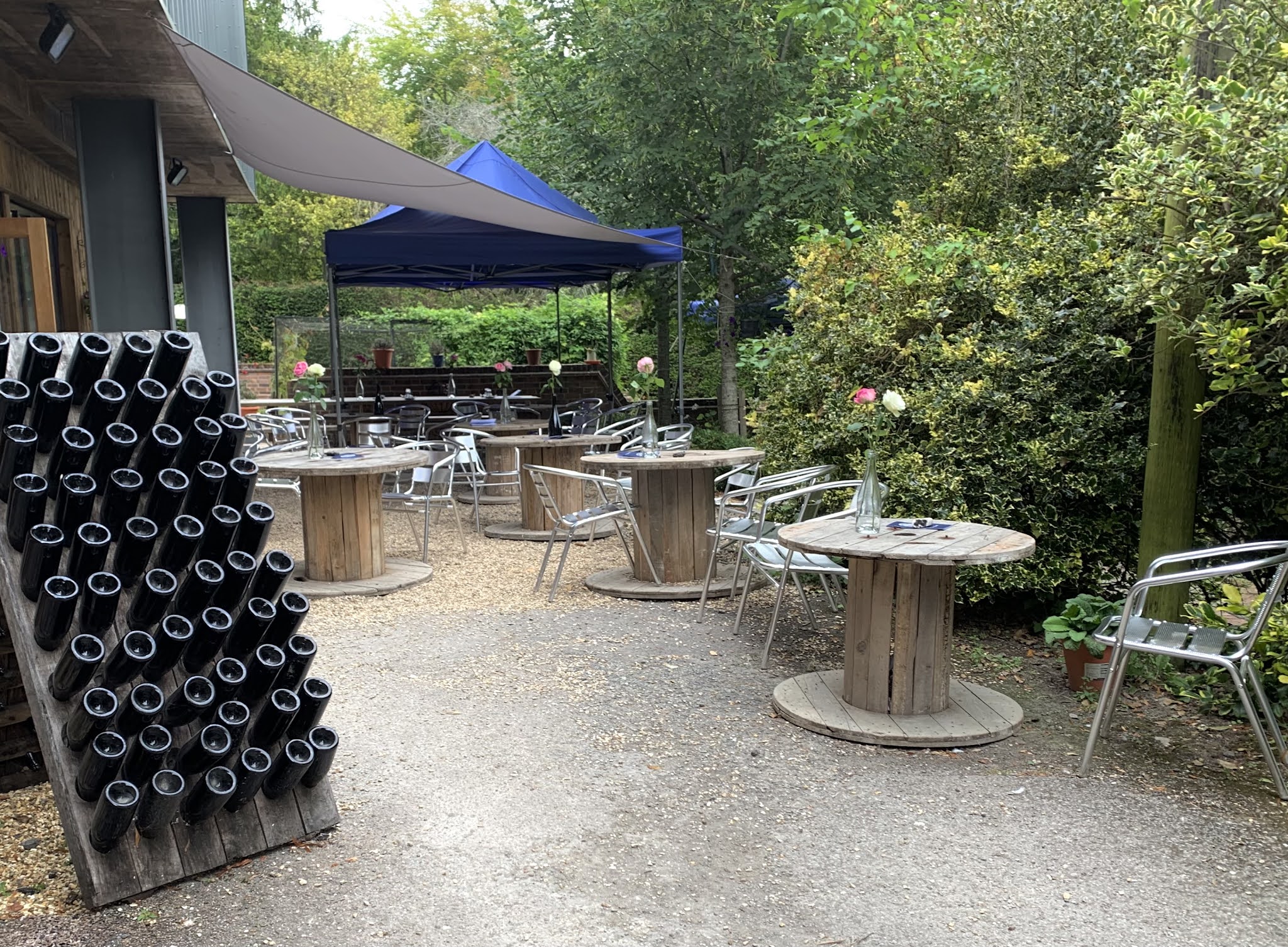
The Hampshire vineyard may have deeper pockets, however. A beautiful new building is rising at the side of the old winery that already holds cellars beneath ground level and will soon grow to include a new tasting room and a fine-dining restaurant on the top floor that will have spectacular views over the valley. I feel another outing coming on … just need a boutique B&B in Hambledon village to recover from the effects of a sparking wine-based tasting menu