Showing posts with label venice. Show all posts

Saturday, 31 August 2024

Atmospheric Torcello offers a unique calm; just defend against the killer mozzies

Torcello is a ghost town. It may be lacking the tumbleweed and swinging saloon doors that typically come with that description, but it shares the same sense of sad dereliction and failed potential triggered by the abandoned towns of the American West. They, however, don't have world-class Byzantine mosaics in their derelict buildings. 

Torcello is romantic, beautiful, and ... if you get your timing right ... one of the few places in the Venetian lagoon where you can experience a sense of splendid isolation.

If you’d visited in tenth century, this would have been the busiest place in the whole lagoon, with at least 3,000 residents, grand palazzi, 12 parishes, a thriving ecosystem of 16 religious houses and flourishing trade routes going back to Roman times. When invaders threatened from the east, the citizens of Torcello scouted out islands deeper into the lagoon for greater safety, eventually founding what we know as Venice. Slowly, but surely, they left their original island home behind, taking what they could move with them and abandoning what they couldn't. 

Today, the island is mostly agricultural, with fewer than 20 full-time inhabitants who pop over to Burano … five minutes across a watery channel … to do their grocery shopping. I was on the morning boat with one of them. Current residents include at least two artists who open their studios by appointment, and there's a long history of creatives seeking refuge here.

 Both Hemingway and du Maurier came here to write and included Torcello in their novels. A canal, still well-maintained despite the lack of population, cuts through the island just as others bisect Venice and Murano. There are sill picturesque bridges and a handful of buildings, but there are also abundant views down waterways between vineyards, orchards and grazing fields.

A 10-minute walk from the water bus dock (line 9 spends the day going back and forth between Burano and Torcello) brings you to what was once the town centre. If you are here before 10:30 you may very well be on your own except for a few locals collecting tourist admission fees and manning souvenir stands. Torcello is most often done as a day trip from Venice, combined with Burano and even Murano, and is inevitably the last stop of the day. I didn’t see anything you could call a crowd until after 2pm, when I was thinking about heading off.

Aside from the moody dereliction, most foreign visitors are here to see the inside of the cathedral. Its simple walls protect a mosaic treasure on par with the more famous work down in Ravenna. Mary holds a baby Jesus in the apse above a main altar that looks more like a Roman ruin than a Christian church.The 12 apostles stand beneath her, each a masterpiece of Byzantine craftsmanship. The side altars are slightly newer and more elaborate. 
The real masterpiece is on the western wall around the original door, however, where Christ sits in judgement and cartoon-style registers tell the story of the saved and the damned. 

As ever with medieval art, hell is much more interesting than heaven and I wish the included audio guide went into more detail about the figures that fiends were poking in the flames. My guess is that they were 12th century bad guys; one looked like he might have been part of an Islamic threat, while another had the look of an “anti-pope”. The guide did explain how the Seven Deadly Sins were represented in the lowest two levels; the vision of gluttons forced to find sustenance by gnawing off their own limbs is enough to put you right off your dinner. Over on the positive side of the ledger, it is lovely to see a zoo’s worth of friendly animals being resurrected with the virtuous dead. Clearly these mosaicists felt we’d need pets in heaven.

All of these scenes, front and back, are played out on a rich background of gold. I find it reassuring, somehow, that the exact same techniques of fusing gold onto glass to make the component parts of these masterpieces are still being used today to make jewellery, art glass and posh wine bottles. 

Beside the main church you’ll find a series of picturesque loggias and the octagonal church of St. Fosca. In front of the cathedral and across a little square from St. Fosca is a round water feature, unusually set into the front of the church as if they were built together. I couldn’t find any information on this on site but would guess it's the ruins of an old baptistery. I was charmed enough to sit here for more than an hour drawing St. Fosca and its loggia, never considering the idiocy of lingering next to a pool of stagnant water in a marsh. I was wearing mosquito repellant but the Italian blood-suckers laughed at the inefficiency of my British formula. The next morning the first of more than 50 viscous mosquito bites started rising into blisters. I only survived the rest of the trip my slathering myself with copious amounts of a wonder product called DopoPuntura, and did my best to avoid photos at the wedding we were attending because my arms and feet looked like I had chicken pox. Or worse.

Thankfully I decided to wander a bit rather than adding water colour from that position, or the damage would have been worse.

Just across from the church is the private residence and vineyard of an antique dealer who’s also a part owner of our hotel, Venissa. This is where the vines they’re repatriating on Mazzorbo were discovered. The house and gardens were closed to the public but there are plenty of picturesque photo opps. Just beyond that, across what must have once been Torcello’s main piazza, are a couple of old civic buildings that now house the island’s museum.

There’s a pleasing jumble of bits and pieces here, from the ancient Romans to the baroque with most of stuff from Torcello’s brief, early medieval period in the sun. Assembled by the island’s owner and amateur archaeologists in the late 19th and early 20th century, it’s quite an old-fashioned and quirky collection. There's not much information and no modern attempts at interactive storytelling. I enjoyed it, but doing so probably does require a good base of knowledge to understand what you're looking at. I felt a sinister thrill of terror, for example, when I stumbled upon the two old Bocca di Leone. But it was only my wider reading … most notably Philippa Gregory’s Tidelands trilogy … that gave me the backstory. This is the downside of the exceptionally loose form of democracy that ruled in this lagoon. Government was actually a mostly benevolent dictatorship with ruthless secret police. The lion's mouths covered official post boxes that allowed you to denounce your neighbours anonymously if you thought they were up to no good. There was little legal protection if you got on the wrong side of people in power. Just a knock in the night and disappearing, perhaps never to be heard from again. 

Bigger pieces of sculpture are scattered across the lawn and leaned against the walls outside, like an architectural salvage yard. Most notable is the so-called “Attila’s Throne” … which actually has nothing to do with the marauding hun whose 5th-century threats first drove the population to the defensive possibilities of the lagoon. Historian’s now think it was probably the seat of government for whoever was in charge in Torcello. You can see it, and sit on it, without paying for admission into the museum.

There are three ticketed attractions on the island; the church, the bell tower and the museum. The church is a must. The tower no doubt has spectacular views over neighbouring Burano and Mazzorbo, on to Murano and the skyline of Venice beyond, but it was far too hot and humid for me to consider such exertion. Pleasant as it is, tourists in a hurry probably won’t find the museum worth their while. But if you’re the kind of tourist who's in a hurry, I’d suggest you’re probably not going to bother with Torcello. This is a place for dawdling.

While the foreigners head for the historic sites, the Italians seem to have a different idea of the island. There are three restaurants scattered along the canal between dock and cathedral, all of them with menus that lean towards multi-course fine dining. (One, currently closed for renovation, appears to be a branch of Venice’s favourite Cipriani.) The dress code is still casual and the tables sprawled under vine-covered pergolas or shady marquees, looking out over gardens. The patrons, however, were clearly there for serious dining rather than a quick bite between tourist stops. I get the feeling Italians see Torcello as a picturesque place to go for a long al-fresco lunch. 

There is one place more like a snack bar and rough beer garden, called La Taverna Tipica Veneziana, where those not interested in a big meal congregate. It’s the one closest to the boat dock, has cold beer on tap and clean bathrooms. It’s here that I settled down to paint my take on St. Fosca, unwittingly saving my skin from further attack. Every 15 minutes from around 2pm a new crowd of about 60 tourists marched by on their way to the town square. I drank my beer, watched them go by and smiled at how packed the church I’d sat in almost alone earlier in the morning must be. It was clearly time to go home. I suspect the last boats of the day get uncomfortably crowded. But I remained ahead of the rest, and was back at Venissa enjoying a spritz before the crowd would have left Torcello abandoned once again.

Thursday, 29 August 2024

Venissa falls a bit short of its promise, but is still a worthy choice for a memorable Venetian stay

As a high-concept project, Venissa Wine Resort is fascinating. As a reality for eating, drinking and sleeping, it still has some work to do.

Let’s start with the positives. Its Michelin-starred restaurant is worth building a trip around, its bedrooms offer a comfortable off-the-beaten track base for exploring the Venetian lagoon, and its vineyard is driving a truly fascinating experiment in wine. However ... the wine is no match for others at its elevated price point, the rooms and staffing fall below what you'd expect from the word "resort" or the luxurious promise of their website, and dining at their osteria (a simpler alternative to their restaurant) was disappointing.

WINE
If you’re a wine lover, you can’t help but be intrigued by what they’re trying to do here. A series of modern floods had wiped out the grape variety native to the lagoon. Or so everyone thought. In the early ‘00s Venissa’s owner discovered remnants of those vines on Torcello and decided to try to replant a vineyard on Mazzorbo to make the traditional wine of the lagoon. Yes, you can grow grapes in what is essentially a salt marsh. This is the lowest altitude vineyard in the world. But it only works if you grow a local variety that’s evolved over the centuries to cope with the conditions; shallow soil, occasional flooding and a lot of salt in air and ground. The Dorona grapes are fat and golden, thick skinned and intensely sweet, but you don't have to be an expert to see that this isn’t a heavy cropper. Given that we were on the brink of harvest, and the only source of fruit was the vineyard next to the hotel, it's easy to see why this wine is a rare and expensive thing.

For €65 per person you can get a guided tour of the vineyard and taste four wines … two whites from Venissa’s grapes and two reds of their production from grapes grown in another vineyard in the Lagoon. I found this a better way to understand and sample the wine than taking a punt on the unknown label at €35 a glass from the hotel bar. Our host Luca settled us in to Venissa’s blissfully air-conditioned wine shop to take us through the details of the project. The same Dorona grapes in the same vineyard produce two varieties; the super premium Venissa that develops on its skin for four weeks before aging for at least four years (around €130 a bottle, varying slightly with vintage), and the slightly less lofty Venusa (still €70 a bottle). The Venissa bottles are as precious as what’s in them; hand blown to reflect Venice’s glass making tradition with a label of 24-carat gold fused into the glass and then etched. Each Venissa vintage is distinguished by a different shape of the the golden fusion.

The marketing, design and story make a compelling combination for any lover of wine. And the taste? Citrusy, dry, some notes of spice, pleasantly complex. I couldn’t distinguish that much of a difference … certainly not a double-the-price difference … between the Venissa and Venusa. There are few wines I’d be willing to spend this much money on and, for my tastes, there are plenty in moderate price ranges that could match this flavour profile. The reds were Merlot/Cabernet Sauvignon blends that drank more like sophisticated pinot noirs; light and full of strawberry and violet but with potential for more complex vanilla and tobacco to emerge. Again, pleasant but at a very high price point for what it is, even if the better one continues with the special bottling art, here fusing copper into the glass instead of gold. and pleasant, You’re paying for the experience and the education, however, rather than tasting to buy, and for that it's a worthy excursion.

FOOD
Probably most successful on the experience front at Venissa is its restaurant, awarded a Michelin star for its food and another Michelin green star for its sustainability. The guide introduced its new sustainability award in 2021 and the save-the-planet vibes are the most distinctive thing about Venissa the restaurant. It isn’t vegan, but it is extremely vegetable heavy and everything comes from in, or very close to, the Venetian lagoon. All producers, naturally, are organic. All the proteins on your plate come from invasive species that are hurting the lagoon and its native species. Eating them helps return balance to the environment. Examples include large-mouth bass, imported from America as a sporting catch and now threatening the local fish with their voracious appetites, and blue crab from Asia that arrived along with the ballast in international ships. 
While green positioning had the potential to become overly preachy, the worthiness disappears beneath an onslaught of exquisite food that’s a feast for the eyes and the taste buds. If saving the planet was always this much fun, more people would do it. 

We went for the 10-course tasting menu, manageable because most courses were just a few bites. That bass made up my favourite course; a tartare in a crisp pastry shell covered with a tapestry of vivid micro herbs. The crab was a close second, tossed with spaghetti, a hint of tomatoes from the garden and wild flowers. The ingredients might all be local but the kitchen team brings influences from around the world. There’s a good deal of Danish-inspired fermentation, distinctly North American corn cakes and hints of Japan and Southeast Asia in spicing and sauces. 

Puddings were especially surprising. I never suspected that artichoke leaves could produce something deceptively close to coffee (used in an affogato) or that you could use aubergine in a sweet; in this case as the filling in a mille-feuille. Like the inventive cep soufflé at Ekstedt at The Yard, this is another example of a flavour-carrying vegetable's ability to transform into the unexpected. 

The dining room is in a majestic, restored agricultural building with such generous spacing between the tables and so many servers taking you through your evening I had to wonder how … even at a starry €290/£250 per person for the dinner and wine flight … they were making any margin. It’s actually quite good value for money against an equivalent experience in England, and the inventiveness of the cuisine is definitely worth going out of your way for. 

The osteria also attached to the hotel is, however, a disappointment. When the same management does Michelin-starred fine dining and a casual, less expensive option, you want the two to be strikingly different. The osteria here feels like an afterthought to the restaurant, and not its own entity, serving up cheaper variations of the tastes next door but without the theatrical service. Having revelled in the vegetal invention, fascinating proteins and modern approaches, on the next evening I was ready to settle in to some traditional Venetian favourites. That's what you assume you’ll get at something called an osteria in the middle of the lagoon, but that's not what's really on offer. While it might have been less expensive than the night before, it was really just a pale imitation of what we'd already done. At £90 per person for dinner and drinks we’re confident we could have done better with a 10-minute walk over to Burano for some heartier, simpler cuisine. (We didn't manage to bring in Burano's Il Gatto Nero, our favourite meal of the trip, under this price point, but that's because we had an embarrassingly profligate evening. With more modest ordering and drinking, you could easily beat the Venissa Osteria's pricing there.)

STAY
The third element of our Venissa experience was the stay itself. This is a “restaurant with rooms”, something I suspect is essential to running a Michelin-starred eatery here as the only transport is by boat, the public water buses stop running before dinner’s end and a private taxi back to Venice will add 30% to your dining bill. You might as well just stay. There are five rooms here and 15 under the same management in houses a short walk away on Burano. (Most of our fellow diners were Italian, but I doubt any were local to the islands.)  

We loved the location next to the vineyard, 50 metres from the Mazzorbo water bus stop and a 10-minute walk to Burano. It’s the only tourist business on this tiny island, so it really feels like going local. The whole place is quiet and relaxing. While the osteria didn't impress us at dinner its location ... essentially a large, screened pavilion next to the vines ... made for a hugely picturesque breakfast spot.

The views from our room over a canal to a couple of miniature palazzi were fabulous, and the air conditioning was fantastically efficient. (It was 30c every day and extremely humid, so that last bit was critical.) But by branding themselves a “wine resort” with a website screaming luxury they were making promises they can’t keep. With so few rooms this is, understandably, not staffed as a hotel would be and there’s often no staff around. The experience is more AirB&B than hotel. Admittedly, for just under €200 a night it’s not luxury pricing, so it's less a complaint than an observation about perception versus reality. But I still would have expected better mattress and pillow quality. The 3-star business hotel my husband stays in during his working week charges a third of the price offers a much better night’s sleep on bedding that feels far more luxurious. In the bathroom, water pressure is poor and anyone approaching 6 feet will have to crouch beneath the shower head to get clean. The last isn’t a surprise in an old property, and may have something to do with their green credentials, but but again isn’t in tune with the promise of the hospitality they’re marketing. 
Bottom Line: If you’re a foodie, I’d definitely recommend the Michelin-starred dining experience. If you're eating here it’s worth the convenience of staying over the restaurant. Just adjust your expectations for a more basic accommodation than the marketing implies. If I were to return to this part of the lagoon for more than one night, however, I’d check out other options on Burano. It's clear they are limited, however, so I’d guarantee air conditioning and try to find some testimony about better beds before I gave up the relative safety of Venissa. On the wine front, I don’t think their production tastes as premium as its lofty price tag, but if you’re interested in viticulture and wine marketing it’s worth doing the wine tasting. However long you stay, don’t bother with the osteria here. Walk over to Burano for a more traditional experience, particularly at Il Gatto Nero.

Tuesday, 27 August 2024

Mazzorbo and Burano offer uncrowded Venetian magic; Il Gatto Nero the lagoon's best restaurant

I have been blessed to visit Venice at least once a decade since the ‘70s, when my wide-eyed 12-year-old self drank in the romance of a gondola ride in an empty canal, revelled in getting lost in back lanes and imagined the terror of being led to a prison cell over the Bridge of Sighs. And while I’ve enjoyed all the trips that followed, none were as good as that first one. That’s because, tragically, Venice has been “Patient Zero” for the ever-growing epidemic of overtourism. Each decade has brought the place a little closer to a shoulder-to-shoulder, Disney version of itself, until I swore that I was giving up. I’d treasure my memories of a better Venice, and leave La Serenissima’s modern lanes to the crowds.

But then came the opportunity to fly in and out of Marco Polo airport for a wedding we’d be attending. All over England I’d watched the masses flock to the usual suspects while nearby sights … often of equal historic and artistic significance … were almost empty. Might the same be true of the Venetian lagoon? I’d never been north of Murano, and had only been on a handful of the more than 30 inhabited islands. Could I recapture the magic of the Venice of my childhood on a neighbouring isle?

Yes.

Mazzorbo and Burano have captured my heart, and given the state of Venice these days I’d advise even first time visitors to stay here and travel into the main city for sightseeing, rather than the usual reverse day trip. Tiny Mazzorbo has a population of less than 300. On a morning stroll around the island you’ll pass locals returning from their grocery shop, and be passed by others on their morning jog before going to work. The main language in the air is actually Italian. Small as it is, the island still exists for its residents and not for the visitors who drive so much of the lagoon’s economy.

Burano, population 2,800, is more crowded and more obviously driven by tourism. But even here in high season, it’s manageable. Visitors share restaurants with locals. Shop keepers are still pleasant and willing to engage in conversation. There’s evidence of both older people and school-age children, the two groups that tend to disappear first when tourism becomes so all-pervasive it drives out everything else. If you wander around before 10 or after five, you're amongst a handful of tourists surrounded by people who actually live here.

I realise that the mere act of writing this endangers the magic I’ve found here. But these islands aren’t for everyone. They’re quiet, there are limited things to see and it’s more complicated to get here. Hotel and B&B options are limited. While there are AirB&B options, in Venice they’ve contributed to pricing locals out of the market, so they’re being watched carefully here. The effort and limited supply mean it would be a waste of time to stay here for less than two nights. And none of these locals are under any illusion: you are still a tourist and tourism still drives the economy. It’s just in better balance than the behemoth 40-minutes by ferry across the lagoon. 

We’re staying at Venissa, branded as a “wine resort” and definitely a bit of a splurge, but I’m happy with the choice. (See full review here.) A brisk stroll takes you to the tourist heart of Burano in less than 15 minutes. But turn the other way, and explore the rest of Mazzorbo rather than crossing the bridge, and you’ll discover an island almost entirely residential. I only spotted one other restaurant outside of the confines of Venissa. The views are exceptional. There are pretty canals lined with colourful houses, farm fields, and long views off the island towards the marsh, other islands and the majestic towers of Venice on the southern horizon. 
To the north, the outline of almost-deserted Torcello beckons. On a weekday, the aquatic traffic alternates between the water bus line coming up from Venice and the delivery boats that bring much of the islands’ everyday needs, but on Sunday they were full of Italian families out on small boats for a day of fun.

Neighbouring Burano’s claim to modern fame is its colour scheme. It’s one of the most colourful places on earth, with every house painted a different shade with white window frames to make them pop. Nobody’s going for subtle earth tones here: vivid purples, electric blues, Barbie pinks, emerald greens and Cabernet reds shout for attention. It should make your head hurt, but the terracotta tile roofs bring unity while the gray stone and red brick of the pavements and the blue/green of the canals offer a soothing backdrop. The array is actually carefully planned by local government; any change of shade needs to be authorised. In this way, the densely packed area … less than a square mile … keeps its rainbow charm. 
Much like Venice but on a vastly smaller scale, a main canal winds through the island. It’s along this, plus one broad street leading to a piazza and the church, that the majority of the sightseeing is on offer. 

Before the Industrial Revolution allowed mass production, Burano was known for its lace. The women of the island made it while the men went fishing to feed the nearby city. There’s little modern demand, or willingness to pay for the vast amount of time needed, for hand-made lace. What’s left of the trade does allow some excellent shopping if you’re interested in sumptuous table linens, bridal veils or lace Christmas ornaments. There’s a museum of lace making on the main square, but the only place I actually saw anyone making anything was in the exceptionally upscale Martina Vidal, where a lady’s exceptionally deft fingers belied her obviously advanced age.

There’s also a generous spill-over in glass making from nearby Murano. Burano doesn’t have the big workshops producing large pieces like art glass or chandeliers, but there are more than a dozen shops with a workbench at the back where locals make beads, pendants and small figurines. Glass reproductions of fruit and wrapped candies are abundant. One shop stands out: Andrea Senigaglia. He fuses gold leaf onto the surface of glass, then etches designs into the metallic surface … from simple letters to a virtuoso copy of Caravaggio’s Bacchus etched into a golden bottle. 

You’ll also find a sprinkling of Venetian mask shops and, in a fusion of two islands, lace versions of the classic carnival wear. I saw enough similarity between the examples in different shops to question whether these were hand made or important from some cheap factory to the east. Let the buyer beware. 

Window shopping is delightful, and there are abundant local restaurants to fuel your efforts. The real joy of Burano, however, is stepping off main lanes and wandering around the purely residential bits. Some of the houses are new and eye-watering lay bright. Others have mellowed and are in a state of gentle repair. All are a photographer’s paradise and, unlike Venice, will reward the patient photographer with a people-free shot without too much waiting. 

The food here is also far better than the Venetian standard, which so often is average at best. I suspect the difference is that restaurants on Burano need locals to come back if they're to do anything more than a lunch trade, so they can't afford to fob anyone off with overpriced or average. So even the spots we stumbled into without any planning ... octopus salad and pesto trofie at Da Gigetto, just off the main square; cocktails at In Piazzetta on that square (and owned by an American who's gone local); or a beer and some cicchetti at Picnic, looking over the water to the skyline of Venice ... were tasty and good value. 

The best meal by far, however, was one we'd planned. Because despite being off the beaten track you're unlikely to get into Il Gatto Nero without a reservation. I learned about it because one of my favourite chefs, Angela Hartnett  ... English but of Italian descent ... says it's her favourite restaurant in the Venetian Lagoon. (You can read my review of her London flagship Murano here.) If Angela said that, and we were staying a short walk away, we had to go. She was, naturally, right.

Though there's a large dining room inside, on summer evenings all the service happens at tables along the canal outside, which is otherwise residential and silent after 6pm. We were the last table along the row, giving us nothing but twilight scenery in one direction and the occasional gliding of fishermen's boats coming home behind us. It was one of the most romantic settings for dining I can remember, and would have made for a memorable evening even if the food had been average. 

But it was well beyond that!

We were lucky enough to strike up a conversation with owner/manager Massimiliano Bovo on arrival (we didn't know who he was at the time), and the combination of our mentioning Angela and our obvious enthusiasm for food and wine meant he took a special interest in us all night. Prompted by his delightful banter ... in a broad Scots accent he'd picked up while living in the UK ... and the magic of the evening, we told him to choose for us and bring out whatever was best that day. After which followed the kind of meal that features in Italian fantasy ... combined with the kind of gluttony that land people in the third circle of Dante's hell.

There were little rounds of polenta topped with bits of seafood to pique our appetite. Hearing that my husband's tomato allergy kept him from having the crab dish at an earlier meal, Massimiliano made sure we had the best of the local crab to come out of the lagoon that day. Risotto came with a helpful conversation about the techniques that made theirs so good, and a packet of their favourite rice to take home. There was a plate of spaghetti with lobster, taken to another level by a crown of fresh courgette flowers. Admittedly it's not usual to have risotto and pasta at the same meal, but Massimiliano clearly recognised me as a woman who's partial to the magic of carbohydrates. Yes, of course we were full by this point, but out came a magnificent sea bass baked in salt with a few seasonal vegetable sides.

The tiramisu ... a dish I rarely order in restaurants because it's normally just wine soaked biscuits and whipped cream ... was the only one I've ever tasted that matches the labour-intensive but delicious, zabaglione-laced recipe I use at home. I admit it. Il Gatto Nero's was even better. All of this was washed down with an excellent local white wine. It was a profligate meal and I could hardly move by the end of it, between the distension of my stomach and the fact that the majority of my blood had clearly been rerouted to work on digestion. But, my god, it was good. Forget St. Mark's Square. The Doge's Palace can wait. Even the rainbow of Burano houses pales in comparison. If there's one "must do" in the Venetian Lagoon, I think it may be eating here.

I’m content to leave the big city of Venice and all those crazy crowds to my memories. Mazzorbo and Burano are a welcome reminder that there are plenty of joys still to be explored in the Venetian Lagoon. You just have to sail off the beaten track. And come hungry.

Friday, 25 February 2011

Da Rioba tops list of Venetian restaurant finds, but avoid eating at Hotel Dei Dogi at all costs

As a general rule of thumb for Venice, the further you get from St. Mark's Square, the better the food will be. (With an exception for the area immediately around Piazzale Roma and the train station, generally filled with execrable places taking advantage of hungry new arrivals who will never return.)

In the main islands of the city, your best bets tend to be in the districts of San Polo and Cannaregio. If you're staying in the main mass of tourist hotels around the Rialto or in San Marco, this may look like a daunting walk. Once you get the hang of navigating the city, however, nothing is more than about 20 minutes away. Trust me, it's worth it. Get into the areas where the natives actually live, and you'll find places serious about the food because they need their regulars to come back.

Our top find for this trip was Ostaria Da Rioba, at Fondamenta de la Misericordia 2553. As with most of the best places here, it's tiny ... about 10 tables ... so essential to book. They put additional tables on the pavement in nice weather; they're on a lovely but almost entirely residential canal with wonderful views. The menu is varied with both fish and meat dishes (the latter being more unusual in Venice) and the preparation leans toward the gourmet. The service is fantastic; English-speaking waiters know the details of dishes and aren't afraid to make recommendations, both from the menu and the wine list.

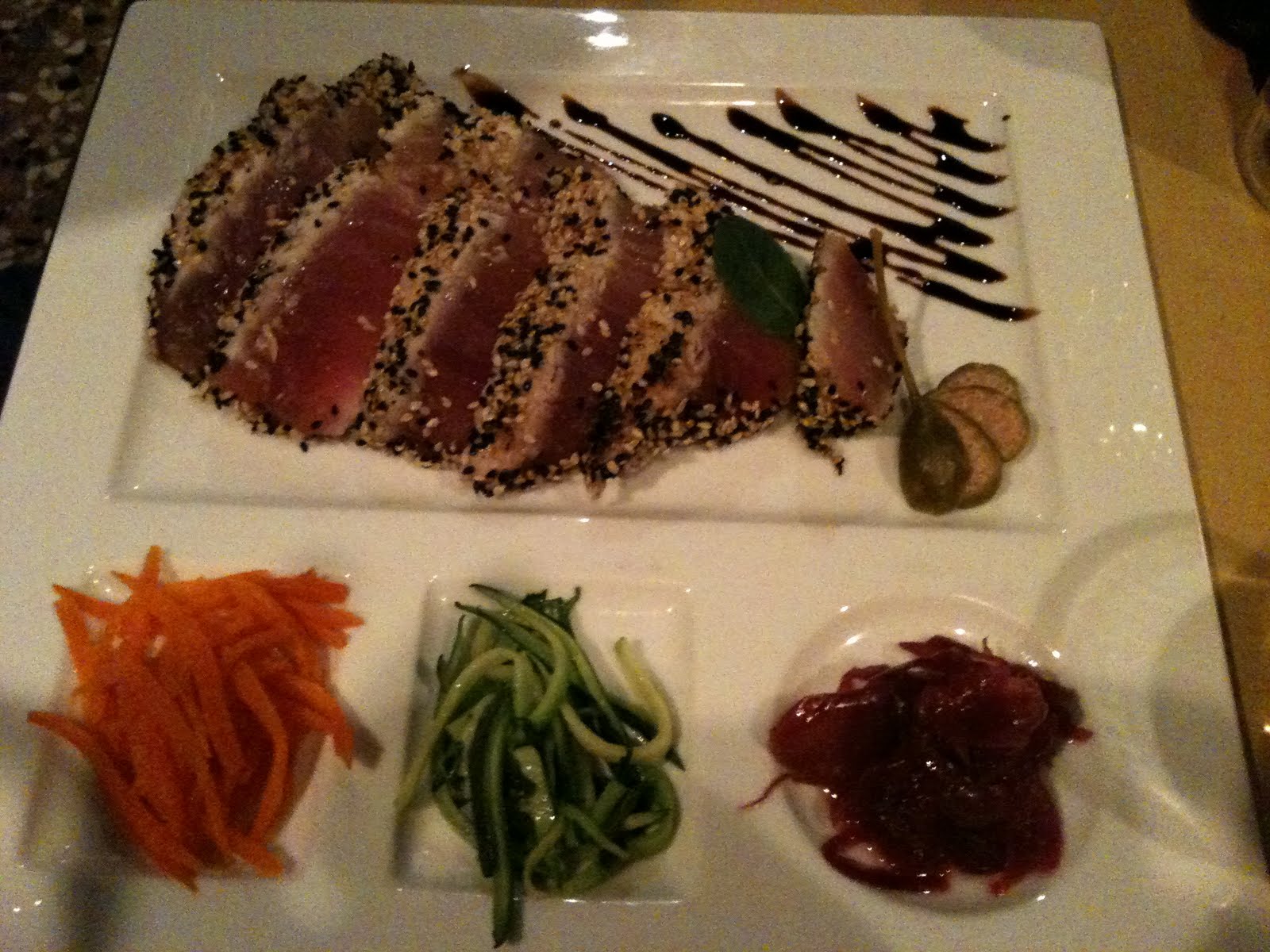
Piers started with a most un-Venetian goose carpaccio with mango jam, baby salad leaves and candied walnuts which was the clear winner for this course. My spaghetti alla seppia, with a black sauce made from cuttlefish and their ink that's one of Venice's most classic dishes, was delicious but lacked the novel delight we got with the goose. We both triumphed with the mains: Piers with a gorgeous piece of tuna crusted with black and white sesame seeds and grilled perfectly so that it was still very rare at its centre, me with melt-in-your-mouth goujons of lightly battered turbot served over a pile of grilled baby artichokes. On the side we'd ordered a spinach salad with pears and walnuts, also gorgeous. This was all accompanied by the waiter's wine choice, a 2009 collio bianco from Edi Keber, a Friulian who doesn't export much. Decanter magazine gives it five stars and says "ample fruit and floral aromas, soft and full bodied with a long tasty finish." Yes. A second bottle was a must. Which means that neither of us can now remember what I had for dessert, other than to say it was great. (Piers had the first of many tiramisus; every restaurant tells you theirs is unique) I suspect if those particular brain cells weren't killed by the wine, they were done in by the complimentary grappa the waiter brought at the end of the evening. The whole meal came in at £140 which is, of course, not cheap, but good value for three courses each and two bottles of excellent wine.

The runner up prize goes to Osteria Da Alberto, on calle Giacinto Gallina not far from Zanipolo. Less elegant and more homey than Rioba, its handful of tables are scattered over two rooms. At the front there's a bar where locals pop in and get sandwiches and snacks to eat while chatting with the proprietors; most of the starters and desserts are dished up from here. I started with sarde in saor, a Venetian classic from the days before refrigeration. The fish are breaded and deep fried, then marinated in a sweet and sour vinegar with lots of onions. It's not a dish for the faint of heart, and I have to say that the Danes win the pickled fish contest by miles. But you really should try the dish while you're here, and Alberto's was an excellent example.

Piers started with a dish of tiny gnocchi in gorgonzola sauce. Delicate and rich, this combination of two of his favourite ingredients ... potatoes and cheese ... had his eyes rolling in delight. He went on to a fillet steak, cooked rare as he requested and served on a bed of balsamic dressed rocket, while I had the spaghetti al mare. It's tough to avoid the latter dish in Venice, as just about every restaurant does it, but this was a particularly good example loaded with fresh seafood and delicately flavoured with garlic, oil and excellent tomatoes. We had another excellent wine here: Marco Scolaris' pinot nero from the Collio region was the kind of fruity yet light red that can easily cross over between meat and fish.

Next on the list is Anice Stellato (Star Anise), on Fondamenta de la Sensa. It is the closest restaurant to the Hotel Dei Dogi, and one that's been in the guidebooks for a while. I'm fairly sure we ate here on the Northwestern Girls' trip in 2001, something I didn't remember until I got inside and was almost certain I'd been there before. A bit bigger than either of the restaurants above, Anice Stellato spreads over three rooms with a bar anchoring the space between the first and second. While Rioba looks like a slightly trendy local wine bar, Alberto like an un-improved workers' lunch spot, this place is a more consciously modern restaurant, with stripped wooden floors, bare wood tables and lots of modern art. The food was good but the service less so, something you'll see reflected on their Trip Advisor reviews. We couldn't get in on our first night, so made a reservation for 9 on the next.

Our table was waiting when we arrived but service was slow ... after a long delay posy starters the waitress removed our bread basket and handed us dessert menus. I'm sure they forgot the second half of our order. Because of the delay, we were the last people in the restaurant and while we had dessert the staff was changed to go home, sat in the front room, had a good gossip and generally forgot about us.

The food might have made up for it but for some sloppy mistakes in the kitchen. We started with a little ciccheti ... the Venetian take on tapas ... of prawns in saor. A more delicate and enjoyable taste than the sardines, but this is never going to be my favourite way to prepare a prawn. Piers' first course was tagliatelli with locally caught spider crab and zucchini, which he pronounced excellent but for stray bits of shell in the dish. My bucatini in a light tomato sauce with smoked tuna was good, although I'm not sure I'd do that combo again as I felt the sweetness of the tomato and the smoke of the fish were actually battling with each other; a cream sauce would have been better. When the mains finally arrived, they were average. Piers' lamb rolled in pistachio had potential, but had been cooked too long for much taste to remain. My swordfish steak was beautiful, done with lemon, butter and breadcrumbs and melting in the mouth, but the plate beneath it was swimming in far too much butter and the potatoes that accompanied it were bland and unattractive. I'd try it again if staying at the Dei Dogi, but I'd book well in advance so I could be there with the main dinner crowd, and I'd be much more assertive about how my mains were cooked.

One place I would NOT, under any circumstances, eat again if staying at Dei Dogi is Dei Dogi itself. We reserved a table in their small dining room for Valentine's Day dinner, figuring it would be convenient not to leave the hotel and responding to a great looking Valentine's Day menu in a brochure left in our room and promoted at the front desk. We should have been warned when the front desk seemed surprised that we wanted to eat in the restaurant, offering to book us a local place instead. Our first surprise that evening: No sign of the promised menu. What was on offer bore no resemblance to the brochure, and was an odd selection of dishes all in a jumble rather than broken into starters and mains. Second surprise: The window table the hotel manager had specifically walked us into the restaurant that morning and told us he'd save for us was already occupied. The service at Anice Stellato was world class compared to here, where one man alone was working the nine tables of the restaurant and the hotel bar. We waited almost an hour between starters and mains. Third surprise: The biggest bill of the trip ... over £200 ... for the least amount of food and wine.

We split a decidedly mundane carpaccio of over-marinated beef which I suspect had also been left out longer than health standards would say is wise. (Piers' stomach was not its usual robust self the next morning.) Piers had badly overcooked tuna; the "tartare" of courgettes on the menu arrived as diced aubergine and potato. My mixed platter of fried local seafood was lukewarm and uninspiring. At least the wine the waiter recommended was good, but at 45 euro it should have been. At that price we paced ourselves and kept to one bottle, a challenge since the creeping service meant our dinner took more than three hours. Still trying to make it a special evening we tried for dessert. Piers' plate of local cheese lacked diversity and had too many hard, sharp varieties that are better cooked with than eaten alone, and my tiramisu ... really the only appealing thing on the menu since they were out of the chocolate fondant ... was well below what I can whip up myself at home. A final insult: they refused to serve tap water. Bottled only. That, my friends, is simply blatant extortion. And after all those indignities, it took another 20 minutes to get the bill.

Sadly, the outrageous rip off off the restaurant countered the great deal we got on our room, and left me with both a literal and figurative bad taste in my mouth. While I still recommend the hotel, based on that experience I will be shopping around for other options for my next visit. Fortunately, I have the memory of the other restaurants to remind me that you can dine well in Venice, with enough research and planning.

Monday, 21 February 2011

Zanipolo tops new and surprising sights in this Venice trip

Venice's glory days were the Middle Ages and the Renaissance, when the world's riches throbbed through its markets and the ensuing profits made the Republic a power to be respected. These are the centuries that gave us most of the city's architectural and artistic masterpieces. I, however, love Venice in her decline.

By the 18th century she was without political power and world trade was flowing through other channels. This, however, was when the rest of the world fell most in love with her. English aristocrats flocked here on their grand tours, Goethe wrote descriptions that drew early tourists and anyone with money who wanted a fast, decadent life with great clothes and an exotic mask could rent a palace and live the dream.

Ca'Rezzonico, an impressive palace on the Grand Canal, exemplifies this age. Not completed until 1756, it's hundreds of years younger than its neighbours and strikingly different in its neoclassical regularity. A few years after completion, a family member became Pope and another made a fabulously prosperous marriage. At the time, the combination made this palazzo one of Venice's most significant places to be seen. It's thus wonderfully logical that it's now a museum to Venice in the 18th century.

While there's an interesting collection of paintings and some impressive pieces of furniture, the real thing to see here is the palace itself. The main rooms wind around a piano nobile of exceptional height. You enter on the side away from the Grand Canal, climbing a magnificent white marble staircase to arrive in a ballroom covered with some of the most magnificent tromp l'oeil (fool the eye) paintings you'll ever see. Billowing draperies, columns, balconies, gods and putti thrusting their limbs into the room all look real, but are simply illusions created with paint. There follows a procession of rooms with grand ceilings, most with more frolicking deities and fat baby angels who hover over slightly more restrained classical interiors. At the front, two salons and a great hall look over the Grand Canal. Here the decor is a bit less flamboyant, if only because it's hard to compete with the picture postcard views out the towering windows.

There are two more floors, mostly filled with paintings. Here the architecture is less grand, but still worth a wander. Though of great architectural and historic significance, Ca'Rezzonico is a second tier museum in this city and sees far less traffic than the main sites; we were alone in many rooms and never had more than six people for company even in the biggest spaces.

Another blockbuster without a lot of tourist traffic is La Fenice opera house. This is certainly, in part, because it's very expensive (8 euro) for the little bit you see, and not on the Venice Card scheme. Thus only the dedicated are there. But for either the serious opera fan, or those who wonder at architectural re-creation, this is a must see. The place couldn't have a better name. Fenice means phoenix, and this theatre has, like its avian namesake, risen from the ashes more than once. The most recent fire destroyed the entire theatre in 1996. Fifteen years later you'd never know it, as the whole place has been rebuilt to the exact details of old.

Tourists get an audio tour with their admission that talks them through the history of the building and the story of the latest restoration. You get to explore the entry foyer before going upstairs to look at an impressive model of the building inside and out. After that you can settle into a seat in the royal box to take a good look at the theatre itself. The box is so opulent, with its gilded putti, baroque woodwork and copious mirrors, that it actually takes a moment for you to look beyond. You then see an impressive galleried space around a traditional stage, topped by a ceiling painted to look like a dawn sky. A few frolicking deities seem to have flown over from the Ca'Rezzonico. The colour scheme is actually a bit off-putting: pink, light blue, white and gold, it is feminine bordering on what the English would dismiss as "twee". But it's of its time (the 1830s), and would no doubt be a great place to see and be seen while enjoying a performance. I don't know if we were lucky, or if this is a regular feature, but a pianist was practicing on stage while we were there, which added greatly to the atmosphere.

Once you tear yourself away from the theatre, you can explore a series of reception rooms at the front of the building used for entertainment during the intervals. Clearly, they also do a fair amount of corporate entertaining here, and the ballroom at the end of the complex is used for smaller concerts. If you can't get to a concert here, then paying to take the self guided tour is an excellent second best.

Venice's naval museum was another new sight on this visit and, I'm afraid, a rather disappointing one. You'd expect a former maritime empire that derived all its fortune and power from trade over sea routes, and whose capital works on water rather than roads, to have one of the best naval collections on Earth. And it might, if it had several million to invest in installation, explanation and the building itself. Alas, this is like so many of Italy's museums: a treasure trove of great stuff bundled together into a crumbling building with little staff and only the barest, dry and academic labels for what you're looking at. (And yes, my Italian is good enough to tell you that the locals don't get much better than the English translations.) Its organisation is also confusing, as you're confronted with World War II upon entry ... let's face it, not Italy's finest hour, although Piers said the manned torpedo on display was actually justifiably famous ... and don't get to the glory years until you're upstairs.

It is, however, worth the making the effort for the model of the Bucintoro alone. One of the most lavish crafts ever built, probably second only to the legendary barge on which Cleopatra seduced Mark Antony, the Bucintoro was essentially a floating version of the Doge's palace. It represented Venice's special relationship with the sea, and played its biggest ceremonial role on Ascension Day, when the Doge, the most important members of court, ambassadors and special guests would board to be rowed into the Adriatic, where the Doge would throw a golden ring into the sea to "marry" her for another year and proclaim his dominion. The model is meticulous in its detail, showing the parquet floors, stately throne, lavish sculptural carving and typically Venetian levels of gold leaf. You'll wish you could, Alice-in-Wonderland-like, sip some potion to shrink so you could scramble around inside it. Alas, you'll just have to stand behind the glass and gawp.

The museum has many rooms of detailed ship's models, and a good collection of full-sized gondole. (Yes, I spelled it right. That's the plural of gondola.) A good example of the poor labeling ... it's from the Rough Guide, rather than anything in the museum itself, that I learned the reason for so many, and such exact, models is that the craftsmen in the dockyards worked from these rather than any kind of blueprint. Make sure you get to the gondole rooms, where you'll see the range of craft from the workday basics to the lavish private boats built to take aristocratic families to grand social occasions. (Even in the 1830s, when they were building La Fenice, they insisted on both a water and a land entry, as the most fashionable would make a grand arrival by gondola.) Also look out for the model of the clever lift system which surrounded a ship and elevated its draft, allowing heavily loaded vessels of the 18th and 19th centuries to get into the shallow lagoon. You'll also find galleries of naval costume, sea shells, ship models from other countries, even a Swedish room dedicated to Vikings and several artistic and military partnerships between the Swedes and the Venetians (who knew?). With limited time, however, you're best to stick to the highlights mentioned above.

My last new discovery was a trio of magnificent churches. The blockbuster amongst them was the basilica of Santi Giovanni e Paolo (known in the local dialect as Zanipolo), a place which, I'll admit, it now embarrasses me to say I didn't even know existed. It was a shocking hole in my art historical knowledge of the city, because Zanipolo should be on anyone's Venetian top 5. A vast Gothic church, its undecorated ceilings and large windows make it lighter and less claustrophobic than the heavily decorated St. Mark's. But don't imagine you'll find austerity. This is the burial place of most of the doges, and almost every inch of the wall space is filled with grand tombs. Most are monumental sculptures. A few are painted. (There are some fine Veroneses.) One portrays the grisly story of a doge who was captured by the Turks and flayed alive; his dried skin is preserved in the urn near the top of the memorial. Outside, don't miss the ornate marble facade of the building next door. It is, believe it or not, the hospital.

That same treatment of marble ... multi-coloured yet symmetrical, ornate yet ordered in its Renaissance sensibilities ... is the most memorable aspect of the second of our church discoveries, Santa Maria Dei Miracoli. It's a small place compared to Zanipolo, remarkable because the interior has the exact same marble walls as outside. It's a striking yet calming effect, which therefore doesn't distract you from the church's most unusual architectural feature. The altar is raised a full story above the rest of the church, up an awe-inspiring white marble staircase. It's so ancient Roman in its influences that you almost expect Augustus to emerge at the top to welcome a triumphant general home. Instead, you get a lovely but unremarkable statue of the Madonna and child that was reputed to work miracles, hence the church's name. The only thing that throws off this vision of classical elegance is the ceiling. Don't look up, if you can help it. The barrel vault is dark wood of many coffers, each painted with a different scene. As if that Venetian tendency for excess took over at the end and the architects said "well, we have to cover something with ornate bits and bobs."

The final church that gets a nod is Madonna Dell'Orto, located conveniently next to our hotel thus un-missable. It's probably not worth going out of your way for, but if in this area, it's worth popping in to admire its austere (for Venice) Gothicism and its excellent collection of Tintorettos (he's buried here).

So there you are. It was my fifth trip to Venice. I had four days. I managed to explore six places I'd never seen before. And the best part? There's still a generous list of museums, palaces and churches into which I have yet to set foot. Now that's a city with hidden depths.

Sunday, 20 February 2011

Venice's "must sees" are familiar, impressive ... and cleaner than they used to be

You know it's been a while since you've been someplace when they manage to build a whole new airport in your absence. It's a bit disconcerting.

I always liked arriving at Venice's tiny, old world airport where you walked straight out of the terminal and onto a boat dock. But no worries. Venice, I assured Piers, was the most unchanging of all European cities. The one almost untouched by chain restaurants, where all the stores were local and all the sites hadn't evolved much since Ruskin wrote his guide. Then I cleared the sparkling new immigration area and saw the big poster for the Hard Rock Cafe. Was I about to be proven wrong? Had Venice sold out?

Mostly not, although there are a few more touches of modernity here. In addition to the Hard Rock, there are two McDonalds. But on the whole, this is still a place into which the modern world has barely barged (you'll find almost no free wi fi; I haven't been that out of touch in years), and where you're going to be paying attention to the same things your grandparents did. The biggest difference these days: things are a lot cleaner.

Everything around the hub of St. Mark's square is in the middle of a major restoration campaign. It's a bit disappointing for the first time visitor, as many of the elegant facades along the sides of the square are under scaffolding and the base of the bell tower is a construction site hidden behind fences. It's definitely not a Canaletto view at the moment. But work is finished on both St. Mark's cathedral and the clock tower to the left, producing a shocking transformation. The church was always a bit overwhelming and garish in its decorative profusion, but you didn't get much color. Mosaics and sculptural detail rose out of a dull gray stone. Now you can see that all the flat surfaces are different color marbles, from the palest pastels to deep reds and greens. There's no symmetry at all, of course. Every column is a different shade. One expanse of wall might feature 10 different marbles. It's impressive, lush, beautiful and a bit ugly all at once.

Much more restrained is the clock tower, an amazing piece of 15th century engineering. It's gorgeous golden dials, pointers and symbols on a bright blue ground show you not only the date and time, but moon phase, what symbol of the zodiac you're under and all sorts of arcane astrological details. Up top, two larger-than-life metal shepherds swing mallets against a big bell to ring the hour. This is all set within, or upon, an elegant construction of white stone that's now dazzling in its cleanliness.

White is not a colour you see much once you get inside the famous church next door. Gold dominates, and those early Christian mosaics, fresh from restoration, are sparkling like a pile of newly cleaned jewelry. There are so many things to look at in St. Mark's, it's hard to know where to start, and nearly impossible to rest your eye on just one thing. The ancient mosaic floor is justifiably famous. Every inch of wall space is crammed with mosaics, monuments or sculpture. There are side chapels, rooms of relics, a treasury, opulent hanging lanterns, highly decorated domes and, of course, hundreds of milling tourists. Frankly, it's a place you can't stay for too long without being completely overwhelmed. I find it wise here to concentrate on a handful of details each visit, as it would take years to actually take it all in. Piers was pushed over the edge by the little room filled with more than 100 reliquaries. (According to The Rough Guide, it's rarely open. So we should consider ourselves lucky.) Toes, locks of hair, bone fragments, bits of the true cross, the stone that martyred some saint. It was all too reminiscent of the worst excesses of the pre-Reformation church. Protestantism rose in him and we decided it was time to check out more secular delights.

The logical next step is the Doge's palace. St. Mark's was, after all, simply the Doge's private chapel for much of its history, rather than the official cathedral. Which should immediately clue you in that you're unlikely to find humility or simplicity in the man's house, either. The palace is interesting in that it's both the home of an elected official and the seat of government. For most of history the Doge didn't actually have much power. He was a figurehead and the brand ambassador for one of the world's most impressive trading empires. Everything about the place is built to impress: the Doge's quarters to awe visiting ambassadors, the huge assembly halls to remind the younger governmental members of their place, the smaller rooms of justice to make citizens quake and bow in awe of the all powerful committees of state. You wander through so many rooms here that, like the church, your eyes start to dull. But it's a rich feast. Magnificent carved or plastered ceilings, some in dark wood, some painted, some gilded. Some all three. There are many impressive paintings, most of them exceedingly large propaganda pieces designed to promote Venetian power or capture its glorious moments of history.

The most jaw dropping room is probably the sala del maggior consiglio, one of the largest rooms I think I've ever been in. It was built to hold a meeting of every man entitled, by his family's entry in the official "golden book", to the ruling classes. By the mid 16th century this was around 2500. Tintoretto's amazing Paradiso is the largest thing in a room of massive paintings; it features 500 individuals all painted in detail. My favourite room, however, is the salla della scudo, a long reception room decorated with frescoed maps of all the places in the world with which Venice did business. (They're later copies of the 15th century originals.) It's a fascinating world perspective from the time of Marco Polo. There's a passable armory; not nearly as good as the one at the Tower of London, but useful for re-capturing the attention of boys whose attention has started to flag from too much art appreciation. At the end of the tour you'll wander through the dungeons, which provide quite a grim contrast and would have sent a shudder down our spines even had they not been cold and damp enough to make us feel we were trapped in a refrigerator's fruit and veg drawer.

Next on the iconic, must see list is the Rialto Bridge. It's a truly awe-inspiring piece of architecture, with a gracious, sweeping arch below and an arcade of shops above rising to a peak dominated by a triumphal arch. Unfortunately the view is marred a bit by the fact that it's the shop backs that face toward the canal, and these are often coated with graffiti. The most elegant views of the bridge are either from a distance, or from the bridge itself. Up top, the store fronts glitter with glass baubles, jewelry and silks (we found great deals on men's ties and cravats), parting at the bridge's summit to offer you rest in sophisticated loggias on each side with some of the best views of the Grand Canal.

After St. Marks, the palace and the Rialto, the island of Murano comes on most people's top sites lists. In addition to being canny traders, the Venetians held a monopoly on the manufacture of the world's most sophisticated glass for almost two centuries. All the glass blowers were kept in splendid incarceration on Murano. A miniature Venice with lovely houses, stately canals and gracious churches, the workmen and their families lived far more prosperous lives that the typical craftsmen of the era. The catch was that they couldn't leave the island. If they did, legend had it, the government would send an assassin after them to protect Venice's coveted trade secrets. Today the monopoly is gone, there are far fewer glass blowers and any of them are free to leave. They're more likely to be producing baubles for tourists, chandeliers for hotels and restaurants or art glass for rich collectors rather than glassware for the tables of Europe's monarchs and aristos. The work, however, is just as beautiful.

One of the best places to see the continuity is the glass museum, which has displays of glass from Roman times all the way up to modern art pieces of today. Don't miss the impressive Barovier wedding cup in deepest cobalt blue, painted with scenes of courtly life in the Renaissance, and the 18th century glass table decorations that allowed you to build an entire formal Italian garden down the centre of your banquet.

Most of Murano is, unsurprisingly, glass shops. The moment you come off the vaporetto you'll be greeted by touts luring you to their demonstrations. Try to avoid these, as they are usually assemblages of work of marginal quality but generous mark ups, fronted by glass blowers of only basic skill. I highly recommend Franco Schiavon's gallery at Fondamenta dei Vetrai 15. They have their own workshop in back, which they'll happily take you into and explain the process while the craftsmen work. Downstairs there's the usual selection of glassware, jewelry, lampshades and chandeliers, but of a higher quality than most. Upstairs their gallery veers towards the collector, with displays of some truly ravishing pieces and gold gilt glasses fit for royal tables. Were I a rich woman, I could have spent a lot of money here.

And speaking of shopping, one of the places here that always gets a repeat visit from me is Paolo Olbi's tiny book binding and paper shop. He's been hand crafting books and desk items from decorated leather and marbelised Florentine papers for almost 50 years, still producing every item himself while his sister works the shop. Over the years I've bought exquisite notebooks for myself and watercolour portfolios for my mother. This trip we invested in the photo album and guest book for our wedding, each made from luscious white leather tooled in floral patterns. You'll probably pass his shop on the calle della mandola on the way to the Accademia Bridge.

Familiar yet still surprising, these top sites are worth repeat visits. The wonder of Venice, however, is that there's so much to explore beyond the familiar. And once you get off the beaten track, it's amazing how few tourists you'll find around you. Next entry I'll explore those new discoveries.

Saturday, 19 February 2011

Opulent Venice works its magic ... sort of ... for a Valentine's Day break

The challenge: you, one quarter Sicilian and imbued with the love of all things Italian, want to inspire in your Anglo-Danish, Francophile fiancé a similar appreciation. Where to start?

Going with a conjunction of timing and tradition I thought I'd try Venice at Valentine's day. This much-cliched combo must inspire some magic, right?

Well, he wasn't glassy eyed and rhapsodic at the end of it. There were parts he liked, and Byzantine-Baroque elements he found so-over-the top that his brain simply stopped processing. I became more firm in my belief that the symmetry, logic and elegance of the Florentine renaissance is going to do the trick. But, in the mean time, we bobbed down canals on vaporettos, wandered past mouldering Gothic palaces, froze to our bones in grand but unheated museums and enjoyed quite a few very fine meals. With an early Saturday departure and a late Tuesday return, the four-day weekend felt like a much longer break, and we were both relaxed and culturally sated before returning to our desks on Wednesday morning.

So, the overview. We went out on a package tour with Expedia. Since the debacle of snow closures at Heathrow over Christmas I'm less of a fan of the company (I'm still waiting for my £800 refund for a canceled flight, which would have been far easier to get had I gone direct with the airline) but when it comes to flight and hotel packages for European city breaks, Expedia still tends to deliver the best deal. For a bit less than the trans-Atlantic flight Piers never took, we both got to Venice on BA and spent three nights in a five star hotel with a room upgrade. Given that a 5 star room in Venice can easily go for 200 a night, I was satisfied that we'd scored a bargain.

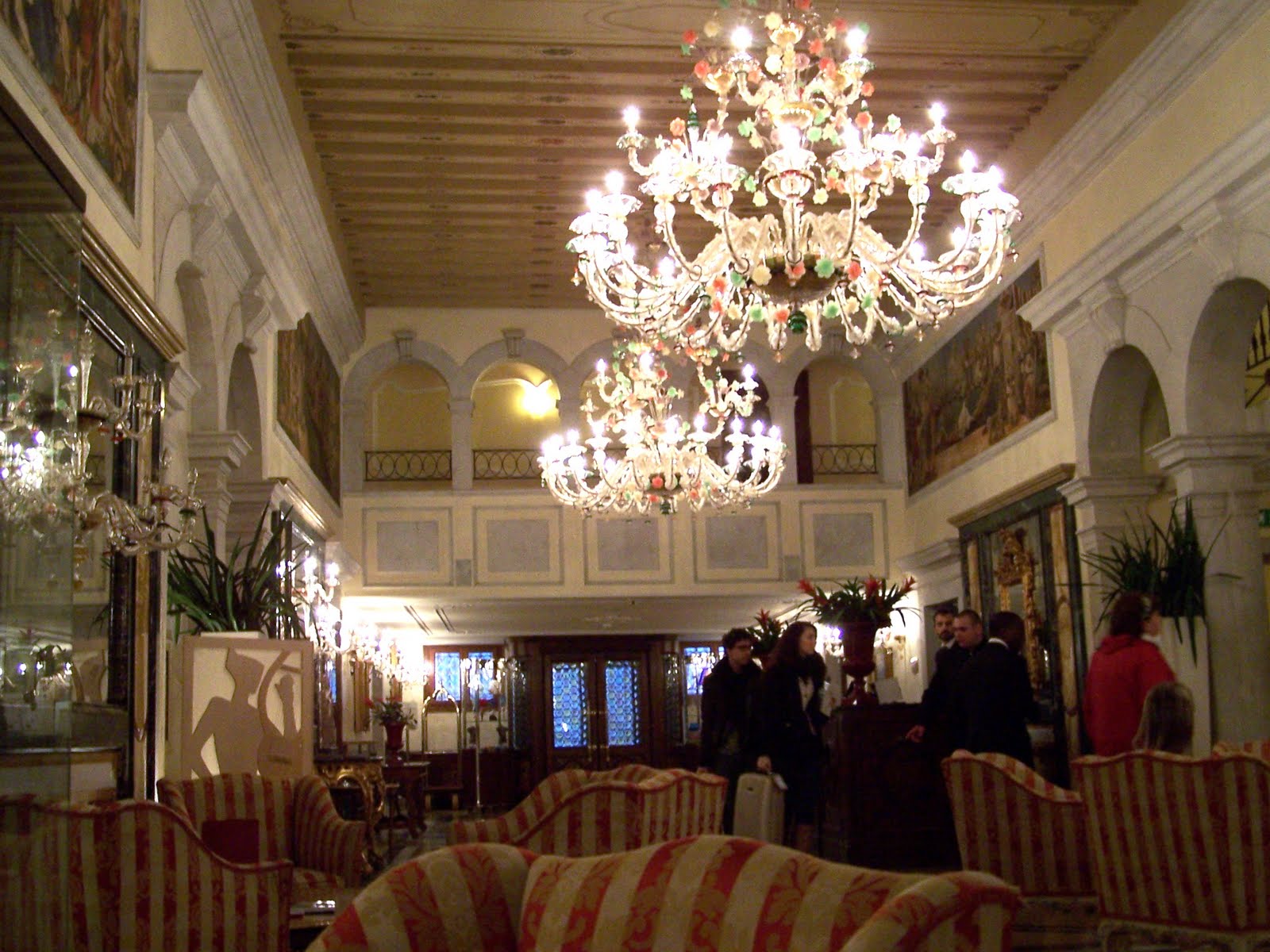
We stayed at the Hotel Dei Dogi, a place I discovered on a shopping weekend with a friend nearly a decade ago. It has lavish, classically Venetian interiors (befitting the family palace and then the French embassy that it once was), the largest private garden in Venice and it's own jaunty motorboat that zips you from the canal in front of the hotel down to St. Marks on a regular shuttle schedule. And yet, because it's in the quiet, off-the-beaten-track area of Cannaregio, its prices are about 30% below what you'd pay for an equivalent hotel closer to St. Mark's.

I have to admit, I actually prefer Cannaregio. It's heavily residential, so its lanes and canals are filled with locals. The absence of tourists means it's quiet and, late at night wandering down silent lanes with the canal glimmering beside you, wildly romantic. Its dominant church, Madonna dell'Orto (a stone's throw from the hotel), is a masterpiece of Gothic restraint not often seen in this city. It's the district closest to the airport, so either a straight shot by the Alilaguna shuttle (13 euro) or a short walk from the Piazzale Roma and the train station gets you there with ease. Once you figure out the route, it's a tolerable 20-minute walk to St. Mark's. And, best of all, it's the district in Venice with all the best restaurants. What's not to like? If someone else would like to pay for me to stay at the Danieli, I'll be there in a heartbeat. But on my own cash? Dei Dogi it is.

As Piers had never been to Venice, the plan was as follows. Day 1, having cleared the airport and checked into our hotel by 1:30, was devoted to rambling around the city and getting a feel for the place. It was, amusingly, also devoted to trying to find someplace to watch the England v. Italy rugby match that kicked off at 2:30. We went to a spot near the train station where the girl behind the bar helpfully went through nearly a score of sports channels on the satellite, but no rugby. A disappointed Piers sucked it up and fell into sightseeing. Ironically, we arrived back at the hotel to find the game on national TV with a time lag, so he got to see the second half after all.

Venice is such an opulent, decadent place, almost overwhelming in its sights, smells and design, I always figure you should ease a new visitor into it. Climb to the centre of the Rialto Bridge and gaze over the Grand Canal. Walk along it for a bit. Wander over to St. Mark's. Gape at the church, watch the clock strike, stroll through the piazzetta to see the outside of the Doge's Palace. Gawp across the basin at the rows of gondole, the outer islands and the Palladian magnificence of Santa Maria della Salute. Up the Riva degli Schiavoni for a bit. Check out the bridge of sighs. Look back at the that most famous of Venetian scenes. And then, frankly, quit while you're ahead. Because any more, as a first timer, is going to put you into sensory overload.

Sunday we concentrated on the glass-makers' island of Murano, then the museum at the Ca'Rezzonico. Monday St. Mark's, the Doge's Palace and La Fenice theatre. Tuesday the naval museum, the church of Zanipolo and shopping. And then a mid-evening flight home. For me, it was a great balance between the familiar and, though this was at least my fifth visit, a good array of new stuff. That's one of the beauties of Venice that goes beyond its lovely skin: There's enough to see in this compact territory to keep you occupied for years.

A few more essential tips for any such sightseeing breaks in Venice.

First, go off season. Even now, in the lowest of low times, we queued to get into St. Mark's, packed body-to-body on the No. 1 vaporetto up the Grand Canal and found some of the smaller lanes to be uncomfortably crowded. Nothing in this city is worth the hell of overcrowding it experiences on school holidays.

Second, don't plan to do anything quickly. Walks from point A to B may only take 25 minutes if you're moving briskly and know where you're going. But if you get turned about (highly likely in the warren of twisting lanes and canals bereft of easy sightlines to identifiable landmarks), or have to take a boat anywhere, that quick jaunt can easily take an hour. Don't sweat it, you're on vacation.

Third, look into tourist cards. If you're planning to go into at least two attractions a day (palaces, museums, churches) for three or more days, the HelloVenezia card is a good investment. Just under 40 euro per person for a 7-day pass, it not only works out cheaper but encourages you to pop your head into attractions that you might otherwise skip. An additional 30-ish euro gets you a 72-hour pass for the transport system. I'm undecided on the value of this one. If you're not planning to leave the main islands, you can probably walk everywhere and save the cash. Especially if your hotel, like Dei Dogi, has its own shuttle. But a trip to Murano and the ability to hop back and forth up the Grand Canal probably meant we broke even.

Fourth, try to only eat at recommended restaurants. Venice is notorious for having the worst food in Italy. Unsurprising when you think that this is a city supported almost entirely by tourism. When you're not working for return customers, it's all about being in a good location and snagging passing trade for a meal palatable enough to keep them from complaining while making you as big a margin as possible. So get off the beaten track and go for places validated by a critic like the Rough Guide. Or this blog, of course, which will naturally be getting around to restaurant reviews.

But first, we have some culture to discuss in coming days...