Tuesday, 3 October 2017

Luscious Alma-Tadema show transports you to a gloriously realised ancient world

I must have been a peculiar child.

At the same time my friends were captivated by their Barbie collections, I was becoming obsessed with Greek and Roman mythology. Like many only children, I had an active imagination and created playmates in my head; but mine were younger versions of classical deities, and I concocted adventures on which I joined them as a young Vestal Virgin or a huntress of Diana. It's a shame I never wrote them down. I could have beaten the Percy Jackson franchise to market by decades.

On a childhood trip to LA, I was just as excited to explore the Getty Villa as I was Disneyland (I've written about the villa previously here). This perfect re-creation of the enormous Villa of the Papyri at Herculaneum allowed me to walk within my fantasy world. And on its walls I found the work of an artist who seemed equally obsessed: Lawrence Alma-Tadema's Spring.* A poster version of the scene of young Romans processing through grand architecture bearing armfuls of flowers ended up sharing wall space with my Sean Cassidy and Donny Osmond posters when I got home. It outlasted the pop idols, staying with me through a progression of university dorm rooms until it fell to tatters.

I've loved Alma-Tadema ever since, but he's a difficult artist to see in any profusion. One of the most successful and prosperous painters in Victorian London, he built his career on perfectly-imagined, highly-detailed scenes of the classical world. Though he dabbled in Egyptians, Greeks and Etruscans, the Romans were his bread and butter. The British, at the height of Empire and confident in themselves as the New Romans, couldn't get enough of him. Queen Victoria even gave him a knighthood (despite the fact that he was a Dutch native). But he fell quickly and resoundingly out of fashion after his death.

As the post-WWI establishment embraced modernism, Alma-Tadema seemed to embody all they rejected. All Victorian painters followed a similar trajectory, but the Dutchman's celebration of history and ancient empires drew particular contempt. At his reputation's low point, the owners of his magnificent The Finding of Moses cut out and discarded the canvas because they could only find a buyer for the frame. Thus Alma-Tadema's work rarely shows up in any profusion. Many are still in private hands; museums tend to own one or two as an example of a genre type. There are no big collections of his work.

Which is why the Leighton House Museum's current show, Alma-Tadema: At Home in Antiquity, is such a rare joy. It's the first time there's been any sort of collective exhibit of the artist's work in London since 1913. There are more than one hundred paintings here (sadly not including the Getty's Spring), given added context by being displayed throughout the exotically decorated home and studio of Alma-Tadema's contemporary, Frederic Lord Leighton. The men were friends with similar tastes. Alma-Tadema's home in St. John's Wood is much changed and not open to the public, but the layers of opulent decor, William Morris patterns and wood paneling at Leighton House provide the same environment these paintings would have been created in, and for.

The show takes us through Alma-Tadema's career in chronological order, starting with a precociously talented child who found his fascination with history early. His young imagination haunted the Dark and early Middle Ages, with a style pinched from the Golden Age of Dutch Art. He repeated the techniques deployed in genre scenes by great masters like Vermeer and Rembrandt to create luminous slices of life, caught mid-story and cropped tight on the action. One early work shows a dramatic scene from the obscure tale of the Merovingian Queen Fredegonda. She's schemed to have a trouble-making bishop eliminated, but her assassins haven't completed the job. Here, she sits cool and dignified in the bishop's bedchamber, facing down his accusing pointing finger as he struggles up from his bed, still bleeding from the head. It's Game of Thrones, Victorian style.

In 1863 Alma-Tadema married and headed off on an extended honeymoon around Italy. It would revolutionise his life. He fell in love with the glory that was Rome, washed in bright light, the blue seas, the white marble, and coloured mosaics. For the next 50 years, his work would be dominated by the classical world.

He quickly became known for his astonishing ability to handle texture. This is beautifully displayed in A Roman Lover of Art. Brass under a connoisseur's inspection shimmers with a dull metallic gleam. Water splashes brightly in a sun-drenched fountain. You know the linen folds of the togas would be heavy and crisp, while little irregularities in the mosaic floor would scratch your bare feet. The marble cladding of the walls in that shadowy corner would provide a cool retreat. It's this kind of reality that pulls us in to a world of storytelling as compelling as any historical film.

We encounter couples in the middle of intense conversations, a girl hiding from her suitor as her sister blocks the door, Hadrian visiting a British pottery to endorse the local economy, people engaging in religious ceremonies, the architect of the Coliseum caught in contemplation. In each, the artist captures a scene at a pregnant pause in the action, much as the best modern news photographers do. You can't help but imagine a continuing storyline for yourself.

Alma-Tadema became particularly famous for his ability to paint marble. There's a wonderful pair of  paintings displayed together that shows off both this, and the artist's frustration with patrons not understanding the breadth of his vision. A wealthy northern industrialist commissioned the painting which becameAn Audience with Agrippa; the general and close friend of Augustus strides formally down stairs overlooked by a monumental statue of the Emperor, followed by his staff and awaited by his clients. The industrialist wasn't happy. Too many people, not enough marble. So Alma-Tadema painted the scene again, but After the Audience. The supplicants have gone. We catch Agrippa's back and the rest of his staff trailing away in the shadows. The industrialist's new version was a big, empty stage set: plenty of marble, story over.

The artist could afford that kind of precociousness because he'd become one of the most famous people in London. His homes and studios were lavishly decorated settings for both his painting and sophisticated parties drawing the fashionable and artistic of the age. Several rooms in the exhibit plunge us into his life, introducing us to his wives (both pre-deceased him, but the second was a well-known artist in her own right and worked beside him for decades) and his artistically talented daughters. We see interiors of his ridiculously lavish home in St. John's Wood, which leaves little wonder why the never-married Alma-Tadema daughters ended their days in straightened circumstances. The artist was clearly as good at spending his money as at making it.

But Alma-Tadema isn't just about beautiful gateways to other worlds. His use of realism to draw you into a story stirs real emotion. Many of his works are gently soothing; beautiful women gazing out to sea or stretched on the atrium floor contemplating fish in the pond. There's a rare contemporary scene called 94 in the Shade (that would be 34 for you celsius users) that shows a young man reading in the shade next to a freshly-mown wheat field; it's the distillation of all the delight of a lazy summer's day. But there's heartbreak here, as well. After his second wife died, he painted a young woman who resembled her sitting alone and sad on a shady bench while the sunny fields beyond are filled with people at play. Less subtle is the dramatic The Death of the First-Born. The Egyptian Pharaoh occupies his throne in a dim room given a ghostly glow as low light bounces off golden interiors. His dead son sprawls in his lap, his weeping wife slumped over the body. The priests who have failed to save the boy sit around in various stages of depression and horror. But Pharaoh looks directly at us, deadened with shock and eyes glistening with tears.


It's perhaps the most powerful painting in this exhibit, and it probably looks familiar. In fact, even if you've never seen any Alma-Tadema, all of this stuff will tug at your awareness. The penultimate room of the exhibit explains why. Even as his paintings were rejected by the art world, Alma-Tadema quietly became the patron saint of historic film set designers. A continuous loop of film clips proves the point. Cecil B. DeMille blatantly copied The Death of the First-Born and Alma-Tadema's other Egyptian imaginings for his epic Ten Commandments. Pretty much every early sword and sandal epic used him as a guide. Ridley Scott's team admits to returning to this source for their vision of Rome in Gladiator, and no doubt did the same for the less-worthy but equally beautiful Exodus: Gods and Kings. And though it's not included in the clips, I'd be shocked if the design of Kings Landing in Westeros didn't have some roots here.

Alma-Tadema's reputation has, thankfully, rebounded. The once near-worthless Finding of Moses became the most expensive Victorian painting ever sold at auction six years ago in New York. It's here, restored to its frame in all its glory. Hanging beside the luscious Roses of Heliogabalus, these two huge canvases anchor the final gallery where we're surrounded by the glory of the artist's last decade.

Even with recovering popularity I doubt we'll see many more Alma-Tadema exhibits in one lifetime. Many of these paintings come from private collections. Getting their owners to loan them, plus assembling others by ones and twos from across the world, was a monumental task I don't expect to be repeated. So if you're at all intrigued by time travel to the ancient world, get to Leighton House before 26 October.

Leighton House is run by the Royal Borough of Kensington and Chelsea. Admission is £12, though National Trust and Art Fund members get a significant discount. Be sure to lay out the additional £1 to get the audio guide, which has far more detail than is available in the free show programme or the display labels. 

I wrote an earlier article about the museum here.

*Since my first discovering it, Spring has moved to the Getty Centre in LA, while the Villa's collections are now restricted to art from ... rather than evoking ... the ancient world.

Saturday, 30 September 2017

Killer Queen brings a legend to life with near-perfect illusion

Ah, the irony of middle age.

I'm still hip enough to be at a rock concert on a Thursday night, trying to download the concert lighter app on my iPhone to wave in appreciation. But my aging eyes can't see the details without my reading glasses, and the concert is a tribute act to a band led by a guy who's been dead for 26 years. And, rather amazingly, I'm on the young end of this crowd.

Welcome to a night with Killer Queen, one of the oldest and most respected of the tribute bands that tour the world re-creating concert experiences of iconic acts that are no more.

It's an extraordinary evening. Queen's hit-laden catalog stretches over 20 years; this concert is packed with anthems everyone knows. The illusion is near perfect. Costumes, wigs, moves and voices bring the band to vivid life (circa the late '80s). The guy who plays Freddie Mercury both sounds and looks the part. Brian May's doppleganger is a tremendously talented guitarist. This isn't lip-syncing play-actors; these guys are obviously talented musicians.

So dedicated are they to creating the illusion, in fact, that they've purposely hidden their own identities. Unlike the Fleetwood Mac evening that first introduced me to the merit of tribute bands, there are no pauses here to discuss the original band or introduce the modern musicians. (The one exception is a reverent performance of These Are The Days of Our Lives during which the background screens are full of images of Freddie and the band in their glory days.) It's pure concert performance. Even a search on Killer Queen's website doesn't reveal much. Though the band's been going since 1993 and is obviously wildly successful (they tour globally), there are no biographies of the band members to be found.

Of course, reality pokes a few holes in the illusion. The intimacy of the 1,400 seat Anvil auditorium in Basingstoke means every seat is a great one, but it's hard to conjure the electric buzz of tens of thousands of screaming fans in a stadium. And though the crowd was on its feet dancing at times throughout the evening, the preponderance of white heads and their propensity to sit down to enjoy the show definitely edged us solidly into the theatre category. The years roll back by the time you get to the inevitable encore/closer of "Bohemian Rhapsody", "We are the Champions" and "God Save The Queen", however. With Freddie in crown and ermine-edged robe and everyone on their feet, bellowing at the top of their lungs, everyone in the audience has regressed to their 18-year-old selves. (Except for a few actual teenagers, gazing at the elders who brought them with curious speculation.)

My only real complaint was the badly balanced sound production. The lead vocals were swallowed beneath the instruments, and none of it seemed loud enough. It was another irony: last week we were at Kingsman: The Golden Circle worrying that our ear drums were going to be blown out. Here, where our bodies should have been throbbing to a near-physical wave of sound, it was all very sedate. I don't know whether this was a one off, a complication of The Anvil or a trait of the band, but it was a shame. Our "Freddie" had a beautiful voice ... obvious in a few quiet bits when he accompanied himself with the piano ... and he deserved to stand out more.

I admit I came to Queen's music late. My youthful musical tastes weren't particularly sophisticated, leaning to bubblegum pop. As a somewhat geeky kid who read sci fi and fantasy, I was mainly aware of them through the Highlander and Flash Gordon soundtracks. They weren't as big in the States, of course; it took moving to the UK for me to start to grasp the magnitude of their talents. Marriage to a huge Queen fan completed the journey. He enjoyed the evening even more than I did.

If you're even a moderate fan, see these guys if you get the chance. Just remember to download the concert lighter app before you go.

Saturday, 16 September 2017

Series of stumbles suggests L'Ortolan is losing its touch

L'Ortolan is one of the grand old dames of British fine dining. It first gained a Michelin star in 1982, when there were just 17 in the country. In the late '80s, it briefly held two. Six notable head chefs have led the kitchen, while time there turns up on the CV of many a culinary star. It's also the only fine dining restaurant in an area where the next best dining options are chains or serviceable gastropubs.

Thus the restaurant, tucked away in the former vicarage of a pretty rural village on the southern outskirts of Reading, has become the "go to" destination for generations of locals marking special occasions. That's certainly the case for us. I've been to L'Ortolan more than any other Michelin-starred establishment, and my evening at its extraordinary Chef's Table makes it on the list of the Top 5 dining experiences of my life.

But nothing lasts forever. I saw several signs last night, as we celebrated the double delights of my birthday and our wedding anniversary, that the venerable spot might be going through a rough patch.

The first warnings had nothing to do with the food. As we sat in the bar with our pre-dinner drinks,
we noticed a gash in one of the leather sofas, frothed with its escaping upholstery stuffing. At the table, the beautiful hand-turned wooden bowl holding our bread was obviously broken, with four inches of one edge snapped off. These may seem like little things, but at a place that stakes its reputation on perfection, they shouted. Though one of the private rooms was buzzing with a party, there were empty tables in the main room on a Friday night, while nobody occupied the esteemed chef's table. These early indications hinted that L'Ortolan was no longer at the top of its game.

We opted for the chef's menu and the matching wine flight. As expected: elegant presentation, classic French tastes, interesting matches with insightful commentary from the sommelier. The standards remain exceptionally high. Mackerel with beetroot, raspberries and a sliver of meringue was a beautiful balance of strong and soft, sweet and savoury. Who can argue with duck liver parfait, or a main of perfectly cooked duck with sides of succulent "bon bon" made of confit leg meat? That classic main got a modern boost from pineapple chutney and bok choy with a soy glaze. Chocolate tart with goat's cheese ice cream is an inspired combo of rich, sweet and tart flavours. I've had many of these elements in different combinations here over the years; the duck bon bons have earned praise on this blog before.

But all was not perfect on the plates, either. The fish course stumbled: stone bass with sea veg and caviar needed more texture, particularly as the skin was soft and flabby rather than crispy; the date puree that accompanied it was too sweet to integrate smoothly with the rest of the dish; leaving the tempura soft shell crab, meant to be a slight garnish, as the standout element on the plate. The balance seemed off on the duck liver, as well, where we had too much liver with not enough secondary elements to temper the iron-rich punch. The walls of ginger tuile were exquisite, but needed to be thicker to impart an essential sweet crunch to the dish. Mackerel, beetroot and fruit is a classic combo, but were the slices of raspberry meant to be still frozen? I suppose this could have been for texture, but something frozen that solid is both a jarring shock to the mouth, and relatively tasteless.

Repeated ingredients across courses also diminished my enjoyment. Of five courses and two amuse bouche, mackerel appeared in two and duck in two. The mackerel as a snack of crispy skin with dots of flavoured mayonnaise and that first course with beetroot. In between was a rather insipid little bowl of savoury custard topped with haddock foam. Heaven help anyone not fond of fish if presented with this opening triple salvo. The two duck courses were separated by the stone bass. Unlike mackerel I can happily enjoy much repetition of this lovely bird, but it does seem a shame to repeat when there are so many other options to explore. I found myself fondly recalling an otherwise unimpressive dinner at the French Laundry, where they bend over backwards to never repeat an ingredient from one course to another. Call me a cynic, but I had to wonder if L'Ortolan is doing a bit of cost cutting.

It could be that I was just in an exceptionally picky mood. With our magnificent meal at Denmark's Restaurant Domestic still fresh in my mind, my expectations had been ratcheted up and L'Ortolan fared badly. Within its specific context, however ... as the only top quality restaurant in its area and a place that delivers London-quality food at somewhat smaller prices ... L'Ortolan delivers. I'm not ready to abandon it yet. But I'm also in no hurry to rush back, and whenever that next special occasion calls for local fine dining, I'll be watching carefully to see if our latest experience was a quirky one-off, or sign of an ongoing decline.


Friday, 1 September 2017

Dining around Denmark: Our restaurant round-up

I've already written of our gourmet dining experiences on our Danish holiday: the extraordinary Restaurant Domestic in Aarhus, and the intimate delights of the Ruths Hotel fine dining restaurant in Skagen.

They were exceptional ... but not surprising. From humble hot dog stands to brew houses and local inns, the food throughout our exploration of the Danish countryside was uniformly excellent. It's what I've come to expect. In fact, I'd say that only an Italian holiday is better at delivering meals that provide consistently high value for money without demanding much restaurant-hunting effort from the tourist.

Much of this is down to the dependability of the traditional "Kro", or inn. These are roughly the same as the British gastropub: charming, historic building; a place to have a quiet drink; but majoring on delicious meals, locally sourced and individually prepared. In England, unfortunately, a good gastropub is the exception to the pub rule ... we have three pubs in our village and none have better than average food ... and can often be as expensive as a fine dining establishment. Perhaps we were just lucky, but every Kro we stumbled into in Denmark was excellent.

In addition, Denmark is following global trends with the rise of small local breweries. Every town we visited had one, offering a range of craft beers that had this wine drinker happy to embrace the hops. Most also have restaurants, usually with a range of traditional food.

Top of the traditional list, especially if you're having lunch, is smørrebrød. I had originally confused this tradition with "smorgasbord" which, though Swedish in origin, has degenerated in America to mean an all-you-can-eat buffet, often of marginal quality. Though you sometimes find smørrebrød in a buffet, usually these artfully-crafted open-faced sandwiches are ordered individually. In the same way that tiramisu can be a benchmark dish in Italy ... everyone does one, the quality and details can vary widely ... I'd put forward the prawn smørrebrød as the Danish equivalent. That, with a glass of beer and a small shot of snaps if not driving, is our go-to lunch order. I don't know what it is here, but the small prawns are of a radically better quality than any we get in the UK. (My guess: locally caught, never frozen.)

You can also reliably depend on pickled herring (if you haven't tried it, you really should; it's much better than you'd expect), additional interesting takes on pickling and delicious mixes of fruit with meat. The base cuisine is Franco-Germanic: roast meats, sauces, potatoes. You'll find schnitzel on almost every menu. But it's usually done with a lighter touch than German versions. You'll come out of a Danish restaurant satisfied, but rarely stuffed.

And, of course, there's pølser.  The Danes are mad for hot dogs; this is a cheap and cheerful go-to meal if you're in a hurry. Roadside stands abound, and whether it's motorway rest stops or vans serving in car parks, you can usually get a delicious combo of meat, bread and essential crispy onions.

The ubiquity of resolutely Danish culinary traditions is fading as global influences spread. And, let's face it, while we want to eat Danish food when we visit, the Danes themselves are probably relieved to find more variety than their traditional repertoire. Sushi places abound. Roadside vans are as likely to be roast chicken or burritos as pølser. In both Aarhus and Helsingør, when we were keen to find classic Danish food we stumbled into markets providing a range of global options, from Thai stir fry to American pulled pork. Without a local to accompany them, two friends of mine recently returned from Copenhagen and, when I asked them about the food, could only reply: "what is it about the Danes and pizza?"

If you want quality traditional food, all of the places below are worth a try. None of these are worth a special trip (as Ruths' or Domestic would be), but if you're in the area already, then seeking them out will reward your efforts.

Aalborg - Søgaards Bryghus
The town's microbrewery sits conveniently on the central square in the old town, in a 16th-century red brick building with tall gables a stone's throw from the main church. The decor inside is more modern, echoed in a fun, informal take on a traditional menu. Excellent value for money: we've never had a bigger platter of pickled herring (we easily could have shared one portion) ... three versions, all tasty, and a beautiful excuse to try the range of beer and snaps.

Aalborg - Bøf og Vin
Does what it says on the tin: beef and wine. Good steaks, some fine seafood options for starters, a salad bar and a solid wine list. On the main road into the historic part of town, near the waterfront.

Gillelej - Adamsen's Fisk
If the sun's out, bypass all the charming restaurants in town and head for the harbour. Adamsen's is a hut attached to a seafood shop, walk up to the window and order from what's fresh. We had battered, fried place on a generous bed of salad with a bread base, garnished with lumpfish roe. Simple, delicious and enhanced by eating at a picnic table bathed by sea air. Reminded me strongly of Captain Kidd's in Redondo Beach, California.

Ribe - Kolvig
Restaurants in the picture-postcard town of Ribe are curiously tipped towards burger bars, kebab shops and Chinese buffets. I suspect this is due to German tourists on bargain caravan holidays. One nicer option is this bistro, down a flight of steps next to the river. Delicious classic food with a French flair and very serious drinks: boutique gins, home-made tonic and a sophisticated wine list. My husband, in a moment of weakness brought on by too much sightseeing, made the mistake of leaving the wine matching completely up to our waiter. He obviously asked with an air of affluent comfort. We ended up with an exceptional bottle of Gevrey Chambertin which we were too embarrassed to reject. It was a profligate splurge, but thankfully delivered at a lower cost than online wine guides had us fearing. Kolvig lets diners order additional bottles to take away for half their menu price ... though we called it quits at one.
Rønnede - Rønnede Kro
The best prawn smørrebrød we had the whole trip, served in an exquisite historic building furnished like a grand 19th century house. Obviously a favourite event venue, this charming thatched inn is less than an hour south of Copenhagen.

Rungsted - Rungsted Kro
Very much like Rønnede, but to the north of Copenhagen. A stone's throw from the Karen Blixen museum and where the author used to put up guests when her house was full. It's recently had a major renovation, so the charmingly crooked walls and windows are now shining like new. I was introduced to biksemad here: literal translation "tossed together food". It's essentially a meat and potato hash served with a fried egg. Delicious, seriously stick-to-your-ribs stuff; this was the only time I left a Danish restaurant uncomfortably stuffed.

Skagen - Solnedgangskiosken
Translated as the "kiosk of the setting sun", this beach hut in old Skagen is this trip's best example of great food coming from humble places. (Top photo.) Delicious hot dogs enjoyed with boutique bottled beers from Skagen Bryghus, consumed at picnic tables screened by dunes and with a clear view of the North Sea. Try the liquorice ice cream for dessert, it's a Danish classic that packs a flavour punch. Resist, however, the temptation to have it with the traditional "guf" topping. This is something like uncooked Italian meringue, slathered thickly atop the the ice-cream and sweet enough to trigger a diabetic coma; the sugar punch had killed my tastebuds before I got to the excellent ice cream.

Stege - Slagter Stig Stoeberiet
This clever butcher has knocked through to the shop next door to create a restaurant with a healthy self-serve ethos. Help yourself to a smørrebrød buffet. Serve your own drinks with an electronic key linked to your tab. There's even a pile of candles and a lighter to so you can build your own hygge. Or pick something out of the butcher's case for them to cook up. Exceptional hamburgers.


Stevns - Traktørstedet Højeruplund
Tiny and rigorously traditional, the low ceilings and groove-and-plank walls make it feel like you've been invited in by a local sea captain for dinner. Hearty soups, delicious prawn cocktail and one of the biggest plates of schnitzel I've seen outside of Bavaria.

Vedbaek - Nautilus
A laid back yet elegant restaurant on a pier. The style and sophistication match the location: we're in the heart of Copenhagen's most affluent commuter belt. Excellent seafood, as you'd expect.

Monday, 28 August 2017

Getting to know wonderful Karen Blixen is Danish trip's final gift

Our exploration of Denmark beyond Copenhagen was a journey of discoveries. They were all delightful, but none was more unexpected than my new-found admiration for Karen Blixen.

If the words "I had a farm in Africa..." prompt any reaction from you, you may already be a bit familiar with Blixen, who originally wrote under the pen name Isak Dinesen. Her best known novel provided the story for the Academy Award-winning film Out of Africa. One of her short stories became the Oscar-nominated Babette's Feast. After Hans-Christian Andersen, she's probably Denmark's best known writer, though I suspect very few non-Danes read her any more. Her novels seemed like appropriate holiday fodder for me, especially since her home and now museum is walking distance from the cousins we'd be staying with for part of our trip.

I was amply rewarded for my decision. Blixen is a magnificent writer, particularly gifted at spinning short stories and with a lyrical talent for description. Though Danish born and resident there for most of her life, she wrote in English first then translated Danish versions. Thus no interpretation or stylistic additions from translators. Her straightforward, informal style ... often imbued with beautifully poetic phrases ... is all her. I fell in love.

Babette's Feast is perhaps the best story ever written about the magical power of food and wine to transform and elevate people. The film is readily available online. Though the book is set in Sweden, the film moves to Northern Jutland. We watched the download while snuggled up at Ruths Hotel in Skagen. While the area is now a bastion of high-end tourism, the stretches of wind-whipped dunes and moorland made it easy to imagine tougher times here, and to put the extraordinary story of a gourmet chef surprising the austere residents into brilliant context. The original story is short enough to read easily on the flight from Heathrow to Copenhagen; highly recommended to anyone en route to Denmark.

Out of Africa is a bigger beast, though still pleasantly easy to get through. It's essentially a collection of short stories, and Blixen's personal, informal style feels very modern. And while all the key plot points are there (though you have to read between the lines for some), the book is very different from the film.  The text is not the epic love story you might expect, nor does it proceed in a straight line. Rather, it's a series of insightful observations about life in Kenya in the first third of the 20th century, and devotes far more time to the stories of the native peoples than the Europeans.

This might present issues for politically correct types. Blixen was, after all, a privileged white woman living amongst "natives". But any sensitive reader will quickly pick up how unusual Blixen must have been, taking time to get to know the Kenyan tribes, Somalis and Indians as individuals, caring about them and becoming a part of their lives. Essentially an autobiography drawn from her letters home, you feel her growing and learning from the people and land around her. She starts, for example, as a hunter keen to shoot and stuff one of everything that roams. She ends as someone content to wander into the bush to sit quietly and watch the natural world. She's a tough, likeable woman who feels very much ahead of her time.

She's significantly different from the character Meryl Streep gave us in one big way: Blixen was only 28 when she went out to Africa. A sheltered, upper-middle class girl, thrown onto a coffee plantation with no experience and few close neighbours, whose marriage quickly collapsed and who never had enough money ... yet battled through and was a respected pillar of the local community for 18 years. Thus the book also gives us a touching coming of age story that the film doesn't have time to deliver.

Having only known the films until this trip, I didn't realise that Blixen lived a successful and very social life from the time she returned to Denmark in 1931. The end of the film version of Out of Africa has us imagining her descending into a depressing, rain-sodden, impoverished exile. Instead, she became established as a writer, travelling, entertaining and gaining a fair amount of fame until her death in 1962. A visit to her home and museum at Rungstedlund happily dispels this gloom.

The two long, low-slung, connected buildings are typical of Danish farm houses. Inside, you'll find a raised ground floor with high ceilings, big windows, pale colours and tasteful decor. To the back are forests and fields now given over to public park, where you'll also find Blixen's grave. Closer to the house, volunteers maintain Blixen's flower gardens and cut them to provide fresh arrangements for the house; something the writer herself was passionate about. To the front, just over the road, a charming harbour ... these days mostly full of posh pleasure craft ... and a lovely view of the glittering waters of the Øresund with Sweden visible on the horizon. Central Copenhagen is just 15 miles down that main road.

Like most house museums dedicated to an individual, Rungstedlund would be pleasant but not particularly exciting without reading Blixen's work. Once you have, it's fascinating. There are a couple of museum rooms, where you can see original manuscripts and precious objects from the author's life. Perhaps most interesting are photos from her time in Africa, putting real faces to the characters you got to know in her book. The main living rooms of the house are much as she left them, with their dignified mix of late 19th century Danish furniture spiked with colourful memorabilia from Africa. There's ample space for entertaining.

In later life she was famed as a mentor to young writers, with her house becoming a much-loved literary salon. Any writer will peer into Ewald's Room (above right), where she did most of her work, and sigh with satisfaction. The walls bear a collection of reminders of Africa, the furniture is comfortable and the windows look out on a soothing scene of garden, sea and sky. Her home, like her books, paints a picture of Karen Blixen as a person you'd be keen to spend lots of time with.

Sadly, we can't accomplish that in person any more. And you might not be able to get to Denmark any time soon. A few seconds of download time, however, and you can start your acquaintance though her books. I recommend them highly.

Zealand's royal north is packed with noble sights

It was a shock to be back on the beaten tourist track.

After 10 days in Denmark without crowds, and with few other foreigners, we were sharing car parks with tour buses. East Asians with high tech photography gear clustered for the best camera angles. I heard more American accents over one lunch at Frederiksborg Castle than I'd noted cumulatively across the rest of the holiday. Welcome to North Zealand, home to a clutch of notable tourist attractions all less than an hour from Copenhagen.

Thanks to an affluent ruling family fond of building projects, you could cover most of the 35 miles between Copenhagen's suburbs and the north tip of the island that houses the capital without leaving royal property. From blockbuster palaces to hunting grounds and summer retreats, this verdant landscape within easy reach of Copenhagen has been a royal playground for centuries.

Kronborg
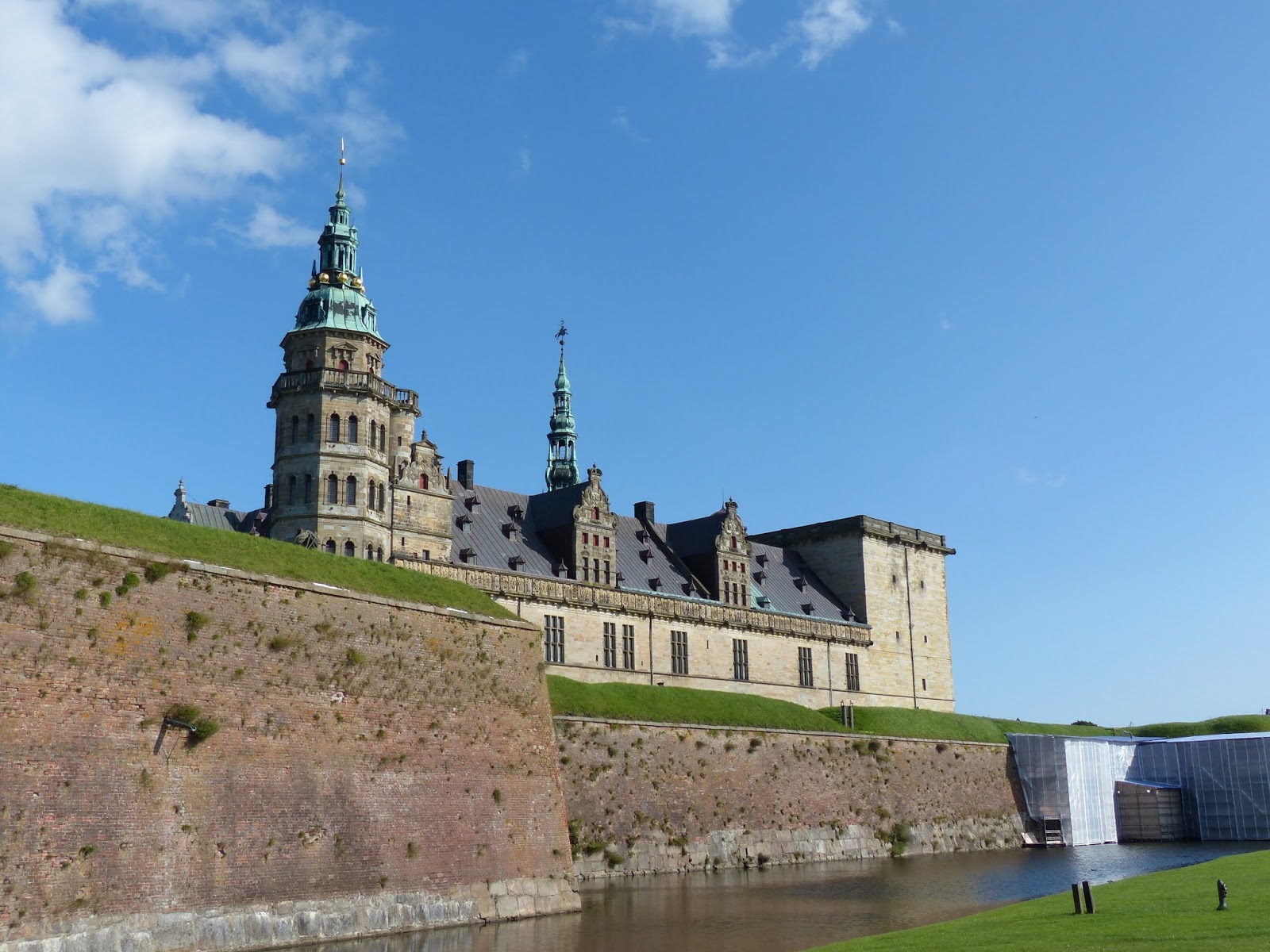
The most famous of these castles, however, had a much more serious purpose. Kronborg dominates the town of Helsingør ... you might know it as Elsinore ... on Zealand's northeastern tip. The castle overlooks a narrow straight separating Denmark from Sweden. The other shore is so close, it looks easily swimmable on a fine day. This is the narrowest point on the sound that provides the most direct access between the North Sea and the Baltic; early kings built Denmark's prosperity on controlling this pinch point and charging "Sound Dues" on trading vessels coming through. 

In the late 16th century Frederik II decided to transform the basic defensive castle here into a magnificent Renaissance palace and renamed it the "Crown Castle", or Kronborg. It's a smug, over-the-top statement from a blatant show-off celebrating more than 150 years of his family exploiting a geographical quirk to make a fortune. While the motivations might be less than attractive, the architectural result was exquisite.

It's an enormous rectangular building with a courtyard in the middle, set upon a moated island and surrounded by star-shaped defensive battlements of earth and stone. This could be quite grim were it not for a decorative garnish of fancifully crowned towers, green and gold roofs and enough opulently-carved friezes, window surrounds and gables to tip the whole thing into wedding cake territory. There's a substantial progression of rooms to explore inside. The decorations and furnishings in the 16th century rooms are a bit sparse, getting more opulent as you reach a suite laden with tapestries and furnishings from the 17th and 18th. The most jaw dropping interior is the chapel, bristling with polychromed carvings, inlaid wood and chequered marble. Don't miss descending into the casemates below the courtyard to see the brooding statue of Holger Danske. This legendary, ancient Danish prince ... a bit like King Arthur ... is supposedly suspended in an enchanted sleep, destined to return in Denmark's hour of greatest need. He may not have woken during World War II, but a brave group of resistance fighters used his name. They're commemorated here, too.

Of course, it wasn't a Dane who gave this castle its greatest fame, but an Englishman. Yes, it's that Elsinore. Most tourists make there way here to see the setting for Hamlet, irrespective of the fact that the sketchy legend of Prince Amleth ... Shakespeare's only tie to anything resembling Danish history ... pre-dates the castle by centuries. Instead, it's more likely Shakespeare chose the setting because the castle, newly-built in his time, was a currently-famous symbol of a wealthy, powerful monarch. No matter. Kronborg's caretakers know the value of a tourist hook and have been playing on the link since they fixed a monument to the English Bard in the outer courtyard wall in the 19th century. Since then there've been successive Shakespeare festivals, live performances and Kronborg-set film adaptations. And, for the past two summers, a chance to interact in "Hamlet Live" as a small troupe of players present key scenes around the castle. 

We were enchanted, trailing the actors from Hamlet's first confrontation with his father's ghost ... cunningly engineered to hover in an archway in a dark cellar ... to his death by duel in Frederick's enormous ballroom. (When built, it was the largest in Europe.) This was not a straight performance. Practicalities don't allow for bringing in a full cast every day, so we made due with Hamlet, Claudius, Polonius, Laertes and Ophelia. Gertrude should have been there as well, but she was ill. Lacking the full cast of characters, some adjustments need to be made ... like the play within a play becoming a puppet show delivered by Hamlet. The players take some liberty with the text, ad libbing to draw the audience in to the action and improvising in the down time between their scenes. 

Which is how I ended up reading Shakespeare's sonnets aloud with King Claudius in his private apartments. I know, he's a murderer, but he was much sexier than his weedy, angst-ridden nephew. 

The closer we got to the climax, the closer they stuck to the text. Some visitors were content to bump into the action as they stumbled upon it in their exploration of the castle, while a smaller bunch ... of which we were two ... followed every scene, dashing up and down staircases, in and out of courtyards and playing the role of courtiers when asked. For any fan of Shakespeare, this was extraordinarily good fun. I was particularly delighted to see a handful of keen children in the core group of fans; what an incredible way to get introduced the classics.

"Hamlet Live" has been such a success since its 2016 launch that it looks set to become a regular feature; I would plan any trip to Kronborg around it. (Eat lunch before the action kicks off; once you're in the castle proper there are no dining options.) Andrew Jeffers, who played a stolid and likeable Polonius, told us it's been such a hit that museum directors are looking at introducing this interactive theatrical model to other attractions in Denmark. Yet another example of how the Danes are leading the way in bringing culture to life for a new generation.

FrederiksborgWithout the Shakespearean link, Frederiksborg is the castle to seek out for history, art and magnificent interiors. Built by Frederick II's son Christian IV, there are a lot of similarities: moats, fanciful towers, baroque decoration. But where Kronborg's grey sandstone walls and line of snarling, Swedish-directed cannon maintain an air of pragmatic usefulness, Frederiksborg's mellow brick walls and formal gardens tip us solidly into fairy tale territory. It's a mood reinforced by the fact that most of the interiors are courtesy of a lavish 19th-century restoration funded by the Carlsberg Brewery magnate. Perhaps not historically accurate, but it's an eye-pleasing jewel box to linger over for hours. I wrote more about the interiors on my last visit, which you can read here.

This time, I wanted to explore the gardens. My introduction to Frederiksborg had been in January, when the windows looked over an icy lake and a snow-covered expanse undulating with bumps that only hinted at formal horticulture. Now, they were at their best. And, delightfully, they're free to enter. (There's a charge to tour the castle.)

The gardens follow the grand French model of bushes artfully clipped into parterres, elevated walls created with pleached trees and grand arboreal allees. That's all dignified with classical statuary on hefty plinths, water features and gates of lacy iron work. It's a garden that trumpets man's mastery over nature, though woodlands and park area on the outskirts are designed with a later, more naturalistic style. Get the big picture looking down at them from the castle, or wander amongst them to get lost in their detail. These gardens are particularly striking in the way they're cut into terraces going up the steep hill across the lake from the castle. Grass-covered banks more than a storey tall, cut at a 60 degree angle, provide comforting green enclosures and a puzzle. How do they mow grass on such a steep slope? My only disappointment: few flowers within the parterres. This is a place for greenery and structure, not blooms.

Fredensborg
You can say the same about the gardens at Fredensborg. More allees, pleached trees and architectural hedges, but on a much grander scale. Frederiksborg's gardens remind me of Loire Chateaux; here you're solidly in Versailles category. Minus the fountains. And, on the day I went, minus any people. Though family who live nearby assured me it's packed with locals on weekends, on a Wednesday afternoon in August I wandered much of the park by myself. In that respect it reminded me a lot of Windsor Great Park which I used to wander on weekdays in splendid isolation when I lived down the road.

The comparison is valid in other ways. Like Windsor, Fredensborg is still a favourite retreat from the capital for the current royal family, and they live here for chunks of the year. Thus the palace and the private gardens are usually closed and patrolled by bearskin-topped soldiers. But the formal baroque pleasure gardens radiating out from the palace and down towards Lake Esrum are open to all. And free to enter.

These gardens are about a century on from those at Frederiksborg, and though they're still full of artifice and formality, you can see the Romantic movement coming. Allees are longer and look a bit wilder. Formal sightlines open up to "borrowed", wild landscape. Paths between formal elements wind through wilderness. I even spotted a couple of grazing muntjac. 

The palace's name celebrates an end to wars with Sweden; "fredens borg" means "peace's castle" and the gardens are full of fascinating monuments I can only assume are dedicated to this episode in history. Obelisks and columns with a variety of ornamentation sit in carefully manicured groves, on islands amongst lily ponds or guarded by screening walls. Sadly, there's no information on site about the monuments and little to be found on the internet. 

Only one gets much attention. The Valley of the Norsemen features 70 almost life-sized statues of Norwegian and Faroe Islands fisher folk. (Norway used to be part of Denmark, the Faroes still are.) They are arranged in three concentric, terraced circles, staring down at a central obelisk. This is a striking way for a monarch to celebrate his common people, and it's a beautiful amphitheatre set amongst fields and woods. But if you're by yourself, it's also more than a bit creepy. The statues are a bit too lifelike, and they all seem to be staring your way. I did not linger there long.

Gilleleje
Not all of North Zealand is royal, and it's not all on the beaten track. There are plenty of beaches ... those on the east coast are more crowded due to their close proximity to Copenhagen. In fact, much of this Eastern shore from Copenhagen to Helsingør feels like one continuous, affluent suburb of the capital. The great and the good live on the waterfront here ... I suppose we could consider them modern royalty ... and architecture fans will enjoy a drive up the coast gawping at the houses. Numerous harbours along the way have switched from fishing to yachts and upscale dining.

Things get more rustic if you spend half an hour crossing to the other coast. The village of Tisvilde is swimming with quaint charm and the long, sandy beach beneath it is a top bathing spot. Head up from there to the very northern tip of Zealand and you'll find the fishing village of Gilleleje.

It's easily passed by if you don't know its history. Knowing makes it worth a stop. Gilleleje was the end of the line for hundreds of jews fleeing Denmark in 1943, when the Nazis switched their three-year-old "protectorate" into a full occupation complete with ethnic cleansing policies. Denmark is full of heroic stories of people working  to get their Jewish neighbours out, but nowhere sees a concentration like this little port town, where local captains packed their boats to get Jews 15 miles over the water to Sweden. Then returned to Nazi condemnation. Sadly, not everyone made the boats. In the race against time, 80 were left behind, hid in the church and were captured when the Nazis closed in. (You can learn more here.) But the brave sailors of Gilleleje saved almost 1,600 souls in their efforts.

Gilleleje doesn't shout about this. The Danes are a quietly modest people. If you visit the church, you'll find a small monument. You can imagine the fear. Even as bright sunlight spilled through clear windows against brilliantly whitewashed walls, I felt the sadness of the place. A short stroll to the harbour and you'll find a beautiful, simple wooden monument curved like the prow of a Viking ship, with a small plaque in Danish. 

Fortunately, there's plenty to cheer you up once you finish your somber contemplation of Gilleleje's history. The buildings around the harbour are rich with half timbering, cheerful colours and thatch. There are plenty of restaurants, including a fish stand right by the water that cooks the fresh catch to order off the counter of the fish monger next door.  The adjacent picnic tables are a great place to grab a beer, watch the boats bob at anchor and contemplate the world. It was both irony and a reason for joy that most of the tourists in the Gilleleje that day were German. Past not forgotten, but put in a salutary place. As we eat fresh fish and ice cream in the sunshine and build a better world. One hopes.

Saturday, 26 August 2017

Agrarian South Zealand is a gentle retreat for the soul

Travellers without personal connections would probably never venture into the region south of Copenhagen. It lacks the blockbuster sites that stud the landscape north of town. It is, rather, a quiet place dense with charming thatched cottages, picturesque fishing harbours, traditional farmhouses and agrarian landscapes.

It's also home to generations of the Bencard family, so I've been fortunate to explore with locals.

By the time you've put 40 miles between yourself and Copenhagen, the island best known for Denmark's capital becomes resolutely rural.  Wide, open roads follow the lines of broad, arable fields bordered by wildflowers or thin lines of woodland.  Everything about the landscape is gentle, from the roll of the hills to the sleepy cows to the nodding hollyhocks that seem to dance above every garden wall. In late August, towering hay scarecrows advertised the harvest festival while combine harvesters brought in the crops. (It had been an unusually wet summer; they were fighting to harvest during a short outbreak of clement weather.) The landscape was green, gold, blue, white and grey: Foliage at its high summer peak; wheat fields bright as burnished metal; waters of the Øresund shimmering from so many views ... all stretching beneath the kind of big skies filled with towering grey and white clouds you only get over islands and peninsulae.

Even the cliffs look gentle. You can meander along 11 miles of Stevns Klint, where brilliant white chalk walls hold back the sea. At their highest, they stand 130 feet, but they never seem particularly menacing. Even though their crumbling swallowed the 13th century Højerup Old Church. Visit the reconstruction, complete with medieval wall paintings, then enjoy a leisurely traditional meal at
Traktørstedet Højeruplund next door. The thatch, low ceilings, beams and long-serving regular staff mirror a traditional menu of classics like hearty soups, fried fish and schnitzel.

Down at the nearby Rødvig harbour, small fishing boats and pleasure craft are temporarily dwarfed by industrial vessels currently in port to help lay power cables to offshore windmills. There's no question this is a working port; your wander around the harbour skirts lobster cages and piles of nets in for repair. Local fishmongers there to clear the day's catch made me wish I had time to take over one of the family kitchens. Instead, we savoured ice cream from the harbour's snack shop (liquorice ice cream is a must for any visit to this country) and watched cormorants air their wings on the breakwater in the golden rays of the late afternoon sun.

This was a region of vast aristocratic estates; many of the farmhouses you see were once tenant properties linked to great houses. One of these that's partially open for tourism is Gisselfeld Kloster. The romantic moated manor house's greatest claim to fame is a link to Hans Christian Andersen. He was a frequent guest, mentions the place in his autobiography and they claim it's where he came up with the idea for The Ugly Duckling. It's also Denmark's fifth-largest estate. Gardeners will be intrigued by the grounds and greenhouses. Indeed, this is what's open to the public regularly to explore. Mostly a landscape park, people in search of flowers should head to the greenhouses. If they look familiar, it's no surprise: the 19th century owner had them shipped over from England. The house is rarely open, but the exterior .... Renaissance, red brick step gables rising from a reflective moat ... is a scene worthy of contemplation.

Taking the slow route along the coast on the 265 will provide an effortless wander through one picturesque scene after another. Civilisation rarely intrudes on the picture with anything bigger than a cluster of thatched cottages or the proud, white, step-gabled tower of a traditional church. The most regular nod to modernity is the profusion of high tech windmills, but they slide easily into the landscape as their calmly-spinning blades mirror the sails of their oft-spotted 19th century predecessors. The Øresund isn't a constant companion. Rather, the island-dotted seascape swims in and out of view as you skirt forest and field. You might get caught behind some lumbering farm equipment, providing an excuse to slow down even further to better enjoy the view. (If you're in a hurry, you could zip down the E47 motorway in a fraction of the time.)

Eventually, the road leads to Kalvehave and the short bridge to the island of Møn. This 84 square-mile island is even sleepier than South Zealand, with just one main town, Stege, and boom times that were last seen when it was a top herring fishery in the early 18th century. It never really recovered its cosmopolitan prosperity after being a casualty of wars between Denmark and Sweden. The consequence for modern tourists is lots of historic buildings and few chain stores or restaurants. Locals are making the most out of their island's independent, old-style spirit: stop for lunch at the local butcher (slager) Stig, where they run a restaurant quite literally on the side, lifting meats out of their counter to prep for your plate.

Of course, you don't even need to get out of your car to take in the mix of historic architecture on Stege's high street, the jaunty gate tower at the town's eastern end, or the venerable Elmelunde Church, oldest on the island. You'll probably be driving by them to get to the most famous place on Møn, Møns Klint. If you lingered in Rødvig Harbour, you might have seen these cliffs gleaming across the water. They form the island's eastern edge, glistening white and towering at three times the height of Stevns Klint at their tallest ... making them visible for miles. They're very similar to England's Beachy Head, with one significant difference: The landscape leading up to the cliff edge is heavily forested. The whole area is now a park, criss-crossed with hiking and biking trails. At the end of the road (literally) you'll find a car park in front of a modern geological museum. 

From here you can stroll along wooden boardwalks that lift you above the forest floor. While the feeling is magical, it wasn't done for your benefit: there are several rare varieties of orchid native to this chalky soil that nobody wants your feet to disturb. The energetic can follow a long chain of steps all the way down to the beach, while the more leisurely can skim the cliff tops to reach a lofty observation point. Even though most of it is forested, the drop is still impressive as the eastern side of the boardwalk holds you in the highest branches of the whispering beech trees. The forest here is spectacularly beautiful. Experts claim that the pale chalk below reflects upwards, giving the whole place a spring-like glow even in the fully-grown depths of summer. At the viewpoint, we paused to watch scores of butterflies feed from clusters of wildflowers. The water below took on almost Caribbean hue as it mirrored the bright white cliffs above.

I wished I had my mother's skill at water colours. Møns Klint, like so much of this part of Denmark, inspires quiet contemplation. The whole region a great place to restore your soul.