Showing posts with label Basingstoke. Show all posts

Saturday, 10 April 2021

West of Basingstoke: Literary roots, architectural surprises and dreamy riverbanks

Many great men have made their mark on Basingstoke, but it's a woman who'd achieved only a modest reputation by the time she died who stars on the signs marking the entrance to our borough.

Jane Austen's fame has grown exponentially since her death in 1817. If you're a foreign tourist making an effort to get to North Hampshire, there's a good chance she's the reason why. I've visited, and written before about, her house and museum at Chawton Cottage and her burial place at Winchester Cathedral. But I'd never made the effort to check out her birthplace at Steventon, just seven miles to the west of Basingstoke. 

It was an ideal objective for staycation exploration and lies just off a road that offers one of my favourite drives in the area. Turns out there are some pretty walks along it, too.

Calling Steventon a village is a stretch. It's a broadly-scattered collection of houses and farms just off the road that runs west from Basingstoke to Whitchurch (the B3400). The land here slopes gently down from the B3400 before starting to climb to a tree-lined ridge. From its top, you get a soothing view of the rolling hills and valleys, patch-worked with farm fields and woodland, that characterise this bit of England. 

The house where Jane grew up no longer exists, but Steventon's high point ... both geologically and for tourism ... is the church where her father was vicar.

I can imagine her eyes tracing the patterns on the painted arch, watching dust motes dance in the pools of sunlight and letting her mind drift to making up stories about other villagers in other places.

There are memorials to her father, mother and brother, who followed in his father's parish footsteps, near the altar. But as with the memorials in Winchester Cathedral, it took fans from later generations to commemorate Jane's presence here.

Returning to the main road, you continue west to the pretty and much larger village of Overton. In Jane's day it was probably best known for being near the source of the River Test, and would have been the easiest place for her family to do a bit of shopping. Later in the 19th century its claim to fame was a mill that created the paper used for official government banknotes, now transformed into the Bombay Sapphire Distillery.

My usual destination on the B3400 lies a mile further west: Hardy's Cottage Garden Plants. But with my favourite nursery for herbaceous perennials still closed to the public, I decided to stop just short of it to take a look at something along the road that had always caught my eye.

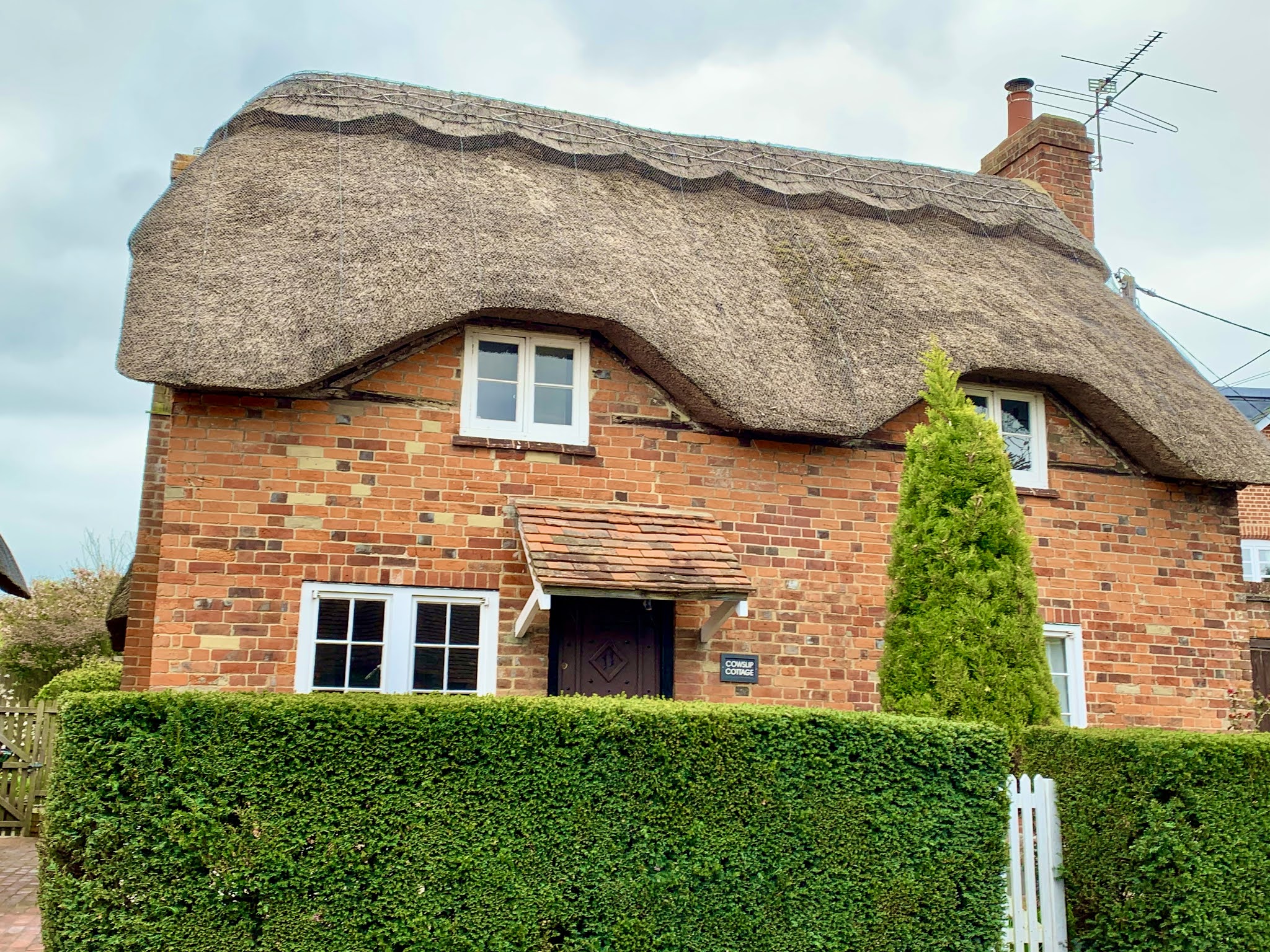
Locals claim that the picturesque line of estate cottages at Freefolk comprise the longest continuous stretch of thatching in the country. Whether true or not, they're certainly make one of the most photogenic scenes in the local area.


And locals know it. They've even multiplied their charm by insisting on matching thatched bus stops out front.

Follow the brown sign to the Church of St. Nicholas, up a little lane across the road, for another treat. The old vicarage here is now a multi-million pound manor house beside the Test; the stuff lottery dreams are made of. 

Tucked into the south flank of the property is the tiny, ancient church. Its foundations date from the 13th century but the exterior you see today is thanks to some remodelling at the time of William and Mary (early 1700s).


The interior has a peaceful simplicity


but also reminds you of the layers of history that build up in a place like this. Recent work has uncovered some early wall paintings of St. Christopher, probably whitewashed during the reformation.

The most spectacular thing here, however, and delightful surprise in such a simple place, is the ornate tomb of Richard Paulet, son of the 2nd Marquess of Winchester. 

After seeing the relatively simple family tombs in the church at the family seat in Old Basing, it was a surprise to find one of them lying in such isolated splendour. 


A signboard outside reveals that there's a county-maintained trail linking 5 different mills along the Test, running from the Bombay Distillery at the Laverstoke Mill to the Silk Mill at Whitchurch. 


Following it a short way from St. Nicholas' (where there's free parking just across the lane) takes you down to the main road, past the thatched estate cottages and into a riverside woodland so magical it reminded me of the famous moss-garden we visited in Japan. (Sadly the light at the time didn't allow me to get any decent pictures of it.)

Beyond that, a bridge crosses the test offering magnificent views, and just a few steps further on a cement weir that offers you a place to sit beside the river.

The same geography that makes North Hampshire's rivers clean, swift-flowing and exquisitely beautiful also makes them rare, ecologically fragile and home to prized brown trout. This means that most of the riverbanks are fenced off on inaccessible private land, jealously guarded for their fishing rights and zealously protected from polluters. This is one of the few places I've found where you could sit quietly beside the water, and I plan to be back. Next time, it will be with a picnic hamper, a chair and a watercolour set. 

I suspect not much has changed here since Jane Austen's day ... and I'd guess that's just the way the locals like it. I certainly do.

Thursday, 8 April 2021

Old Basing's been forgotten by time ... to its modern benefit

Almost everywhere in and around Basingstoke is bigger and more significant today than it was in the past. Old Basing is a notable exception.

For a little over a century after 1531, Basing (the "Old" came later) snuggled against one of biggest aristocratic palaces in the country. In ornate red brick accented with stone, Basing House resembled Hampton Court and sprawled over two separate but interconnected buildings with more than 360 rooms. The village beyond its walls would have been a bustling place, ready to spring into action to support regular royal visits (Henry VIII and all his reigning children came here) or simply to take care of the resident Paulet family and their entourage. 

The grandeur was a statement of success by the man who became the first Marquess of Winchester. William Paulet was Lord High Treasurer of England for more than 20 years and served in major government roles under Henry VIII, Edward VI, Mary I and Elizabeth I. He must have been an extraordinary diplomat to remain in favour through those tumultuous administrations, particularly since he remained Roman Catholic throughout. 

The site where the house once stood is now a pleasant place to stroll around ruins, earthworks and gardens while you contemplate how the mighty can fall. The best time to come is when historical re-enactors are encamped to commemorate Basing's role in the Civil War. (I wrote about that here.) The site was closed due to COVID precautions when I had a recent ramble, but you can see the original castle mound which held one of the palace's two main buildings from certain spots in the village.

The old gate lodge offers some picturesque (and free) sightseeing just next to the village pub.
But the only significant building still standing from those glory days is the enormous tithe barn.
Paulet family diplomacy couldn't carry them through the Civil War, however. I suspect the 5th Marquess' overt Roman Catholicism and close friendship with the French Catholic Queen Henrietta Maria made him a particularly juicy target for Cromwell. The Parliamentary leader was so irritated by two failed sieges of Basing House he came to Basingstoke to direct the third personally. 

So eager was Cromwell to destroy the Paulets and their cause that, once he'd taken the house, he not only destroyed it but encouraged villagers to re-use its materials to enhance their own homes. Thus fuelling a bit of a building boom in Old Basing in the 1640s. (While I can't be certain these particular buildings were part of the post-war boom, they certainly look the part.)


Basing House was destroyed, but its owner lived on and his son's political choices were luckier. He supported the import of William and Mary from Holland (The Glorious Revolution) and they rewarded him with a new title: Duke of Bolton. He rebuilt a very grand hunting lodge next to the old tithe barn (another memory long torn down, sadly) and chose to be buried in the village church. By this point both he and the parish church had converted to Church of England, reputedly much to the locals' dismay.
Villagers also were doubtless irritated that Charles removed himself from cheek-by-jowl proximity to the village by building the new family seat within a buffer zone of hundreds of acres of enclosed parkland. His new neoclassical pile was equidistant between Basing and the flourishing market centre of Basingstoke. Thus began Basing's slide toward's backwater-dom.

About a mile's walk from Old Basing's village centre you'll find the main gateway to the estate he built, called Hackwood Park.

Hackwood Park is no longer in the family and ... thanks to the M3 motorway ... could no longer be considered a part of Old Basing since the massive, always-bustling highway now cuts through the old estate and forms an impressive barrier between its old village and the house. Though you once might have walked easily from village to house, today the new gates are on the other side of Basingstoke and it's a drive of several miles to reach them. (The house isn't open to the public.)

The land between the arch and the motorway became a public park called Crabtree Plantation after the M3's construction. The views are spectacular, though the constant whir of traffic undermines the bucolic scene.

A long, narrow strip on the north side of the park is woodland, however, which muffles the traffic noise. It's a popular local spot to exercise both dogs and children, and can seem almost Tolkeinesque is certain lights.

Meanwhile, back in Old Basing, nothing much happened. Following the trajectory of places like Bruges and Venice, with its main claim to fame gone the village sank into quiet obscurity. Though people added houses in the 19th and 20th century, the place retains the feel of the 16th - 18th, and is one of the loveliest places to ramble around Basingstoke. 
There's a beautiful walk along the river Loddon ... and an unusual one, since so much of the river's access is privately controlled because of conservation and fishing rights.

Sitting alongside the river is one of the prettiest pubs in the area, Barton's Mill:

And the village remains full of picturesque houses to appreciate:


Though the modern-day Paulets have decamped to South Africa, the original ones sleep soundly in the parish church.

The fifth marquess, who fought Cromwell and lost, had grander ambitions and had built a lavish mortuary chapel on a hill above Basingstoke. But it was destroyed in the Civil War and is now just a picturesque ruin. (See this story for more.) His ancestor's tombs frame the high altar in Old Basing's parish church, and his son's tomb (pictured above) is in a side chapel.


Old Basing seems to be working on a new claim to fame. Last autumn catering veteran Tim Goodwin opened The Street Bakeshop, an old-fashioned bakery where everything is done on-site, by hand. Their sourdough is the best I've had outside of Michelin star restaurants, and their pastries on par with anything the Danes could crank out.


Fortunately bread and cake fall into the "essential" category so the shop has been able to remain open for take-away though lockdowns two and three. It's rare to see the place without a queue outside, and it's quickly become a local legend. 

So for what's probably the most picturesque walk in the Basingstoke area: start at The Street for coffee and pastries, take a long ramble around the village and perhaps even around Crabtree Plantation, then collapse at the soon-to-be-reopened Barton's Mill for a pub lunch beside the Loddon. 


Friday, 2 April 2021

Beneath the modern blight, Basingstoke is rich in history and architecture

Modern Brits are so attached to foreign holidays that "staycation" typically means not leaving the country.
Not leaving home? Now that's a stretch. 

It's no surprise that my wanderlust fit well amongst the English; other than Christmas, I don't think I've ever taken off work and not gone somewhere. But I'm doing it now. With three intense months at my back I simply don't have the energy to wait until lockdowns lift and hotels open. Thus I'm embarking on two weeks Chez Bencard, without even local museums, stately homes and restaurants open to make things memorable. What's a holiday sightseer to do?

I've decided to treat my home territory as if I were a foreign tourist, going out on an excursion every day to learn about, photograph and walk around spots I may take for granted in my daily life. Pandemic lockdowns take interiors off-limits, so my explorations will be about exteriors, views and outdoor rambles. First up: Basingstoke.

If you want to see how the English class system is still alive and well, tell upper-middle class professionals you've moved to Basingstoke. Their inherent politeness will prevent them from saying what they really think, but for just a moment as they master their surprise their faces will register a mix of surprise and horror. Then will come the understanding consolation. "I suppose the commuting is good from there, eh?"

Why the disdain? In modern minds Basingstoke is perhaps best known for its role in post-war slum clearances from London. Government money poured into the place in the 1960s to fund great swathes of social housing into which some of the capital's poorest were re-located. The architecture was dismal and oppressive. However, as an informative exhibit in the town centre's museum points out, the new housing was considered luxurious by people who'd had little access to indoor plumbing, space or fresh air. 

The town grew steadily but poor architectural choices continued. Brutalist office blocks and grimy overpasses line the motorway-like main drag through town. Strip malls, office parks and industrial estates ring the town centre. Doubtless trying to improve things, civic worthies in the early 1970s bulldozed much of the town centre and replaced it with a shopping mall and car-parks. It is, on first glance, a charmless, down-at-heel amalgamation of cement, steel and eye-punishing signage that is only made palatable by its transport links. (And perhaps by Berry Bros. & Rudd's HQ in one of those industrial estates.)

Yet Basingstoke is not a "New Town" like Basildon, Bracknell or Milton Keynes. The links that make it beloved of today's commuters and warehouse managers run along pathways that have been here since pre-historic times. The original name, Embasinga stocæ, goes back to an Anglo-Saxon tribe known as the Basingas, led by one Basa. All of the "Basings" are homes of Basa's people. Basingstoke saw the defeat of King Aethelred by the Danes in 871, was a thriving market town by the time it turned up in Domesday and was sophisticated enough to host Katherine of Aragon overnight as she journeyed to the English court for the first time from her native Spain.

There's more existing from Tudor and Medieval times than you'd think, but you have to look hard. The most picturesque are the ruins of the mortuary chapels just northwest of the train station.


The chapels once held the remains of, and services for, the great and the good of the area. Destroyed in the Civil War, they're just picturesque ruins now, but heavily-worn monuments like that of Sir William de Brayboeuf (below) give a sense of the magnificence of the place.

The chapels would have once looked down upon St. Michael's church, sitting in a green valley beside a tributary of the River Loddon. The church is still there, though the view is blocked by the train station and the bulk of The Anvil Theatre. I suspect most shoppers in Festival Place never realise that a historic monument lies just out M&S' back door.

Though most of the current building dates from the 16th century, its foundations are far older. If shoppers can be bothered to leave the mall, they'll see this:

A walk around to the front and west side reveals a showy chequerboard pattern of stone and flint. The architectural flourish is a reminder that local worshippers in Tudor and Stuart times might have included Henry VIII's Lord Chamberlain or the Marquesses of Winchester. 


It's the steadfastly royalist Marquess you can credit for the artillery damage it's still possible to pick out on the south side of the building. Basingstoke was the scene of fierce fighting and the Marquess was such a thorn in Parliament's side that Cromwell came to the town to oversee the royalist's destruction himself.
Facing the church's west door across an unfortunate car park is Church Cottage, probably Basingstoke's best-preserved and least-altered Medieval building. Appearing in records from 1277, the building has been a home, a school and brewery offices. It's now the administrative centre for the church.

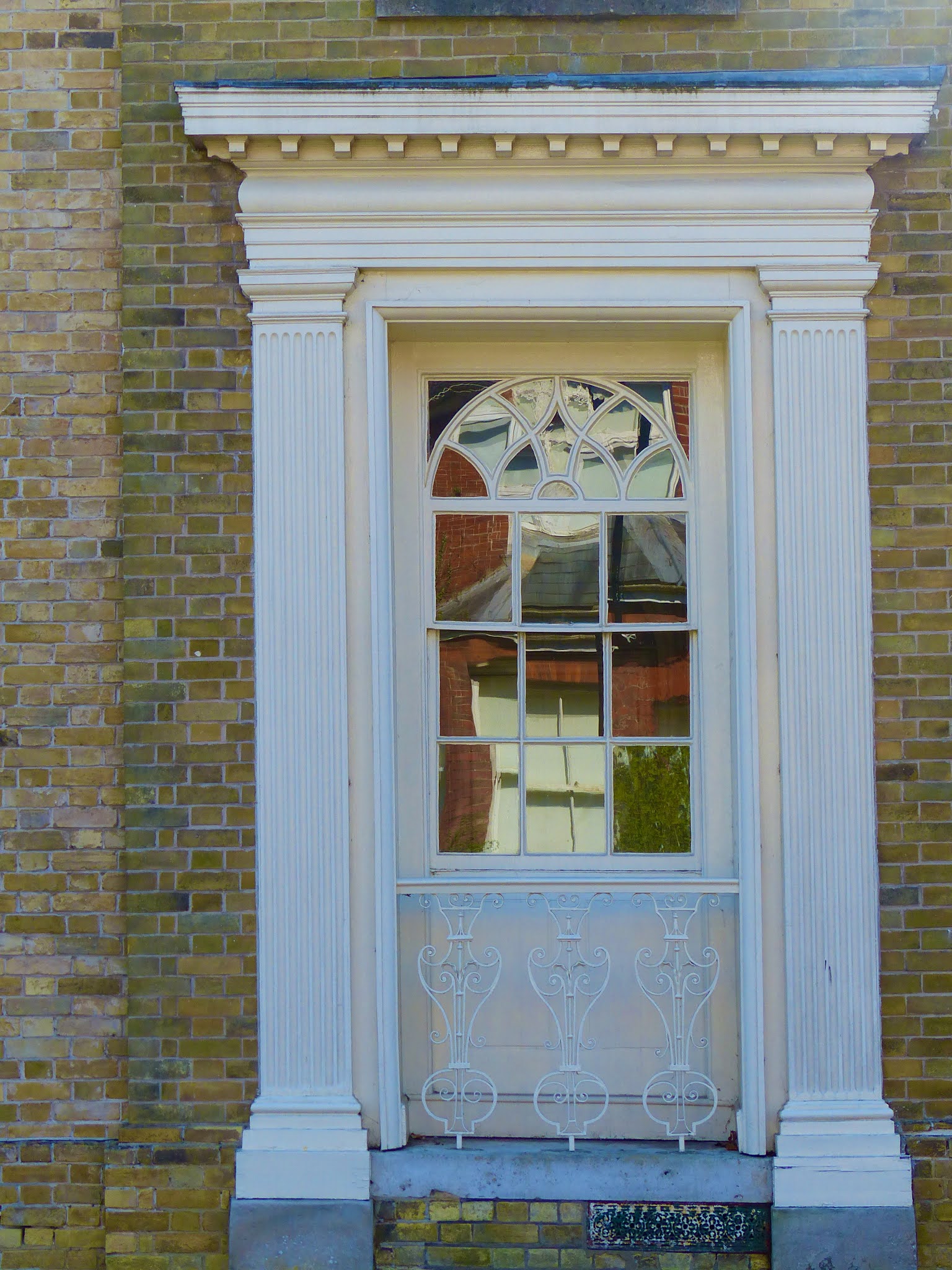
The rest of the town's Medieval roots seem to have disappeared, but if you look at the backs of buildings you can see that many Georgian facades are covering much older buildings.


There's one significant building from the early 17th century: a lovely row of alms houses that demonstrates how social housing in times past managed to be both useful and architecturally gratifying.

In fact, I suspect a historian might find rich source material for a book on the history of social housing, since the town seems to be full of examples from the 17th century right up to this delightful Lutyens-style row from the 1930s...

And these by the church. It's not until the developments of the 1960s that things got ugly.
If you escape the shopping mall and wander through what's known as the "Top of Town", you'll find a mix of Georgian, Victorian and Edwardian facades with just a few modern intrusions. Sadly its charm is obscured by a mix of grime, poor repair, garish signage and empty shopfronts. This classic building with its bow-fronted Regency windows is a case in point. (I'm sure the team at Wawa deliver excellent massages, I'm just commenting on how glorious the building could be with some TLC and a better use of those windows.)

Observant explorers will notice a profusion of broad arches built into the architecture:


These are the telltale remains of the coaching inns that once competed vigorously throughout town. Roughly half way between London and Southampton, Basingstoke was the perfect place to stop on the journey. Coaches would clatter through these arches into busy yards where horses could be refreshed while people went inside for food, drink and rest. Only the Red Lion has stayed true to its original purpose.

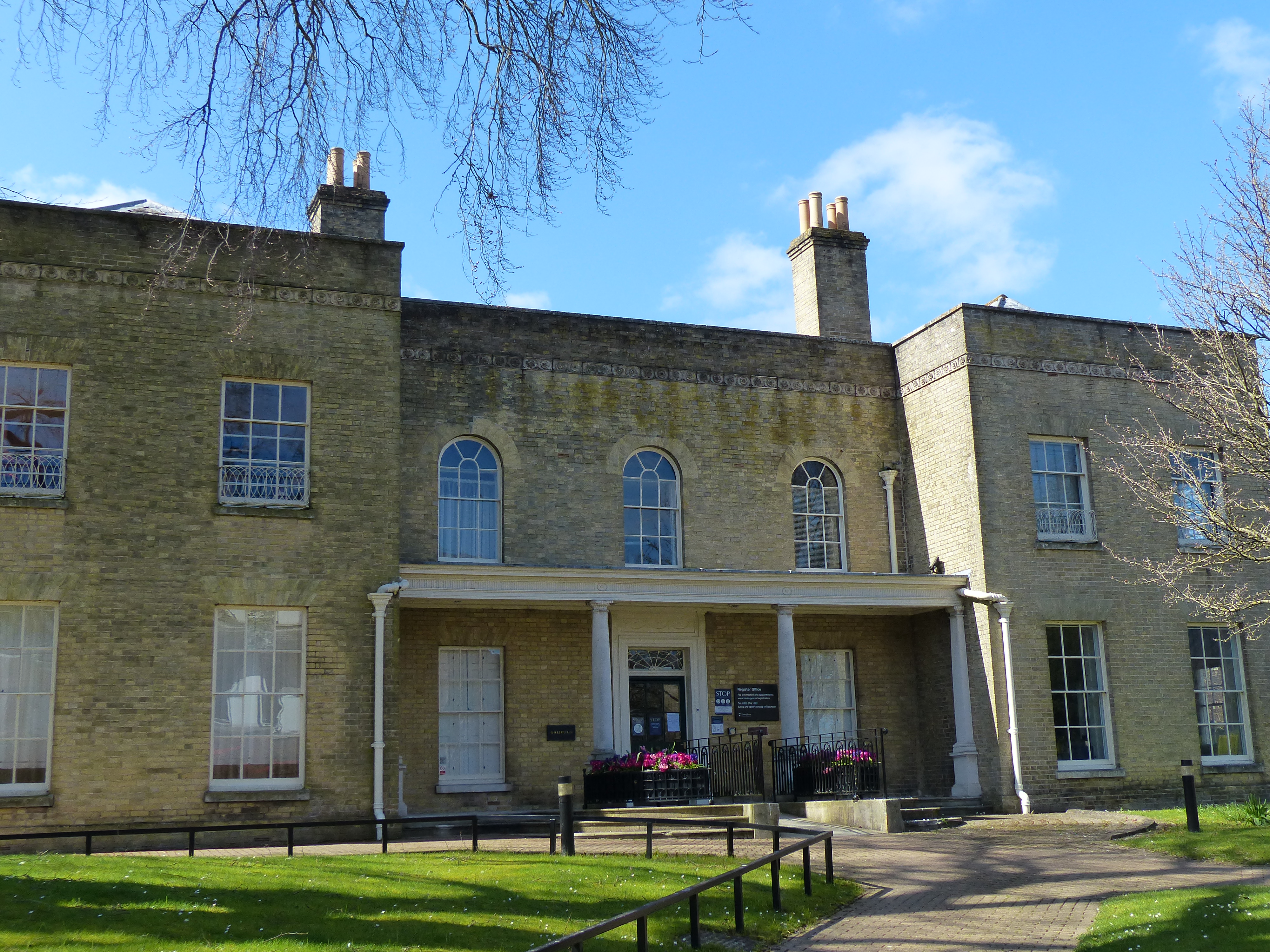
Here are some other Georgian highlights from the town centre:


One of the most famous people associated with Basingstoke's history in this period is Jane Austen, who grew up in a village eight miles away and would have come here regularly for shopping and socialising. The Assembly Rooms where she would have danced no longer exist, but the town recently put up a statue of her in front of the Wallis Museum at the centre of the "Top of Town" district.


After Jane, the town's most famous association is with Thomas Burberry, a local draper whose early observations of how shepherd's smocks seemed to become resistant to weather after their wearers handled lots of sheep led him to develop waterproof gabardine. His outerwear would no doubt have been popular in any circumstance, but a lucrative army supply deal during WW1 and direct endorsement from the king ensured his fortunes. His headquarters and factory, once in the Top of Town, are long gone. But his greatest legacy is undoubtably the Regency-era house and grounds he purchased and later donated to the town.
These days the Council occupies newer buildings around it, leaving Burberry's legacy to be used for special events and weddings. It also forms the gateway to War Memorial Park, created from the house's original grounds and marked by the town's monument to the conflict from which Burberry made his fortune.
The park is a pleasant, if unexceptional, lawn ringed by trees. Its best feature is probably its bandstand, used for summer concerts, and an aviary full of brightly-coloured songbirds.


Other shopfronts, the town's majestic Fairfields School and the opulent cemetery caretaker's cottage (where cricket commentator John Arlott was born) attest that Basingstoke was a prosperous and gracious place in Burberry's time.


It's no surprise that a rapid population explosion altered the place almost beyond recognition. At the start of WW2 the town had barely 13,000 residents. It's now the largest town in Hampshire with more than 157,000 (according to the Council's web site). It is, sadly, all too typical in England in its disfigurement by well-meaning officials with a taste for drab modern architecture and a contempt for history. And the challenge continues.  The Council predicts another 20,000 residents in the next 20 years.

Some of the new housing supporting this boom is attractive stuff tapping in to the region's history and architectural vernacular. Some is cookie-cutter horrible. Most intriguing is a new committee investigating the revival of the Top of Town area. As my walk revealed, what's left of the historic centre is full of good potential. With renovation and ... most critically ... a use plan that brings in people with money to spend, central Basingstoke could still be a place to make Thomas Burberry, Jane Austen or the Marquesses of Winchester proud.