More than a thousand articles on travel, fine dining, good wines, art and culture. Mostly European, with some further afield. If you’re using a mobile device you’re probably only seeing a handful of the most recent posts. Switch to a desktop browser or scroll to the bottom and click “view web version” to see the search function, archives and location-specific collections of articles.
Tuesday, 18 March 2025
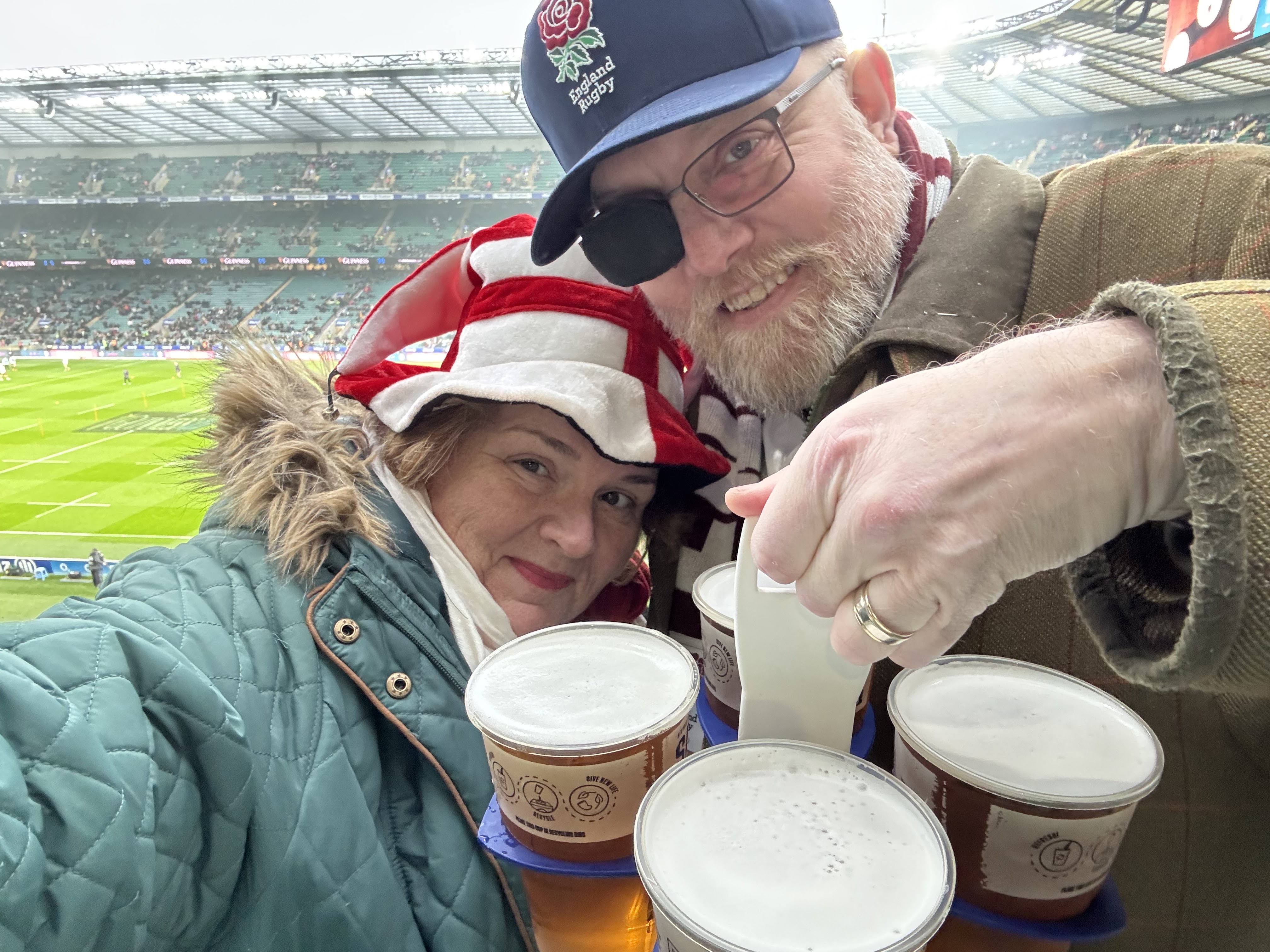
Rejecting the received wisdom, we enjoy Cardiff for rugby but don’t need to do it again
The Welsh capital is a nice enough place but without context you might be surprised it turns up on a big birthday bucket list. That context is rugby.
Rugby is the national sport in this mighty little country. It’s significant in other parts of the UK, but only in Wales does it eclipse all others with a dominance only otherwise seen in New Zealand. Unsurprisingly, therefore, the national stadium in Cardiff is legendary, and the annual 6 Nations match-up between England and Wales … played here every other year in rotation with England’s home ground at Twickenham … is one of the hardest tickets in rugby to get.
Tickets are always available for those with the cash and the desire to find a way, of course. Which is why this year we took our second trip with England Rugby Travel. This time we weren’t flying half way around the world to Japan, but driving two hours up the M4.
Was it worth it?
Like any premium experience, value comes down to your passions. If you aren’t a keen fan then it’s a lot of money for two nights in a generic corporate hotel (the Radisson Blu), an evening event with a couple of drinks and a styrofoam box with a burger and chips, and match seats less that 20 rows from the roof, behind the try line. (That would be “end zone” for my American readers.)
The reality, however, is that there’s no practical way to get tickets to this match as an outsider other than hospitality packages. And the overall experience comes with a lot of intangibles. The pre-game event brought us face-to-face with rugby legends telling tales of the past, analysing team performance, and making predictions for the next day. As a relative newcomer to the sport I knew who the people were and was entertained. (They’re all amusing, but emcee Martin Bayfield could have been a stand up comic.) If you grew up a rugby fan in England, however, as my husband did, then the guys on stage were legends, taking the night from amusing to magical.
There was more magic on the streets the next day with the Cardiff pre-game experience. You can enjoy this without a premium package. In fact, I’m fairly sure that thousands amongst the crowd didn’t have tickets to the game at all, but came into town for the atmosphere and would be watching play in one of the local pubs instead.
Unusually, Cardiff’s Principality Stadium is tightly-wedged into the centre of town. There’s no fan zone behind the ticket barriers, rather an approximately 20 square-block area jammed with bars and restaurants on the outside. That entire town centre becomes a fan zone for hours before and after the game. While I’ve never seen anything like it in Europe, it’s remarkably similar to the American college football scene at the big state universities. Good-natured fans stroll the streets, bands set up in squares to entertain the crowds, vendors sell patriotic fashion and face painting.
We faced two challenges. Once you get within three hours of kick-off there’s no chance of sitting down anywhere, and the queues for beer make it incredibly unlikely you’re getting a drink. In the latter it reminded me a great deal of Oktoberfest in Munich, walking for hours around the world’s most famous beer festival, thirsty.
We’d been lucky enough to get seats at the Owain Glyndwr pub five hours before kick-off; probably the last two seats in the place, sharing a table with others. We admired the two-pint glasses around us and should have taken the hint. After nursing our first pints for an hour … we were going to be drinking all day, so were pacing ourselves … we attempted another round and had to give up. The crowd at the bar was 30-people long, five people deep, and I barely moved in the 20 minutes I stood in the queue. I gave up and returned to our table, where we sat drinkless until an hour before the stadium gates opened. Clearly we should have purchased enough first time round for the duration.
We spent an hour walking through town drinking in atmosphere instead. It was fun, but in many streets we were facing the kind of body-to-body crowding that makes you think of news reports of unfortunates falling over and being trampled to death. Queues at all the other pubs we passed were equally mad; we were clearly not getting another drink in hand until we got into the stadium. Thus we were amongst the first through the turnstiles.
Here’s the conundrum: Getting in this early gets you easy access to food, drinks, seats and toilets, but there’s no atmosphere for at least the first hour and, unlike Twickenham, there are no screens showing the earlier match. Maybe we’re just old farts, but we were happy to forgo the buzz for our own comfort. Perhaps locals know how to get seats and drinks: clearly most fans don’t bother getting to the stadium until about 40 minutes pre-match, when there’s a sudden surge to fill seats for the pre-game show.
It’s here that I thought the Welsh really triumphed. From the flag unfurling to the bands, the lights and jets of flame, the DJ and the traditional male choir: the pre-game show here is a triumph. The Welsh reputation for singing is well-deserved and the hymns thundered.
We expected the local voices to add to the atmosphere throughout the game. When the roof is closed, as it was for our match, the crowd is often called the 16th man, giving the home team an intimidating advantage. There was no such energy on display. I suppose I shouldn’t have been surprised, given that the home fans were sitting on a 16-game losing streak and then had to watch a 68-14 pounding.Post-match crowds on the streets outside remained an uncomfortably tight sea of bodies. We retreated to our hotel, changed clothes and ventured out for a later dinner reservation at The Ivy Cardiff. We were incredibly thankful to the friend who had warned us that reservations were essential, or we wouldn’t get dinner following a match. After a day of crowds and queues we were grateful for table service and a quieter atmosphere.
So my verdict on Wales for away games will disappoint my Welsh friends. I am glad I ticked the box, but I wouldn’t want to do it again. At least not without a local who knows the tricks to negotiating the crowds better. I far prefer the away-game experience in Rome, even though the stadium is a tram line away from town.
Sunday, 9 February 2025
Why rugby has become an essential part of my English life
Carpets of the little white flowers remind me that winter is blessedly short here. From now on something will be blooming consistently in the garden. Skies may remain grey, drizzle may fall, but flower trails at heritage properties across the country give me a reason to get outside.
It’s not enough of a lure to get the husband out of the man cave on a winter weekend, however. People need to be chasing a rugby ball for that.
Rugby has turned up a fair amount over the years in this blog, mostly in conjunction with travel we’ve coordinated around England away games. It’s been an excellent excuse for Paris, Rome, and most notably Japan, where we were lucky enough to attend some of the 2019 World Cup. I haven’t written much about England’s home ground of Twickenham, however, despite the fact that we’re now regulars.
It’s time.
How did an American who’s mostly ambivalent about sport, with the exception of St. Louis Cardinals baseball, end up passionately supporting England rugby in the stadium five to 10 times a year, with more on TV? And why? Part of it is, quite simply, that I married in. Some men have a mid-life crisis and buy themselves a ridiculous car or a young wife. Mine, thank God, went for debentures at Twickenham. (This is a particularly English version of season tickets; your investment buys you right of first refusal on tickets for your seats, which you then buy at face value. Given the difficulty of getting seats for a sport where every match always sells out, this is the only way to guarantee attendance.)
But I’m not just tagging along to be a good wife. I honestly enjoy the game.
All the things I liked at my first outing … fast-paced action, fit male bodies worthy of admiration, a merry and highly social crowd … have only multiplied in my affections over the years.
I can add patriotism. I love England as an enthusiastic immigrant. I had to work hard to gain my place here and I regularly appreciate things that native-born citizens take for granted. I think it would be great for the country if more people mustered more vocal enthusiasm for the place. But I grew up in a place where flag-waving is the norm, whereas patriotism here … with a few exceptions …. is far less visible. I love wrapping myself in the flag. Wearing a crown of red roses. Belting out Jerusalem and God Save the King. You get to do that at the rugby.
As I learned more, I fell in love with the structure of a game that has a role for any body type. The slight, little people. The tall lanky people. The chunky, broad types. Slow ones and fast ones. There’s a place for everyone in this remarkably inclusive game.
While I still only have a tenuous grasp on the laws of rugby … and know enough to call them laws rather than rules … I have a much better understanding of what’s happening on the field. Enough, certainly, to be able to roar frustration at gaping holes in the defence and appreciate the beauty of a particularly nimble tackle or agile run. Honestly, I don’t think it’s even possible to have a full grasp of the laws unless you’ve been involved with the game since childhood, and probably played it, because they are profuse, subtle and complicated. And ever-changing. Leading me to my belief that thick people can’t play rugby. It’s one of my favourite aspects of the sport.
Long before I paid attention to what was happening on the field I worked with the sport’s veterans off of it. If you want to lure British senior executives out of their offices, rugby regularly tops the list as the most enticing corporate hospitality offering. Thus I’ve hosted meetings where Clive Woodward offered leadership tips, got to interview Lawrence Dallaglio, and explored the importance of data in the game with Ben Kay. I even learned how to do the Hakka from New Zealand legend Sean Fitzpatrick. All of these events included drinks and socialising with the former athletes who were always incredibly bright, easy conversationalists and great fun.
These guys gave me my initial impression that people rugby people are special … a belief that’s only strengthened as I’ve come to know the game. So I’m not surprised that following Maro Itoje on Instagram can teach me about West African art and that Joe Marler’s podcast gives me fascinating insights into quirky professions.
These days, I extend that exceptionalism to the fans. I can’t think of anything else I do in my life where everyone involved is so uniformly pleasant and easy to get along with. In a country where you don’t talk to strangers on the train and cheerfully greeting an oncoming pedestrian is regarded with suspicion, fans inside the stadium strike up conversations like they’re all old friends. Or, if you’re part of the strange minority that is USA rugby fans, like family. This geniality extends to opposing fans. At the 2015 World Cub a group of South African fans consoled me after they trounced the Americans. Everyone loves the Italians, perennial 6 Nations underdogs. Even the long-standing Calcutta Cup, fought between the English and the Scots, is tremendously civil.
I admit, this may be because of the total lack of diversity in rugby fandom. I am not sure there is any other activity on the planet that is so relentlessly upper middle class. In the 10 minutes it took me to cut across the fan zone from the car park to our seats I once overheard conversations about how a new acquisition was going, how a retirement portfolio was weathering recent market fluctuations and the perils of moving the youngest child into student housing at Oxford. I suspect, if I worked at it, I could develop more new business at Twickenham than on LinkedIn. Though who wants to spoil such a fun day out?
Because fun, ultimately, is why I’m content with investing so much of our free time, and our discretionary spending, into following rugby. Every game at Twickenham is a celebration. Following the team away is even better. We’ve bought a package to see the lads in Cardiff for the last game of this season’s 6 Nations, and I’m ridiculously excited. I have no doubt it will be the highlight of our first quarter of 2025. When we were having serious conversations about economising at the turn of the year we took a hard look at the rugby and, rather surprisingly, I was even more vocal in its defence than he was. Whatever the result on the field, the whole experience is consistently joyous.
Unadulterated joy is too rare a thing to sacrifice unless there’s no other choice.
Monday, 14 February 2022
Mercure Centro Termini is an efficient base for culture and rugby
Hard to believe it’s been six years since my last visit to Rome. The friendly folks at Facebook won’t let me forget, however, as they keep pushing memories my way. They look suspiciously familiar. Another Six Nations rugby weekend. Another Valentine’s Day. Another loss for the Italian team. For an explanation of why it makes sense to travel to Rome to watch rugby, read my original story.
Not everything is the same, however. The authorities have laid on far more trams so transport to and from the Stadio Olimpico was far easier. Inside the stadium there’s been a complete overhaul of food and beverage provision, with a wide variety available from food trucks, stands and vendors strolling the aisles. It’s the only stadium I know surrounded by parkland; go early, grab a beer and relax on the grass under the umbrella pines. There was still an abundance of queuing, but this time a new cause: Covid-19.
Given that the Italians were the European front line of the pandemic and suffered horrifically, it's no surprise that they're now hyper-vigilant on disease control. You probably stand more chance of getting hit by an asteroid than of catching Covid in Rome. FFP2 masks are required everywhere, only allowed off for seated eating or drinking. You won't get in to any public venues without showing your vaccination certificate; sometimes multiple times. To get into the game, the name on your ticket, photo ID and vaccination certificate had to match up. We saw multiple people turned away for a missing element. Major museums do the same triple check plus a temperature scan. At the stadium, we had to go through three different queues with variations of checks before we finally got to our seats. If this is the future of major events, plan on getting everywhere at least three hours in advance.
Despite the increased admin, prolific queues, and extended hours in a mask, a long weekend in Rome remains an ideal way to break England's winter gloom. We got lucky with sunny skies and 16C (61F) temperatures for the whole visit. Travelling out on a Wednesday evening and back on the Monday gave enough time for plenty of sightseeing and lots of wonderful Roman meals without being away from the office too much. Rumoured plans to eject Italy from the Six Nations tournament might be better for the game, but will strike a heavy blow to options for winter weekends away.
Prices at the hotel we'd used last time had skyrocketed, so we opted into our customer loyalty programme and went for the newly-opened Mercure Centro Termini. Its location 1/3rd of the way down the long, straight road between the main train station and the Victor Emmanuel Monument is ideal for sightseeing, with most things in walking distance. It's amazing how much this area has changed since my early visits to Rome. In the '80s the station and everything around it was run-down and a bit dangerous. The whole neighbourhood has had a makeover (other than one small park across the street from the bus terminal that's still the preserve of weeds, rubbish and the homeless) and the station itself is modern, efficient, clean and studded with upscale shops.
The local Mercure is so new, however, that taxi drivers don't know where it is. Even when you tell them the specifics (at the corner of Via Nazionale and Via Agostino Depretis) they confidently take you somewhere else in the area. The newly-renovated building ... a pink Venetian Romanesque-style palazzo out of place in the grand, white, neoclassical street, obviously wasn't designed as a hotel. There's no real lobby to speak of, just a check-in desk across from the lift doors and a few couches on either end of the bar and restaurant that faces the street. If you didn't look up to see the Mercure flag hanging above, you'd never guess from what you can see through the windows that it's a hotel. Which might be part of the problem with the taxi drivers. While the street-facing restaurant is busy at breakfast time, when guests can add a functional but unexceptional buffet breakfast to their tab for €13, we never saw anyone eating lunch or dinner here, which made the whole place a bit odd and lacking in atmosphere. I'd like to see them lose some of the restaurant tables and create more lounging space.
Based on our lodgings, I'd guess there's a lot of variety in accommodation since they seem to have wedged hotel rooms into a space built for something else. Ours was generously sized but oddly shaped; a long, narrow rectangle with exceptionally high ceilings ... the walls were taller than the rooms were wide ... divided into two distinct spaces by an archway. A super-king bed took up almost all of the second room, while the first by the door was occupied with a shelving unit, desk and one chair. A modern, spacious bathroom continued the enfilade on the other side of that. Tall glass doors in both rooms led onto a balcony that ran the length of the space but, sadly, had no chair or table.
Staff were friendly and consistently helpful, particularly the attentive and charming Daniele who, running the bar and restaurant from breakfast into the afternoon, became the real face of the hotel as his domain doubled as the lobby. While short on atmosphere, the Mercure was functional, quiet, good value for money and I'd stay there again. The location gives easy, quick access to the airport via the Leonardo Express train (€14 per person, travel time about half an hour), though we did splurge on arrival and took a mini cab door-to-door (€60, but saved us 20 minutes of walking with luggage, with the only driver all weekend who knew the hotel).
Our itinerary for the weekend balanced serious sightseeing with great food, shopping and sport. I was conscious of being at a tipping point perhaps never to be send again: all the tourist attractions were open, but there were few visitors beyond Europeans. Though the Spanish Steps and the Vatican were crowded, numbers were nothing like recent history.
Sightseeing was a joy. Thursday was all about Baroque church architecture, Friday dominated by the glories of Ancient Rome, and Saturday given to the Vatican. With Sunday’s game not starting until 4pm we could fit in some shopping around the Spanish Steps in the morning. Monday was my only miscalculation; a day somewhat wasted because I forgot that museums are all closed in Rome at the week’s beginning. I should have saved the churches for departure day. Despite that miscalculation I still managed to pack a prodigious amount of art, architecture and history into a short period, and managed to tick one place of my still-to-see Roman bucket list. Enough to finally have some decent experiences to blog about. More to come…
Monday, 3 February 2020
Rugby, Montmartre and 25 Hours brighten up a grungy Paris
Songwriters may love Paris in the springtime, but on a grey, rainy weekend in February there's a lot less poetry about the place, particularly given current levels of rubbish, graffiti and homeless people.It's been almost six years since the last time we were in Paris, and the city has changed noticeably. I'd always considered it to be cleaner than London, but no more. Discarded papers and packaging blew down streets in most neighbourhoods. Go out when shops are closed and you'll see that most security blinds have been defaced by street "artists". The graffitti isn't just in marginal neighbourhoods. I spotted several defaced walls on the Left Bank overlooking the Île de la Cité, in buildings likely to house multi-million dollar apartments.
Most surprising were the homeless. Around the Gare du Nord and Montmartre we saw them established on full-sized, filthy and rain-sodden mattresses, looking like they were long settled. We saw obviously homeless people sleeping on the ground in metro stations or riding trains to stay warm. Tragic bundles of humanity huddled in doorways in Saint-Germain-des-Prés, amongst some of the world's most expensive galleries and antique shops. While London has a significant homeless problem, they don't seem to be as obviously established in the middle of traffic patterns as those we saw in Paris.
Though the city looked grubbier everywhere we went, I confess that three days of rain and staying just across from the Gare du Nord probably gave us a disproportionately grim view. Neighbourhoods around train stations are inevitably a bit dodgy, no matter how hard they push their urban renewal projects. Someone's clearly been putting effort in around here since my last visit, since the station's grand facade is now spotlessly clean, artfully lit and fronted with new civic sculpture. Ignore what you see on street level and it's quite magnificent.
The 10th arrondissement may lack the charm of my usual preferred bolthole in the Marais, but if you're coming from London by train ... and if your primary objective for the weekend is a rugby match at the Stade de France ... you can't beat the location. And if you want to stay around here, I'd recommend the 25 Hours. It's an enormous hotel within the Accor chain in a classic 19th century building, immediately across the street from the station's main entrance, but it feels neither corporate nor traditional. In fact, they've somehow managed to pull off the feel of a boutique hotel despite having hundreds of rooms.
The decor is North African fusion with hints of Asia and industrial chic. A minimalist front desk also has the feel of an African or Caribbean market, with craft items inspired by the hotel's design for sale and a coffee and pastry stand to one side. Upstairs, hallways are an eye-popping fuschia, rooms are decorated in bright primary colours and vivid batik prints. The rooms are well-lit (often a problem in old building renovations) thanks to fun exposed bulbs and signage, mattresses are deep and pleasantly firm, there are surprisingly large shower rooms and even more surprisingly large TVs with sharp definition. The whole place is flooded with high-speed WiFi. The first (American 2nd) floor has a cocktail bar with a cool vibe, an extensive drinks menu and a live DJ on weekend evenings. There's a lounge area with a big communal table for people who want to hang out outside of their rooms and ... the big boutique-y touch ... a table with typewriters and printing stamps where you can write and post a love letter to whoever you're missing.
This floor also features a family-run restaurant called Neni that served up the best meal we had the whole weekend. It markets itself as Persian-Arabic-French-Russian fusion, but I'd simplify that by putting it in an eastern Mediterranean category. Think hummus, babaganoush, spiced lamb. I had their Jerusalem chicken platter; think fajitas, but the grilled chicken and peppers were served on a pillow of silky-smooth hummus and served with the best pitta bread I've ever had. We didn't get to Neni until our last night, when we'd exhausted all the most likely-looking bistros in the street. Had we started there, we would have been back.
I hadn't done any restaurant research before the trip, because the primary objective of the weekend was a simple one: rugby. Typhoon Hagibis had cancelled the France v. England match to which we'd had tickets during last year's World Cup, so getting to the same match up in the 2020 Six Nations tournament seemed like an excellent Christmas present for my husband. (It also gave me the chance to go to Paris' much-publicised Da Vinci exhibition. Of that, more later.)
If you get in on the day the tickets go on sale at the Stade de France you can get tickets direct from the venue. I missed this window so bought tickets through rugbyticketservice.com They're highly professional, with frequent communications and an emergency number if anything goes wrong. It's still stress-inducing, however, to be using a reseller when the official tickets warn so prominently against it. And, of course, you're paying double the price. Best to be more organised in the future.
If you were an England fan, the result was disappointing but the experience of seeing a game in the Stade de France fantastic. This is entirely different from the carnival-like atmosphere of seeing an away game in Rome, where visitors outnumber Italians. The French take their rugby seriously and the huge stadium (2nd largest in rugby) was sold out. The stadium managers are a canny lot, laying a French tricolour across each four seats and seemingly not selling seats to visiting fans in blocks. I'd guess there were at least 15,000 English fans there but they melted into the sea of beret-wearing, flag waving French. La Marseillaise is one of the world's great national anthems, and hearing it sung with passion by tens of thousands is a cultural highlight on par with ascending the Eiffel Tower or eating a classic French meal.
English fans were far more obvious around the Gare du Nord before and after the game, where bar and bistro owners ran up both nation's flags and invited fans to celebrate or eat and drink away their sorrows. Nobody seemed to care that it was Brexit weekend and the UK had just left the union ... save for one bar owner who mentioned it as excuse to drink with him, whatever your feelings. Business, rugby and tourism seem to flow despite government disputes. Over the weekend we tried the Terminus Nord, Au Baroudeur and Le Bouquet de Nord. All offered standard French bistro fare, tasty but unexceptional. Terminus Nord probably has a slight edge with its art deco interior and fresh seafood, but it's the most expensive of the three.
Staying in this neighbourhood also puts you within walking distance of Montmartre, the obvious sightseeing choice if you want something close and easy. This 130-metre hill is the highest natural point in Paris, made even more prominent because it's topped with the high, triple domes of the Basilica of the Sacre-Coeur. The fit can hike it but we took the funicular up and a taxi back to the hotel. The view from the top is spectacular; arguably better than the one from the Eiffel Tower because the tower is in it. (Top photo.)
The church itself is worth a wander ... particularly for its mosaics ... though is much more modern than most people think. It was only dedicated in 1919, though planning started in the 1870s. Amusingly, it was conceived as an enormous public penance for 100 years of decadence that, the founders believed, led God to allow defeat in the Franco-Prussian War. Part of the decadence was also the revolt of the Communards (French proto-communists, not the '80s pop band), so city government felt perfectly justified evicting hundreds of undesirables ... lefties, artists and the like ... from the land to build the church. And so you end up with an enormous monument to the establishment and conservative values in the heart of Paris' most alternative neighbourhood. No wonder construction took so long.
The streets winding down the hill from Sacre-Coeur are a jumble of picturesque architecture housing restaurants, boutiques and galleries. This is picture-postcard Paris. The main square here is packed with caricaturists and artists selling the same sweet scenes your grandparents might have brought home in the 1950s. This may be the neighbourhood of Picasso, Matisse and Modigliani, but don't expect edgy stuff in the streets; that's on the gallery walls.An older generation of artists was also associated with this neighbourhood: Monet, Renoir, Degas and Toulouse-Lautrec. The last is more closely associated with a little place at the bottom of the hill called the Moulin Rouge. And that establishment really needs its own story...
Thursday, 18 February 2016
In Rome, rugby and culture are surprisingly happy bedfellows
The email from the Italian ministry of tourism and culture sealed my love affair with rugby. To enhance the enjoyment of rugby fans' weekend in Rome, anyone who could produce a ticket to Sunday afternoon's Italy v. England game would receive free admission to all of the city's state-run museums.Perhaps the Italians do this for all international sport fixtures ... but it seemed a particularly comfortable fit with rugby.
Long before I understood the game, corporate sponsorship brought me into contact with fans who were gracious and interesting, and former players who were intelligent gentlemen. Both defied the usual shallow sporting stereotypes. I quickly came to appreciate that any live match is as much about the party, the bands and the costumes as it is about the game. And once I understood more about what was happening on the pitch, I got excited about what happened on the field, too.
Thus when the dates for this year's Six Nations tournament came out, and England was playing Italy in Rome on Valentine's Day, it was a "no brainer". Rugby for him + Rome for me = Romantic weekend. Clearly, this was not an original thought, as the English outnumbered the home fans by a substantial percentage.
The delights of an Italian away game
For the benefit of my American readers, most of whom will have had no exposure to rugby, I should explain that Six Nations is the annual tournament to determine the top nation from the best of the Northern Hemisphere. The competitors are always England, Ireland, Wales, Scotland, France and Italy, and the tournament always takes place over five weekends in February and March. The Italians are the newest members of the top nations (it used to be the Five Nations) and, though they often show skill and strength, they are perennially the weakest team. Italian rugby is also quite a niche sport, with a far smaller fan base there than football.
This makes Rome the ideal place to take in a Six Nations game ... before you even consider the add-on delights of sightseeing, food and wine. Back in the UK and Ireland, tickets are hard to come by and every game is sold out. At Twickenham, the English HQ, tickets are by ballot, with the odds weighted towards members of rugby clubs. And they're very expensive.
Tickets in Rome's Stadio Olimpico were half the price of the equivalents at Twickenham, and easily available over the web.
One of the glories of rugby is the way fans interact. The conflict is on the field: opposing sides can sit next to each other in the stands, buy each other drinks and acknowledge the strengths of the opposing team's play. It was no different in Rome, where the Italians were gracious and cheerful hosts to the foreign masses. Also like Twickenham, there's a Fan Zone outside of the stadium for pre-game festivities with food, drink and a great pop band. You haven't heard Volare until you've heard the disco cover version.Once inside, the experience of watching the game is pretty much the same as in the UK. Except that we had far better seats for the money. And beer vendors circulate within the stands, allowing you to buy beer while watching the game, rather than having to leave the main arena.
The nightmare of logistics
The Italian rugby experience might be as much fun as Twickenham, but it's not nearly as well run. Sadly, the day was a long case study reinforcing negative stereotypes about poor organisation and a general lack of urgency. My word of warning to anyone going to a game: get there well in advance.
Stadio Olimpico is about 3 miles from the Piazza del Popolo, linked by a direct tram line. Sounds quick and easy, right? Trams were sporadic. Once they appeared, security checks before allowing people to get on board slowed things even more. While police were much in evidence, no other authority offered direction to the growing crowds. Luckily, these were English people, so the masses naturally formed an orderly queue. We turned up more than three hours in advance, and we waited more than half an hour to get on a tram. Guide books warn you that there's nothing much by way of food or drink at the stadium, so enjoy yourself in town and then go to the game. I'm fairly sure anyone who followed that advice regretted it.
Once you arrive at the stadium complex, everyone funnels towards a single access point. The gatekeepers take their time; this was another half hour spent patiently shuffling in a very slow queue, this time 50 metres wide, funneling towards about 15 turnstiles. I'm not sure what was taking so long, because security was a leisurely scan of the barcode on your ticket, a cursory glance into a bag and a multiple inquiries as to if you were carrying any water. Language might have been an issue here. "No!" I answered confidently, and truthfully. They asked about water, so I wasn't volunteering the flask of rum. I suspect someone should have told them to ask about liquids...
Inside, more than an hour after starting from Piazza del Popolo, we were in desperate need of refreshing food and drink. Time for more waiting. There's nowhere near enough vendors to handle a capacity crowd, a situation made worse by the peculiar Italian style of queuing. Stand in one line to buy a ticket for whatever you want, move on to another to exchange the ticket for your goods. There are different queues for food and drink. Add to the confusion with frustrated Anglo-Saxons who don't understand the system, waiting for ages to get to a barman who can't sell them anything because they haven't queued up for a ticket. Finally, exacerbate the frustration with servers who move at a speed reminiscent of old Chinese people doing Tai Chi in the park. Thus we spent another hour acquiring beer and hot dogs.
But wait, there's more! It turns out there's another ticket and security check to get into the stadium proper, manned by more people working at glacial pace. So, despite the fact that we started our journey three hours before kickoff, we were still standing outside the final set of turnstiles, singing God Save the Queen with hundreds of fellow waiting fans, as the teams took the field. We finally reached our seats about 10 minutes into the first half.
I'm convinced it was only the genial nature of rugby fans, combined with the English love or order, and dislike of making a fuss, that prevented disaster. If an American football crowd had to wade through this much madness on the way to the game, I fear punches would be thrown.
Sports and historyKilling time in the second queue of the day, I turned to examine the monumental obelisk marking the formal entrance to the stadium complex and realised that it bore the bold words "Mussolini Dux" still picked out in shining gold leaf. Back in England, Oxford is seething with debate over whether or not a statue of Cecil Rhodes should come down. Meanwhile, nobody in Italy seems to care that millions of sports fans each year process to and from their games under a memorial to one of the greatest villains of the 20th century. I suppose that when your city has accumulated 2,500 years of history, you roll with the changes. If you tried to edit the architecture to fall in line with political correctness, you'd consign a lot of Rome to demolition.
You can't really ignore Mussolini here; the whole area was his pet project. Originally called the Foro Mussolini, now the Foro Italico, he commissioned it in the '30s to encourage sport and celebrate the new, modern Italy he was building. Mussolini's Italy had a distinctive architectural style: Ancient Rome re-interpreted through the filter of fascist modernism. There's probably no better place to see it than this athletic complex. Sad, really, that they don't do tours.
That obelisk is flanked by two powerful, if graceless, pink neoclassical blocks. A massive avenue runs between then to the stadium. Given the crowds on the day, I didn't realise how monumental this processional way was until I come across the arial photo shown here. All along that route, and surrounding the round plaza it leads to, you'll find exquisite black and white mosaic work done in the style of the great Roman bath and athletic complexes. Sadly, they and the white marble paving slabs leading to them are in horrific shape. This all must have been grand once, but it's not seen the intense renovation I noticed in the city centre.Next to the main stadium there's a practice field surrounded by ancient-style marble seating, overlooked by an army of encircling giants. These, again, are copies of neo-classical art, but they're oversized, chunky and brutalised in classic Fascist style. Wooded hills surround the area on two sides, and they're dotted with temples and monuments that grant a benediction to the scene below.
It's all rather magnificent, if also a bit creepy. (As grand Fascist statements always seem to be.) And a real shame it's not generally open to the public ... because it's fascinating to compare and contrast this to the Colosseum, Circus Maximus and other grand public entertainment venues of Ancient Rome. The retractable roof on the main stadium, for example, is obviously modeled on the velarium that kept punters shaded in the Colosseum 1,800 years ago. Sadly, the dilapidated state of much of the complex reminds you a bit too much of those ruins in the original forum.
But I can imagine how gorgeous, and exciting, this place must have been in 1938. How proud attendees must have been of this as a reminder of their glorious past, AND as a symbol of a modern, forward-thinking Italy. I wonder how long it took them to get a beer?