Showing posts with label Mirador de Morayma. Show all posts

Wednesday, 3 April 2019

Homey private dining and other top picks for Granada restaurants

I’ve seen lots in the media about the trend of pop-up restaurants and private dining, but hadn’t tried it myself until Granada. If Francisco Lillo Roldán is anything to go by, this is definitely an option worth searching out when visiting a new place.

Francisco cooks and serves out of a building along the Calle Virgin del Rosario, just across from the noteworthy La Tana wine bar. (We were introduced to both by Marta Sanchez of Bite Granada.) La Oliva’s sign suggests a public venue, and its interior tells the tale of a former olive oil shop, but today it’s a very private domain. There are no menus, most of the views to the street are screened and you won’t get in without making arrangements in advance.

This is not a restaurant and Francisco is not a chef. Most of the food is assembled on a counter next to the table and the hot stuff comes off a burner closer to a camping stove than a professional range. Rather than getting formal, multi-layered courses ... for example a main of protein, starch, two veg and sauce on one plate ... you’ll get a progression of small dishes with just one thing in them. A single meatball with a bit of sauce. A generous spoon of the new season’s broad (fava) beans. There’s no high end presentation here. It’s the simple dishing up of the home cook.

And that’s the beauty of it. An evening at La Oliva feels like you’ve been invited into the home of a local who’s turning out his cupboards to give you as many tastes of local specialties as they’ll yield, all with running commentary.

You're a guest, and payment is simply a sordid little inconvenience at the end. And even that is unconventional. You’re presented with an envelope and invited to slip in whatever cash you feel would be appropriate for the evening. Francisco let us know in advance that the value of what he was serving would be at least €40 in a restaurant; what we left was up to us. Given that this was our last night in Spain, this was a better experience than our most expensive meal (e85 at Mirador de Morayma, discussed below), and we drank a lot of Francisco’s wine, we contributed far over his base cost.

I assume every evening will be different at La Oliva, depending on what’s in the market that day and how many people have booked in advance. There were five of us (the girls’ trip four plus one adventurous lone traveller) and the menu was surprisingly vegetal for Spain, reflecting the lush abundance of the local spring harvest. We’d lost count, and notes had become sketchy, by the time we were nursing our Pedro Ximénez, but photos attest to at least a dozen rounds of tasting flowing across the table before us. With wines starting with a dry sherry, progressing through white and rose before big reds and that final glass of sweet stuff. Abstemious diners should steer clear.

In line with tradition, we’d started with a range of charcuterie, olives, fresh bread and three types of olive oil. Francisco certainly knows his olive lore, explaining that there are 263 acknowledged varieties and so many different ways of preserving and pressing them that the variety of consumables to emerge at the end of the production process is almost infinite. Certainly the three oils he poured for dipping were radically different. Pigeon and mushroom pates followed.

As we started to move into first course territory, there was a pair of prawns on wilted spinach, a deliciously innovative mix of salt cod, radish and spring onion dolloped on orange slices and drizzled with olive oil, cod in saffron sauce and a dish of quickly pan-fried fresh asparagus tossed with olive oil, crushed almonds and lemon rind. I was so pleased to have the last; watching beautiful two-kilo bunches of pinkie-thick stalks being piled high in the markets earlier in the trip was the one time I'd had the urge to use our flat's kitchen. I will definitely be trying this flavour combo at home when English asparagus comes into season; in at least another month.

Next was a bit of tuna lightly fried with herbs, then a small bowl of chickpeas with onions and green
pepper in a few spoonfuls of broth, then broad beans with onions. If this had been a "proper" restaurant I'd have said too much repetition on the fish and the pulses, but in this environment it was instructive of what the locals would do with seasonal produce, so bring it on.  And if this is representative of what the Spanish eat at home, then it was far lighter on the meat than your average restaurant meal. Our only taste was the aforementioned meatball. Two simple sweets followed: a bowl of macerated strawberries and a plate of fried pastries and biscuits a bit like Italian cantucci. 

If you have only had one or two nights in Granada, I'd recommend a regular restaurant. But if you have more, this is a memorable alternative that gives you a distinctive local twist. Here are some other local dining options.

Mirador de Morayma Disappointing. My visit with my husband a year ago was magical, the service memorable and the food magnificent. It was almost a different restaurant this time. It took four contacts starting months in advance to get them to acknowledge my reservation (that should have been a clue), they didn't acknowledge me as anything but a walk-in despite the advance planning and my positive blog article, we were tucked in a poky upstairs room, the service was shoddy (the private event downstairs was clearly consuming all the attention), and we think we were probably charged for a bottle of wine we didn't consume (but recognised that we were tipsy enough that we didn't have the credibility to argue the bill. Most shocking was the emergence of two solomilio (beef tenderloin) well done when we'd asked for them medium rare. I didn't think it was even possible for a blood-loving Spaniard to cook meat that thoroughly. All we could think of is that they'd heard American accents and decided to cook meat the way they thought Americans liked to eat it. It's one of the few times in my life I've sent a dish back to the kitchen. It took so long for fresh steak to come out that the other half of our party had finished their mains, and though done properly this time it wasn't warm.

The starters had been much more successful, including a lush plate of jamon Iberico and wild boar croquetas. As it had been last year, the suckling pig was a triumph, and had we all gone for that we would have been happier diners. I'd still recommend Morayma, but only if you can sit in its romantic gardens with their incredible views, and only if you have the pig. 

La Vinoteca did manage to live up to last year's positive review. The almost-secret dining room behind the front bar still mixes classics and seasonal specials in a cool, modern interior. Plates edge towards fine dining presentation but at moderate prices. Squid, octopus and pork (below) were all memorable here, as was a decadent ... but totally un-Spanish ... chocolate brownie dessert. Good regional wine list.

Monje Taberna Espirituosa was an accidental find and a real delight. We'd been heading for the much-recommended Cunini fish restaurant, but even at 9:30 at night there was a 45 minute wait.  Espirituosa had one cozy table in the back corner, which we grabbed hungrily. This place has quite a modern vibe, with an open, airy decor that feels almost like someone's garden room. Plus tremendous  and very genial service from the very clued-in Jorge and Javier, who reminded us to fill out that Trip Advisor review even as they talked us through their menu. More beautiful Iberico and some classically grilled padron peppers, plus a chance to introduce the girls to the Granadan classic of fried aubergine with a drizzle of molasses. This is where we opted for the ubiquitous paella and we were rewarded with some of the best I've ever had, gorgeously presented and heavily studded with a variety of seafood including tiny crabs and a wealth of mini-marshmallow sized scallops. It broke our heart to send some back to the kitchen, but we were stuffed.
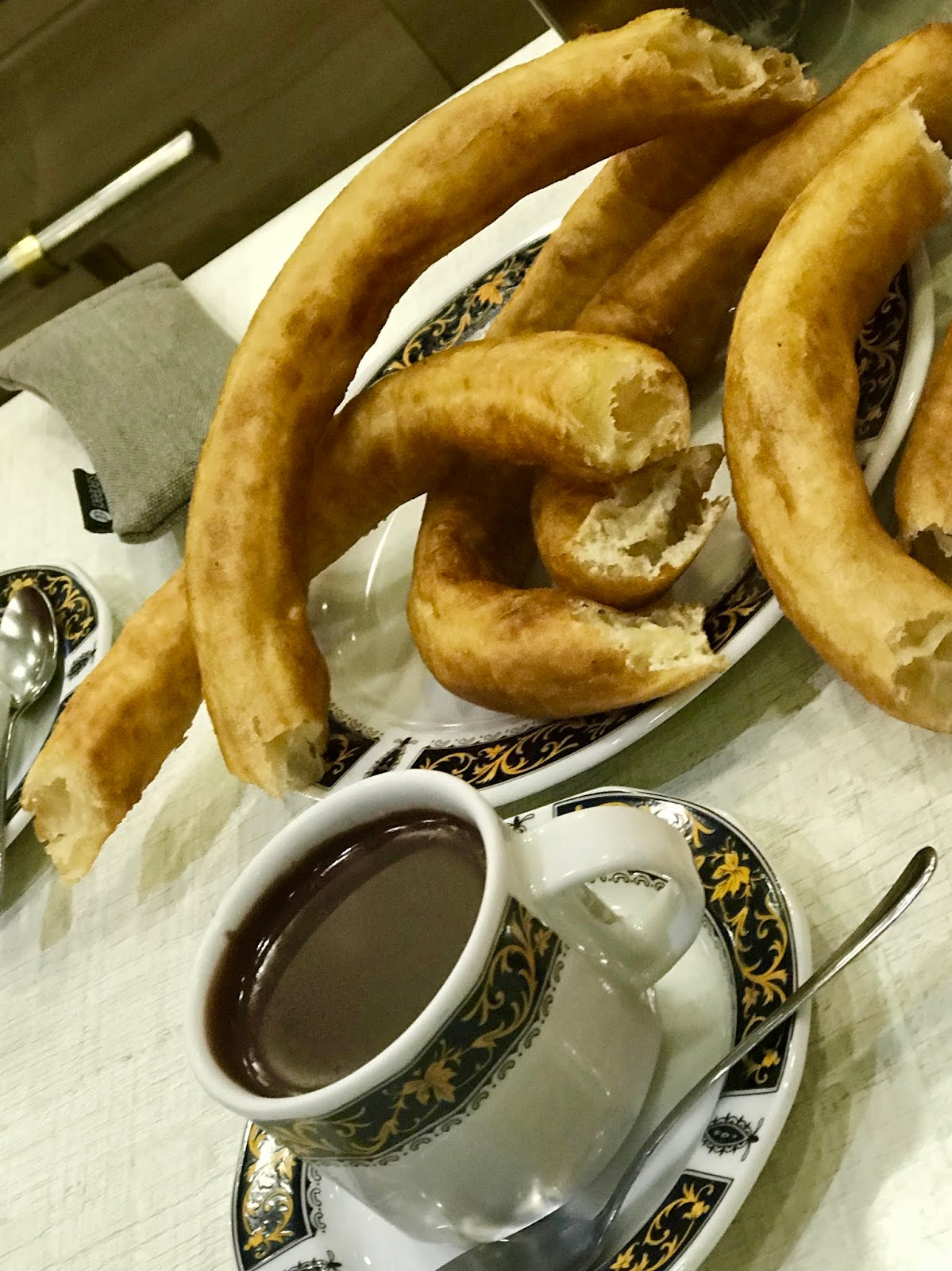
Churrería Alhambra Cafeteria Chocolatería proves that looks can be deceiving. This spot on the southwestern corner of the Bib Rambla looks about as touristy as it is possible to be, complete with "pizzeria" emblazoned on its awnings. But according to tour guide Marta Sanchez, they make the best churros in Granada. Naturally, we had to test that claim. And though we have no other Granadan examples for comparison, they were certainly the best any of us had ever had. Crisp, light, flavourful batons of fried dough, curving gently on the plate and served with a coffee cup of dark chocolate sauce. On its own, this chocolate was unpleasantly bitter. When used as a dip for the churros, however, the bitterness melds with the pastry's sweet to bring flavours into perfect balance. If we hadn't fallen so deeply in love with Pasteleria Lopez-Mezquita, we would have returned here for future breakfasts. So many pastry shops, so little time...

Sunday, 29 April 2018

Local food tour unlocks secrets of Granada's regional cuisine

As a general rule, the more popular a tourist destination becomes, the harder it is to find authentic local cuisine there. Tourist restaurants default to a generic national menu that satisfies the lowest common expectations, giving little insight into regional traditions. Turning to Trip Advisor rarely helps: its mass-market rating algorithms mean you're just as likely to find a coffee shop with great WiFi or a pile-em-high-sell-em-cheap buffet in the top-rated restaurants as a true culinary discovery.

Granada fit solidly into this model on a first wander through town. Menus all seemed to offer the standard array of dishes you'd find at any Spanish restaurant anywhere in the world; our first lunch of deeply average croquetas, fried squid and salad would have been just as good at our local La Tasca. I'd hoped for a unique melange of Arab and European similar to what you get in Sicilian cuisine, but on first glance the Islamic past's influence seemed limited to 27 Moroccan restaurants. I love Moroccan cuisine, but these are places run by immigrants who've parachuted in to take advantage of the cultural zeitgeist, not anything Granadan. 

The fusion is there, you just have to work hard to find it. There's a distinct willingness to mix sweet with savoury, a unique smoky bread, a love of flaky pastry, cinnamon popping up in unexpected places. And there are plenty of local specialties: goats' cheese (these mountains are made for it), the distinctive Jamón de Trevélez, blood sausage, a fondness for sherry. There are two routes to plug quickly into this food culture. Follow the recommendations of respected travel writers, or sign up for a food-focused tour with a local company. 

The first (thank you, Conde Nast Traveller) gave us Mirador de Morayma for our most exquisitely atmospheric evening. With great food, too. Devour Tours mixed history with stops in three local bars before sitting down to dinner, all with expert commentary on the food and drink. Finally, to give some credit to Trip Advisor, by our last night we knew what we were looking for and used their revues to find our way to one of our best meals of the trip at La Vinoteca.

Mirador de Morayma
Hiking up to this spot on the crest of the Albaicin's hill may not work off all the calories you're bound to consume, but you'll certainly be ready for some sustenance. Your efforts will be rewarded with an exceptional view: the Alhambra spreads from one edge of your visual horizon to another, as if it were built as one enormous folly to enliven the terraced gardens here. The restaurant is located in what's known locally as a carmén, the term for an aristocratic home complete with gardens and orchards, all hidden behind the walls of a tight urban space. This house, legend has it, was the residence of the Princess Morayma during the captivity of her husband Boabdil, the last King of Granada. (And a short walk from her mother-in-law's place at the Palacio Dar-al-Horra, which I wrote about last time.) Both interior and garden have now been turned into a restaurant, and though there's a warren of interestingly decorated rooms inside (wooden beams, tiles, artwork), as soon as it's warm enough most punters spill outside onto three terraces of shady gardens. It's a lush space with patterned cobbles, gently-murmuring fountains, towering evergreens and rambling roses. As if trying to exorcise the Moors, the garden has its own chapel and an exquisite tile mural of St. Anthony beams down from the side of the house.

The menu was full of regional specialties, which sadly I didn't appreciate as such until our tour the next night. On a more informed visit I would have tried the remojón salad (salt cod, oranges, black olives and spring onions), the salmorejo (cold tomato soup with garlic, thickened with bread and emulsified with olive oil), or the codfish with almonds. Despite guidance, we did well. A starter of asparagus spears and goat's cheese wrapped in local dried ham, then lightly grilled, may seem ordinary but the core ingredients were of exceptional quality and the whole thing was elevated by a sauce of reduced Pedro Ximénez that left us momentarily speechless. (Pictured at top.) We both opted for the suckling pig as our main. Succulent and rich, undeniably porky with exquisite crackling. It didn't beat my world's best suckling pig in San Sebastian ... the fat here could have been rendered a bit more ... but it was close.

Morayma adds to its attractions with house wines produced on their country estate, though they were sadly out of the white that night. The waiter made an excellent pick from a list studded with interesting local options. He ended our evening with glasses of complimentary licor de hierba and a move to a recently-vacated table with a better view. We ended up in a corner loggia overlooking both the gardens and the Alhambra. Under the pergola below, a large gathering of locals sang traditional songs as a couple who were clearly the centre of celebrations did a bit of informal flamenco. Magic.

Devour Tours
They're my fantasy tour company: devoted to the intersection of food and history, offering tours to small groups led by expert guides. Guide Marta Sanchez joins the rarified ranks of Sicilian oenologist Valeria Carastro and Omani guardian angel Yousuf as a local able to take your whole experience to another level through knowledge, experience and a genuine love of their home town.

After a short stroll through the lower reaches of the Albaicin and a chat about the history of the place, we got down to serious business at La Bodeguilla de al Lado, a tiny place specialising in local wines with a proprietress who's acknowledged as one of the town's great experts on flamenco. No dancing here, but the decor is a temple to the art form. We matched a dry but lightly fruity Xate-O ... one of those grape varieties that never gets out of Spain ... to an aged goat’s milk cheese from Granada. (Goats are far more practical than cows in these mountains.) Though Lado is near the Cathedral, it's down an unremarkable side street a tourist would never bother to traverse.

We were in a higher-traffic area at Casa Julio, just off the Plaza Nueva. The bar was packed three deep; all that could fit in to the narrow room. The rest spill out into the pedestrian lane outside. A bit of a shame, as all those people obscure the gorgeous tile murals that cover the walls. Forget the sightseeing, however, and go for the atmosphere. Despite the touristy location, it's an obviously local crowd. Tourists are probably put off by the jam. But, as Marta advised, Granadans rarely stay at any place for longer than the space of one drink and tapa. Squeeze in, order, and space will come free. The specialty here is lightly battered and fried local hake. Despite my perception that this mountainous region was deep inland, it's a quick run to the sea less than 50 miles away. Natives talk about local seafood and discuss their favourite beaches. A cold, crisp cerveza (beer) was the logical match here. 

The most bizarre introduction of the evening was El Tabernáculo. I thought I'd experienced every aspect of Southern European Catholicism: guilt, ecstasy, pathos, competitive placement at papal events. But I'd never put festive drinking on that list. This bar is a celebration of the fraternities that parade various religious statues during Holy Week. It's wallpapered with posters and holy cards of Jesus, Mary and the saints, hung with rosaries and medals, adorned with statues of penitentes (the pointy-hooded ceremonial participants who look like, but have nothing to do with, Ku Klux Clan members).They even play their distinctive parade music on a continuous loop. The religious atmosphere puts nobody off but the tourists; the place was packed and merry. Another new experience here was sweet artisan vermouth, which was not the stuff you drip out of a bottle to flavour a martini but its own distinct cocktail. Herby and slightly medicinal, it's probably a bit of an acquired taste but went perfectly with the grilled pork loin ​‘Montadito’.

We ended up at the Bar Patio Braserito, one of those places that was indistinguishable from scores of other restaurants on the outside but was packed with locals within. Here I discovered perhaps my favourite dish of Andalucia: lightly battered, fried aubergine (eggplant) drizzled with dark honey. Exceptional. On to artichokes with creamy Torta del Casar cheese sauce, a fish course of fresh cod in an obviously made-from-scratch tomato sauce and the local pork ‘​secreto’​, grilled with Pedro Ximénez sauce. We tried this with two versions of ‘Cerrojo’ red wine from the area before rolling into the inevitable Pedro Ximénez as a dessert wine.

In addition to ending the evening with both brains and bellies full, we walked away with a list of Marta's fabulous recommendations for more to see, do and eat in Granada. Sadly, their was just one day left. This is really an ideal tour to do on your first night.

La Vinoteca
As the name implies, this place is serious about local wines. It looks like it's had a recent remodelling and is run by people who want to appeal to those serious about their food and wine but disenchanted by the fussiness of fine dining. The staff is young, devoted to their menu and more conversant about it in English than anywhere else we went. There's a dark, trendy front end dedicated to tapas and wine consumption, with restaurant rooms behind for those who want a full meal. The restaurant section had the occasional open table (we hadn't booked and got a good one by the window) but the tapas bar was heaving throughout.

A tempting menu made our choice hard, but the word solomillo stood out. I had brilliant memories of sirloin from past Spanish trips, but Piers had yet to try the classic cut here. Would it live up to the meat eater's expectations? Absolutely. Beautiful beef, simply and lightly grilled (you never have to ask for rare here) with a few potatoes and a wedge of grilled red pepper. This is nowhere-to-hide cooking, entirely dependant of the quality of the ingredients and the fire, and they had both sorted here. The waiter knew his wine list well and introduced us to several of his favourites before we ended the evening with a surprise. The Spanish do baked cheesecake. None of this fluffy, gelatinous, flavour-free set stuff so common across Europe but proper, weighty, taste the cheese, baked cake. Here served as four small squares with different fruit toppings. I was happy.

And sad. Because that was my last meal in Granada, and after three days I felt that I had just begun to experience a distinctive regional cuisine. But it was time to go. Cordoba was calling.