Showing posts with label Vatican City. Show all posts

Wednesday, 23 February 2022

A full day in Vatican Museums with light crowds is bliss

If money was no object, I would spend the next year diligently ticking off all of Europe's biggest, "must see" sights. 

Regular readers will roll their eyes. "Travel is always what you would do if you didn't have to earn a living, Ellen." True. But the year ahead is a very particular one. It's set to the be liminal zone between a time of total travel shut-down and a return to the world as it was. I am sceptical that lessons from the pandemic or the plight of the planet will keep anyone from long-haul travel. If anything, taste for it will have increased as everyone has dreamed of unattainable foreign climes for two years. Now, for a very short period while travel is technically allowed, but the hassle and increased expense of it is causing people to hesitate, there's a window for those of us who live in Europe to enjoy our continent's wonders without the pressure of too many outside visitors. Do I have any problem rubbing elbows with Americans, Chinese, and Australians at the Tower of London? Absolutely not. But as I've often written here, the  places we all want to see simply weren't built for the numbers who want to see them. For years, my sightseeing strategy has been to head for lesser known alternatives to all those Top Ten books. For this brief window, we can head for the big bets.

I proved that theory last week in the Vatican Museums. My last visit in 2006 was so awful I vowed never to return. Every hallway was thronged, every significant artwork required queuing to take a look. You risked life and limb getting in the way of bus tours being marched at high speed through the long galleries on their must-see pilgrimage to the Sistine Chapel. The Raphael rooms were as crowded as a London tube at rush hour, and the Vatican had built a new covered walkway on the outside of the building to stagger entry into the Sistine. Yes, after a mile of walking and no place to sit, you had to stand for more than half an hour just to press, body-to-body, into that famous room of Michelangelo's wonders.

What a difference a pandemic makes.

Our only queue was for the obligatory vaccination and temperature check at the front door. (This is because we pre-booked. Walk-ups waited.) By mid-day there was a healthy crowd, but you could always get a photo free of humans if you were patient. You could actually find a seat in the Sistine Chapel immediately upon entry. It was blissful, and I spent the whole day there.

“There” being the whole museum complex, not the Sistine Chapel. Yes, that famous room is beautiful, especially since its cleaning in the 1990s. It wows you with its vibrant pastels, and there's no denying the power of Michelangelo's figures. 

But I resent the fact that so many visitors are here to see only this, treating all the galleries on the way as an opulent race track. I think the whole visitor experience would be improved, and museum revenues boosted, if they offered a Chapel-only ticket at a premium, a museum only ticket at a discount, and a third tariff if you want to see both. There are so many masterworks to enjoy in the museums, some of them ... in my opinion ... better than Michelangelo's offer. But such major change is unlikely. The crowds will return, and the distances won’t change. So here’s my best advice for making your visit a joy rather than a chore.

PLAN Pre-booking tickets is essential. Go for the opening slot. Before you go, spend some time with the museum map working out what you want to see. There are seven kilometres of corridors and because the place is essentially a very long, narrow rectangle with a one way system, you’ll walk most of them. The Sistine Chapel is, naturally, at the far point from the entrance. You can leave the bulk of the galleries near the entrance to see later, but once you start down those long corridors there’s no easy way back, so take the time to see what interests you. The main route takes you through the Museo Pio-Clementino (the most famous of the Greco- Roman statuary), before starting down those long hallways. Once you get to the Raphael Rooms … the heart of the papal apartments, don’t miss the turn to the Borgia apartments. While not quite as magnificent, they feature a series of tiled floors and coffered, painted ceilings it would be a shame to miss, and because it’s a dead-end dogleg at the far end of your route, it’s easy to do so.

Even if you are walking briskly and looking at little, you’ll need 45 minutes to get to the Sistine. A typical visit is three to four hours, but you can easily spend … and I would recommend … an entire day. 

BE KIND TO YOURSELF Ignore everyone else. Set a pace that works for you and enjoy it. There are few places to sit so take advantage of them. The first is in the Cortile Ottogano, an eight-sided courtyard open to the sky close to the start of your hike. Though you may be full of energy, I still recommend pausing to sit here and take in what’s always been considered the best of the Vatican statuary. It is a beautiful space. You won’t see benches again until the Borgia Apartments, and then soon after in the Sistine. Have a good rest there before your return journey. 

The current tourist route forces you through the modern art museum between the Papal Apartments and the Sistine. You used to go directly from one to the other, and it appears it’s still possible if you ask the guards nicely. There are some lovely Chagall paper cut-outs in the modern galleries but the rest is uninspiring. So if exhausted, ask a guard in the last of the Raphael rooms if you might use the shortcut. 

Since my last visit the Vatican has dramatically improved food service, though it’s all on the entrance side of the complex. The standard circle tour will end near both a self-service food court and a small cafe that opens onto a section of the gardens open to the public. There is also a full-service restaurant in a marquee in the Cortile Della Pigna that you would have seen when you entered. (Nice wines, freshly-prepared pasta, not too expensive, with pleasant views around the courtyard.)

It’s a much more civilised option though, counter-intuitively, you need to follow signs to the exit to get to it. Proceed as if leaving and you’ll return to the top of the entry hall between the Pinacoteca and the Pio-Clementino. Cross straight over and your back beneath that famous pine cone. If you decide to spend the whole day in the museums, a leisurely lunch here is the perfect way to restore your energy before round two.

BRING BINOCULARS The ability to see details adds to the enjoyment of the Sistine Chapel, but this isn’t the only place binoculars will be useful. There are decorated ceilings throughout the complex that deserve attention, particularly in the Papal Apartments. And there are several windows with magnificent views over Rome or the Vatican Gardens that reward magnified viewing.

APPRECIATE THE ARCHITECTURE If someone took away the more than 70,000 items on display (and some have tried), this would still be an amazing building to explore. Look up regularly. the Sistine is just the biggest of the lavish ceilings that decorate the place. Pay attention to details, from tiny keyhole covers to vast marble inlaid floors. Look out the windows; most views have been arranged like a living painting.

For my money the two best architectural sights along the way are the gallery of the maps and the rooms of the Vatican Library. Pope Gregory XIII commissioned the map gallery as a tour of the papal holdings in 1580. It’s essentially a detailed look at Italy, region by region, starting in the South and working your way up the boot before culminating in maps of the whole peninsula, one contemporary and one Ancient Roman. The maps are works of art in their own right, embellished with cities, the occasional historical scene and decorative extras. The ships, sea monsters, water nymphs and putti gambolling off shore are a particular delight. The 40 panels in the 120-metre long gallery are surrounded by lavish ornamentation inspired directly from the then newly-discovered Domus Aurea, and the ceiling is one of the best in the complex. This room alone would be worth the price of admission.

As would be the Sistine Corridor of the Vatican Libraries, located directly below the map gallery. These rooms are even more influenced by the designs of Nero’s Palace, and are a joyous riot of colour, landscape and classical myth. 

GO BEYOND THE SET CIRCLE TOUR If you can spare the full day, there’s much more to see beyond the already rich offerings of the walk to and from the Sistine Chapel. A turn off the route from the Pio-Clementino galleries takes you into the Egyptian section, with a collection that rivals any museum in the world. While there’s an enormous amount from ancient Egypt itself, the most fascinating stuff to me is all the Egyptian-inspired fittings from Hadrian’s villa at Tivoli, now moved here. 

I’ve already mentioned the Borgia apartments. Another “dead end” (currently; the doors at one end are sealed) is the Braccio Nuovo, or new wing. It’s the bright white, obviously newer side of the Cortile Della Pigna. Instead of taking the steps up to the main rooms of the Pio Clementino, you turn the other way and go down a long hall filled with Roman busts on each side. At the end, turn right and you’re in a magnificent gallery built after the Napoleonic war to house all the goodies stolen by, and recovered from, the French. The Augustus Prima Porta and the reclining statue of Father Tiber are amongst the blockbuster statues framed by magnificent architecture and marble floors inset with ancient mosaics. The 1820s building set the model for just about every neo-classical 19th century museum wing to come after.

Most people walk straight by the Ethnological Museum on their way to the exit without giving it a glance. If you buck the trend you’ll find yourself wandering almost alone amongst glass cubicles stuffed with exquisite craftsmanship from Africa, Asia and the South Pacific. There’s a magnificent model of a Hindu temple in Indonesia that the Vatican has funded restoration on, and a fascinating collection of terracotta busts of Native Americans fashioned in the 19th century. 

The pinocateca, or picture gallery, is another of the museums that rarely sees much traffic. And yet it’s stuffed with glorious religious art, including Fra Angelico, Giotto and DaVinci. There are more Raphael paintings, here, but you’ve drunk your fill of him in the Papal Apartments. I’d make my make way here for just three glorious masterpieces. Turn your attention to Raphael’s tapestries, woven to grace the lower walls of the Sistine Chapel on special occasions and displayed here in near darkness to let their colours sing. Londoners may know the preparatory sketches from their esteemed place in the Victoria and Albert Museum; the real thing is so much better. Melozzo da Forli is lesser known, but his heavenly host of musical angels are sublimely beautiful and have graced millions of Christmas cards. Supreme over them all is Caravaggio’s Deposition from the Cross, one of his most powerful works.
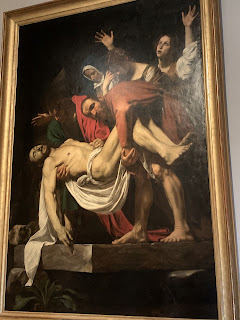
You might prefer the Etruscan museum, the coin and stamp collection or the early Christian art museum, none of which I managed to get to on this visit, or on previous ones. It is, after all, one of the biggest museums in the world. And for a few months more, I suspect, magically under-attended. If you have any chance to get there, or to any of the other great cultural sites, get there while numbers are still low. 


Tuesday, 16 February 2016

Eternal Rome's changed a lot in a decade. Mostly for the better.

Rome may be an Eternal City, but it's not an unchanging one.

It's been exactly a decade since my last visit. The years before that had seen me there frequently, taking in everything from quick business trips to in-depth art historical studies to one very special visit for the canonisation of the nun responsible for establishing my school.* But less familiar places have beckoned in recent years, and I'd consigned Rome to memory.

Last weekend, the grand old lady and I got to know each other again. And just as when you see any dear, old friend after a long break, changes jumped out. Some good, some bad. Here are the main things I noticed after a decade away.

It's clean!
The Rome of my memory was crumbling and past its prime, most of its major sights blackened with the accumulation of the urban grime. Rubbish clean-up was haphazard, public green spaces were rarely maintained and graffiti abounded. Sightseeing was hard work, and always tinged with sadness about how the place and its treasures were deteriorating.  Clearly, government has been working on this. And it shows. The Piazza del Popolo, Trinita dei Monti, the Trevi Fountain and numerous once-dingy baroque church facades are now gleaming white. The restored Ara Pacis in its sparkling new museum was the highlight of my trip.  The Forum is much improved with manicured green space. Pavements are even. Graffiti still exists (it wouldn't be Italy without it), but it's much less prevalent than it used to be. Facades of most buildings ... both public and private ... seem freshly painted and in good shape. Roof gardens are now crowning glories of of pastel-kissed beauties, rather than aberrations in a landscape of decay. Taking a tram beyond the city centre, however, showed that this beautification is limited; more about that in my upcoming rugby coverage. In the primary tourist areas, this is as good as Rome has looked in my lifetime.

But good lord, it's crowded!
Just like any major European capital, I suppose. It's the inevitable result of all those cheap airfares, the opening of the Communist economies, the rise of Asia and the advent of younger generations of Americans not content to wait until retirement before seeing Europe. Groaning under the weight of tourism, historic districts feel more like DisneyWorld than working urban centres.  Fortunately, once you step off a beaten path, there's peace. Go up onto the Palatine, visit the Capitoline Museum rather than the Vatican, wander the side streets between Piazza Navona and the Pantheon. When it comes to the postcard-familiar viewpoints, however, be ready for body-to-body jams, made even less appealing with street hawkers who are far more aggressive than they used to be. Sadly, it takes some of the wonder out of the experience.

There's security everywhere
Some of this might have been a consequence of an international rugby fixture. A sold-out 70,000 seat stadium, well over half the audience visiting from England, was no doubt a tempting target for terrorists. But it felt like much of the security is now business as usual. It's most noticeable at the Vatican, where Bernini's exquisite colonnade has become the framework for airport-style scan stations required for anyone entering the church. Police cars were abundant, while soldiers in camouflage with impressive guns stood in front of military vehicles watching over key areas. This being Italy, everyone's uniforms looked great, and they were carrying them off with the usual "I've just stepped off the catwalk" swagger. It's still a bit disconcerting to be so obviously guarded. A consequence of our times.

A lot less traffic
Rome has finally done something about its traffic problems. It used to feel like any wander about town was taking your life into your hands, as speeding cars dodged and dashed, scooters zipped dangerously close to the pavements and crossing any road pitted you in an adversarial contest against drivers who paid no attention to any rule of the road.  These days, many key tourist areas like the Via Condotti have been restricted to taxis, and there seem to be many more one-way streets. The huge avenue through the forum was completely pedestrianised (I'm guessing this was only a weekend thing) which gave the whole area a carnival feel. Even on Monday, traffic seemed light. The cacophony of horns had noticeably reduced, and people seemed to be paying attention to traffic lights. I don't know how they've managed it, but it's much improved.

The Filipinos have arrived
Anyone who got to know Rome in the '80s and '90s was warned against the pickpockets merged in with beggars and street people, usually in Romany gypsy garb. Given the current refugee crisis, I expected those problems to be worse, and homeless numbers to be swollen by Syrians and Africans. I don't know where the government has moved them, but we saw fewer homeless people than in London. A few packs of gypsy women were holding their grimy children out and appealing for coins around the Vatican, but otherwise any homeless or refugee problem wasn't much in evidence. The ethic group that surprised me, however, were the Filipinos. As a steadfastly Catholic country, they've always been here as nuns, priests and pilgrims. Now, they seem to be taking over the service industry. Much of our top-notch hotel staff  was descended from those islands, Filipino waiters worked tables across town and I spotted Filipino chefs working in more than one kitchen. Given their global reputation for excellent customer service, and for immigrating around the world to find work, their presence wasn't a surprise. I always found my Filipino school friend's reverence for family, food and religion to be very Italian, so I can see the cultural fit. But seeing them in customer-facing jobs that, in my opinion, Italians had always held back for la famiglia was a surprise. What it says about Rome's economy, and changing attitudes towards immigration, I wasn't there long enough to be able to say. But it's a fascinating development.

But the illegal handbag sellers have gone
Another large immigrant group was traditionally West African. They'd be organised into gangs to sell suspiciously accurate copies of designer handbags. I used to think they were some of the best organised people in Italy. I remember watching in admiration as a white van dropped a group of them off on the Via Veneto. In less than 20 seconds they'd be unloaded, scattered to assigned points, and the van would have disappeared. No doubt to return to some assigned pickup point later. Each man had a bed sheet he'd spread to form a backdrop for his wares, which he could fold by the corners, thus being able to disappear with his stock at first sight of authority. They clearly had a sophisticated system of communicating about police, and always seemed to be one step ahead of them. The word on the street was that these weren't fakes at all, but percentages of normal production skimmed off manufacturing lines by a well-honed mafia retail organisation. I confess to buying more than a few of these items in the old days: I loved bargaining with the guys, the good deals fit my young professional budget and the bags were lovely. Clearly, the authorities have broken the trade. A few of the African sellers are still around, but now they're doing a range of folding wooden fruit bowls. They may now be legal, but I suspect their margins aren't what they were. The bowls just don't have the cachet of a Prada bag at 90% off.  The hottest item for street vendors these days is the selfie stick. One assumes there's been some sort of immigrant turf battle, because this trade seems to be controlled by Indians and Southeast Asians. The African handbag hawkers would never bother you if you didn't make eye contact. The selfie stick vendors are irritating pests who surround you, follow you along and keep badgering, no matter how many times you say "no". The trade is particularly fervent around the Vatican, in front of Castel Sant'Angelo and in Piazza Navona. I'd suggest this needs to be the police's next focus; it's by far the most irritating part of being a tourist in Rome these days.

St. Peter's suffers
Even with the additional crowds and the irritating selfie stick vendors, on balance Rome has improved impressively. We had a great trip, and most things were better than I remembered. The one glaring exception was Vatican City, where crowds, security and the realities of modern tourism have
combined to destroy the old magic.  The crowds are jaw-dropping; the queue to get into the Vatican Museums had reached the two-hour point by mid-morning on a Monday. The people hawking Vatican tours and shortcuts to the Sistine Chapel are as numerous and irritating and the selfie stick men. The frequency of papal appearances may be a good thing for the faithful, but it means that the piazza in front of the basilica is now cluttered with the detritus of modern event management. In addition to those security stations, there's the permanent papal pavilion, a network of crowd management fences, giant television screens, speakers and lighting. This piazza is one of the grandest architectural statements in the Western world, carefully designed by Bernini to evoke the sense of walking into the welcoming embrace of mother church, while a host of saints smile benignly down upon you. The modern clutter destroys the effect. Inside (once you've made it through the scanners) the crowds are as bad as you'd expect; made worse by the fact that they now fence off the entire area under the dome and most of the area beside and behind the main altar. Once, even huge crowds could disappear into the vast space, giving you the delightful experience of not realising its true size until you spotted someone in the distance and the scale kicked in. Now, everyone's kettled at the bottom of the nave like a London mob. Not only does it ruin the perspective, but you can't get close to many of the wonders of the cathedral any more. No chance to look at Bernini's greatest works at anything but a distance. The only redeeming quality: you can now get some gorgeous, people-free photos. But it's a woefully unfair trade for the complete destruction of reverential, mystical awe this place was built to convey.

Of course, the thing that's changed most in 10 years isn't Rome, but me. In that decade I've gone from being an Italophile who spent repeated holidays in that country to a more adventurous traveler. Our Northwestern Girls' trips have been seeking out new adventures since 2005, and I acquired a partner, then husband, in 2009 who prefers France and Germany to Italy, and opened up the possibility of couples-based, romantic travel. I've reached a point in my career that means I don't have to pinch pennies when I travel as I once did, and my perspectives on food and wine have broadened considerably. Of course, my energy levels are diminished and I no longer have the desire (or ability) to go clambering up bell towers and church domes. I've changed, Rome's changed, but overall ... I think we're both the better for it.

*Philippine Duchesne made it to the ranks of sainthood in July 1988. She was a member of the Society of the Sacred Heart and, fairly late in life, achieved a long-standing dream to travel to the Americas to teach American Indian children. She's now considered the patron of perseverance and adversity. Her shrine and burial place are in St. Charles, Missouri, and she was a tremendous role model growing up.