Friday, 2 April 2021

Beneath the modern blight, Basingstoke is rich in history and architecture

Modern Brits are so attached to foreign holidays that "staycation" typically means not leaving the country.
Not leaving home? Now that's a stretch. 

It's no surprise that my wanderlust fit well amongst the English; other than Christmas, I don't think I've ever taken off work and not gone somewhere. But I'm doing it now. With three intense months at my back I simply don't have the energy to wait until lockdowns lift and hotels open. Thus I'm embarking on two weeks Chez Bencard, without even local museums, stately homes and restaurants open to make things memorable. What's a holiday sightseer to do?

I've decided to treat my home territory as if I were a foreign tourist, going out on an excursion every day to learn about, photograph and walk around spots I may take for granted in my daily life. Pandemic lockdowns take interiors off-limits, so my explorations will be about exteriors, views and outdoor rambles. First up: Basingstoke.

If you want to see how the English class system is still alive and well, tell upper-middle class professionals you've moved to Basingstoke. Their inherent politeness will prevent them from saying what they really think, but for just a moment as they master their surprise their faces will register a mix of surprise and horror. Then will come the understanding consolation. "I suppose the commuting is good from there, eh?"

Why the disdain? In modern minds Basingstoke is perhaps best known for its role in post-war slum clearances from London. Government money poured into the place in the 1960s to fund great swathes of social housing into which some of the capital's poorest were re-located. The architecture was dismal and oppressive. However, as an informative exhibit in the town centre's museum points out, the new housing was considered luxurious by people who'd had little access to indoor plumbing, space or fresh air. 

The town grew steadily but poor architectural choices continued. Brutalist office blocks and grimy overpasses line the motorway-like main drag through town. Strip malls, office parks and industrial estates ring the town centre. Doubtless trying to improve things, civic worthies in the early 1970s bulldozed much of the town centre and replaced it with a shopping mall and car-parks. It is, on first glance, a charmless, down-at-heel amalgamation of cement, steel and eye-punishing signage that is only made palatable by its transport links. (And perhaps by Berry Bros. & Rudd's HQ in one of those industrial estates.)

Yet Basingstoke is not a "New Town" like Basildon, Bracknell or Milton Keynes. The links that make it beloved of today's commuters and warehouse managers run along pathways that have been here since pre-historic times. The original name, Embasinga stocæ, goes back to an Anglo-Saxon tribe known as the Basingas, led by one Basa. All of the "Basings" are homes of Basa's people. Basingstoke saw the defeat of King Aethelred by the Danes in 871, was a thriving market town by the time it turned up in Domesday and was sophisticated enough to host Katherine of Aragon overnight as she journeyed to the English court for the first time from her native Spain.

There's more existing from Tudor and Medieval times than you'd think, but you have to look hard. The most picturesque are the ruins of the mortuary chapels just northwest of the train station.


The chapels once held the remains of, and services for, the great and the good of the area. Destroyed in the Civil War, they're just picturesque ruins now, but heavily-worn monuments like that of Sir William de Brayboeuf (below) give a sense of the magnificence of the place.

The chapels would have once looked down upon St. Michael's church, sitting in a green valley beside a tributary of the River Loddon. The church is still there, though the view is blocked by the train station and the bulk of The Anvil Theatre. I suspect most shoppers in Festival Place never realise that a historic monument lies just out M&S' back door.

Though most of the current building dates from the 16th century, its foundations are far older. If shoppers can be bothered to leave the mall, they'll see this:

A walk around to the front and west side reveals a showy chequerboard pattern of stone and flint. The architectural flourish is a reminder that local worshippers in Tudor and Stuart times might have included Henry VIII's Lord Chamberlain or the Marquesses of Winchester. 


It's the steadfastly royalist Marquess you can credit for the artillery damage it's still possible to pick out on the south side of the building. Basingstoke was the scene of fierce fighting and the Marquess was such a thorn in Parliament's side that Cromwell came to the town to oversee the royalist's destruction himself.
Facing the church's west door across an unfortunate car park is Church Cottage, probably Basingstoke's best-preserved and least-altered Medieval building. Appearing in records from 1277, the building has been a home, a school and brewery offices. It's now the administrative centre for the church.

The rest of the town's Medieval roots seem to have disappeared, but if you look at the backs of buildings you can see that many Georgian facades are covering much older buildings.


There's one significant building from the early 17th century: a lovely row of alms houses that demonstrates how social housing in times past managed to be both useful and architecturally gratifying.

In fact, I suspect a historian might find rich source material for a book on the history of social housing, since the town seems to be full of examples from the 17th century right up to this delightful Lutyens-style row from the 1930s...

And these by the church. It's not until the developments of the 1960s that things got ugly.
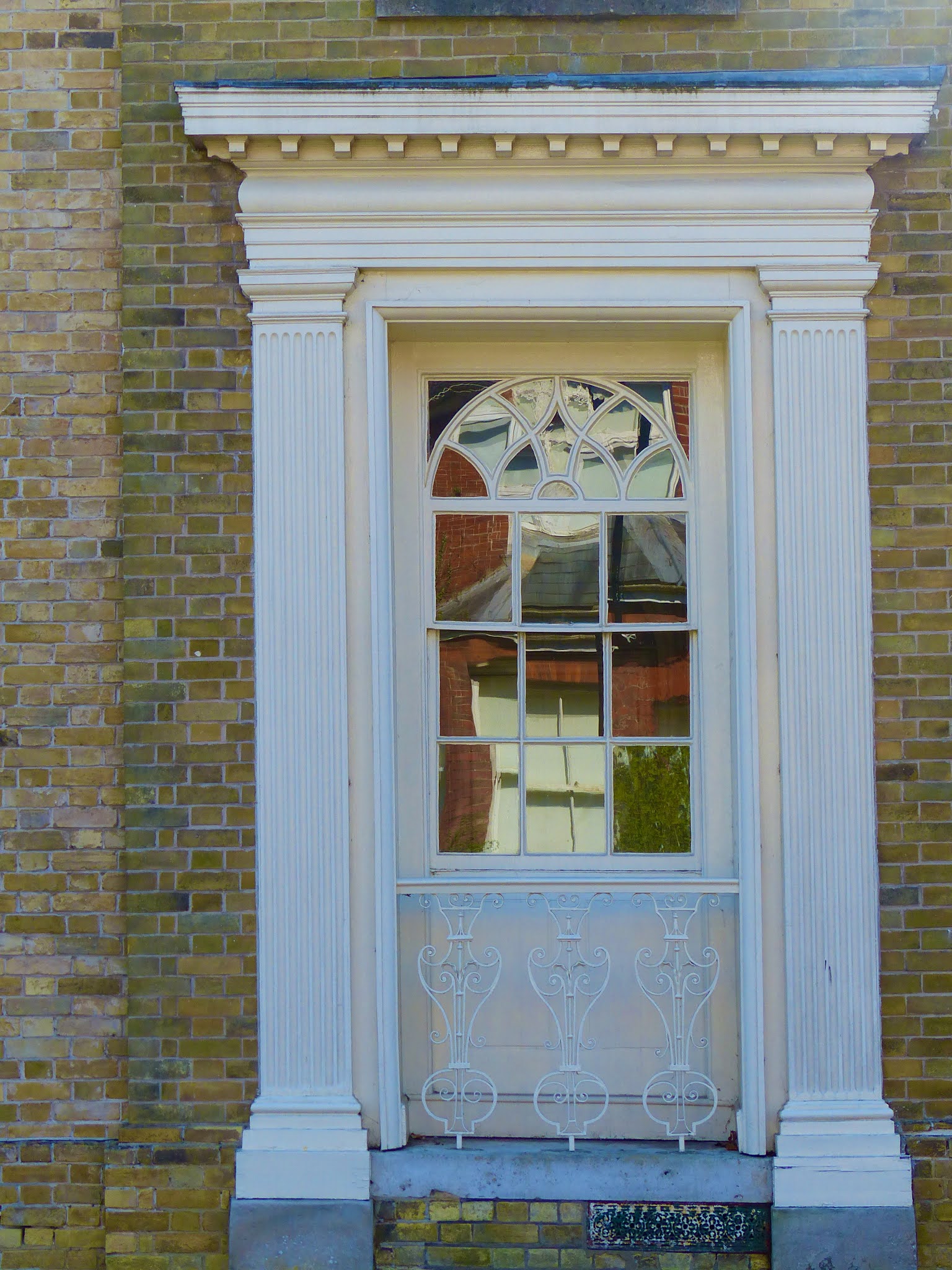
If you escape the shopping mall and wander through what's known as the "Top of Town", you'll find a mix of Georgian, Victorian and Edwardian facades with just a few modern intrusions. Sadly its charm is obscured by a mix of grime, poor repair, garish signage and empty shopfronts. This classic building with its bow-fronted Regency windows is a case in point. (I'm sure the team at Wawa deliver excellent massages, I'm just commenting on how glorious the building could be with some TLC and a better use of those windows.)

Observant explorers will notice a profusion of broad arches built into the architecture:


These are the telltale remains of the coaching inns that once competed vigorously throughout town. Roughly half way between London and Southampton, Basingstoke was the perfect place to stop on the journey. Coaches would clatter through these arches into busy yards where horses could be refreshed while people went inside for food, drink and rest. Only the Red Lion has stayed true to its original purpose.

Here are some other Georgian highlights from the town centre:


One of the most famous people associated with Basingstoke's history in this period is Jane Austen, who grew up in a village eight miles away and would have come here regularly for shopping and socialising. The Assembly Rooms where she would have danced no longer exist, but the town recently put up a statue of her in front of the Wallis Museum at the centre of the "Top of Town" district.


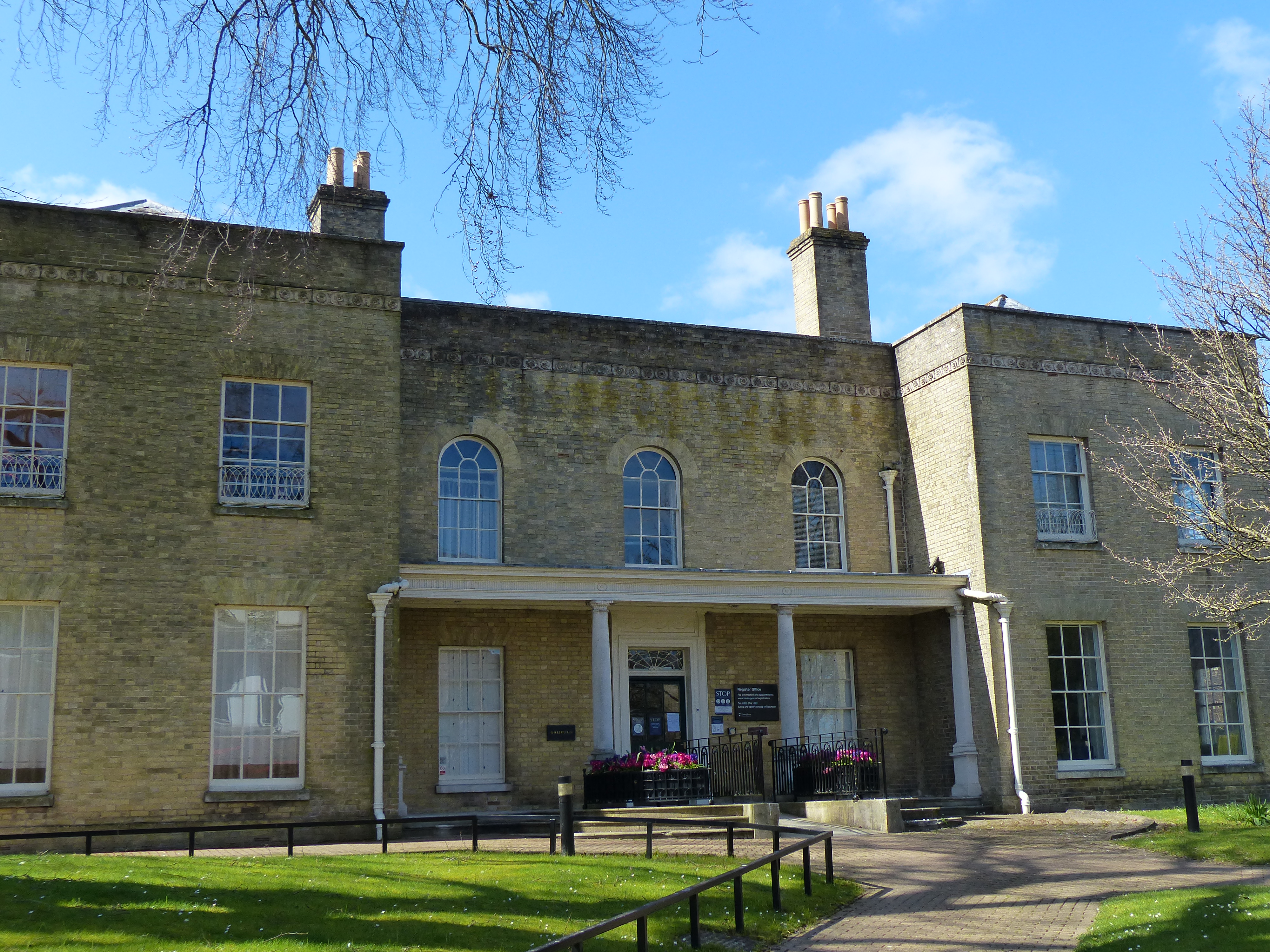
After Jane, the town's most famous association is with Thomas Burberry, a local draper whose early observations of how shepherd's smocks seemed to become resistant to weather after their wearers handled lots of sheep led him to develop waterproof gabardine. His outerwear would no doubt have been popular in any circumstance, but a lucrative army supply deal during WW1 and direct endorsement from the king ensured his fortunes. His headquarters and factory, once in the Top of Town, are long gone. But his greatest legacy is undoubtably the Regency-era house and grounds he purchased and later donated to the town.
These days the Council occupies newer buildings around it, leaving Burberry's legacy to be used for special events and weddings. It also forms the gateway to War Memorial Park, created from the house's original grounds and marked by the town's monument to the conflict from which Burberry made his fortune.
The park is a pleasant, if unexceptional, lawn ringed by trees. Its best feature is probably its bandstand, used for summer concerts, and an aviary full of brightly-coloured songbirds.


Other shopfronts, the town's majestic Fairfields School and the opulent cemetery caretaker's cottage (where cricket commentator John Arlott was born) attest that Basingstoke was a prosperous and gracious place in Burberry's time.


It's no surprise that a rapid population explosion altered the place almost beyond recognition. At the start of WW2 the town had barely 13,000 residents. It's now the largest town in Hampshire with more than 157,000 (according to the Council's web site). It is, sadly, all too typical in England in its disfigurement by well-meaning officials with a taste for drab modern architecture and a contempt for history. And the challenge continues.  The Council predicts another 20,000 residents in the next 20 years.

Some of the new housing supporting this boom is attractive stuff tapping in to the region's history and architectural vernacular. Some is cookie-cutter horrible. Most intriguing is a new committee investigating the revival of the Top of Town area. As my walk revealed, what's left of the historic centre is full of good potential. With renovation and ... most critically ... a use plan that brings in people with money to spend, central Basingstoke could still be a place to make Thomas Burberry, Jane Austen or the Marquesses of Winchester proud.


Sunday, 28 February 2021

Digital dinner party brings proper sense of occasion to lockdown life

 My digital dinner party may be an innovation that stays with us after lockdowns are only a memory.

Eating together over a video link is nothing new in the world's pandemic response, but I was looking for a sense of occasion. I wanted to play a proper host's role, and I hungered for the atmosphere of a celebratory, formal dinner party. Such entertaining is usually the highlight of our winter months but has been absent from our lives since autumn 2019. Thanks to eight adventurous friends, I think we managed it. 

We started with a WhatsApp group and a contest. Each of the 10 (including us) participants suggested an ingredient or challenge for each of the three courses. Amongst the starter suggestions were "pistachio", "the American South", or the cryptic "smoke in the water." Suggestions for mains included ingredients (chestnut, capers), instructions (roast it, spice it up) and cuisines (England on a plate, French). Desserts might have been anything from "get colourful" to Biscoff (a new ingredient for most of us) to crumble.

Once all the nominations were in I wrote them on slips of paper and staged a random draw for each course, recorded on video and broadcast to our WhatsApp group to ensure impartiality and create a sense of occasion. This happened a full three weeks out from the dinner, so everyone had plenty of time to plan their menu. The random draw gave us a first course of pasta, the instructions to "wrap it up" for our mains and cheesecake for dessert.

Three weeks of amusing culinary chat ensued across WhatsApp, connecting people who mostly didn't know each other well, if at all. This turned out to be a fabulous way to break the ice, so that by the time everyone got together on a live broadcast they felt they knew each other a bit. The digital format also made it possible to bring together five couples who would have been particularly difficult to get around a real table, given their starting points. While two friends were connecting from down the street, the others joined us from Herefordshire, Essex and Norfolk.

I laid down timings in advance to help everyone plan and try to ensure we were eating each course together. We'd assemble at 7 for cocktails, serve starters at 7:30 and mains at 8. But we were flexible. Between conversation and ambitious second courses, we slid our "wrap it up" interpretations to 8:15, and dessert to 9. In the run-up to the start time, everyone laid their tables, setting up their computers at one end and a festive array of china, glassware and candles at the other.

And then ... we dressed for dinner. Men ironed shirts, dug out cufflinks and polished shoes. Women wore makeup and donned dresses. The majority made what efforts we could to tame our lockdown locks, while the bald ones smirked with superiority. We all agreed it was a delight to make an effort, and all of the preparation contributed to it feeling like a grand event.

Naturally, staring at a mosaic of five screens at the other end of the table on an iPad leaves something to be desired. We certainly didn't get the views of everyone's culinary efforts we would have liked ... though shares on social media the next day revealed that people had made as much of an effort with "plating up" as they did with everything else. If we do this again, we'll set our table in front of the television screen in the sitting room and broadcast from there, so we can see people and their plates in more detail.

While there's actually no need to make huge culinary efforts to participate fully ... ready meals could easily have met the three-course challenge and not diminished the fun ... this was a group that was serious about its food. The WhatsApp group hummed with news and photos of special orders and advance preparation, my favourite being our neighbours' video of a squirming box of live langoustine just arrived from Scotland. 

Home-made ravioli dominated the first courses and Wellingtons the mains. (Though the langoustines were a defiant rebuttal wrapped in sole ... if I remember rightly. Like any good dinner party, we'd had a fair amount of wine by that point.) We probably saw the most variety in the cheesecake course. Not only was there the baked or set debate, but the neutral base of the standard version took on an entirely different flavour profile in each house. The suggested but unselected Biscoff made an appearance in the Essex dessert, while Norfolk laid on both a sweet and savoury variety, pictured in the montage of their whole meal posted below.

The menu chez Bencard started with crayfish ravioli in a red pepper sauce. I used a fabulous tip from a Gordon Ramsay recipe for the first time, whizzing half the crayfish into a pate-like paste with an egg white and adding the other half to that, diced fine. The result was a firmer filling that's easier to work with and less likely to "bleed out" in the boiling if your pasta breaks. I made a mistake with my sauce, however. Though my red pepper and carrot combo has become a successful alternative to standard red sauce for my tomato-allergic husband, the flavours overwhelmed the fish here. I should have gone for a simple brown butter with a scattering of pine nuts and herbs. 

Piers took over the main course with a venison Wellington ... a beautiful and planet-friendly alternative to beef ... with rosti, broccoli and a fabulous red wine sauce. We still have an issue with presentation, however, and that plate came out as a tasty but rather lumpy array of browns. Note there's no photo. It being late February, I could take my cheesecake (baked, New York style) in a Sicilian direction with a topping of seasonal blood orange curd and candied blood orange slices. Turns out another benefit of a virtual dinner party is that half of the cheesecake is now in the freezer, saved as a treat for a later date.

We spent a lazy Sunday mildly hung over, alternating between sedentary pursuits and cleaning up the prodigious mess in kitchen and dining room. Almost like old times. I'm grateful to adventurous friends who were up for something different. Who's next? Given that the UK government roadmap currently won't allow more than six individuals from more than two households to congregate indoors until 21 June at the earliest, there's plenty of opportunity to do this again. 


Monday, 1 February 2021

Age may be the best predictor of pandemic resilience

 I managed to avoid all the usual diseases and broken bones of childhood only to acquire chicken pox at the age of 21. A week after my return from Christmas holidays at Walt Disney World I was covered in itchy spots. The doctor at the student health centre was uncompromising: I was to isolate in my bedroom for six weeks while asking my apartment mates, who had thankfully all had the disease, to sort food and drugs for me. While a relatively mild hindrance for children, chicken pox in adults can be lethal. So I was to take care of myself and stay far away from anyone else.

My professors were understanding, but what followed was an odd adaptation of journalism school. This was 1987; long before the publicly-available internet or video calls. Reporting involved physical research and face-to-face interviews. The solution was to report on the world I could access through my television screen ... the State of the Union, the Super Bowl, made-for-TV movies ... filling in commentary from people I could contact by phone. While it honed my writing and reporting skills, it was a strangely artificial way of interacting with the world and I breathed a heavy sigh of relief when, no longer contagious, I could re-join the student newsroom.

I hadn’t thought of that for decades. Until this morning, when I started wondering what I could possibly come up with to refresh a blog that had lain empty for another pandemic-restricted month.

The blogosphere is already awash with viewpoints on the historical merits and demerits of Bridgerton. Recipes and philosophising about Veganuary and surviving dry January abound. Work-related content belongs on LinkedIn. Any commentary on the American election risks angering a percentage of my friends and family and, worse, could attract trolls. (This blog’s usual fare of fine dining, opera, high-end tourism and cultural sightseeing isn’t their usual territory, but they are a true threat across social media.) You can find better January gardening tips elsewhere and I fear I’d bore you with my new-found lockdown hobby of drawing and painting. I could take you on a tour of our newly-redecorated downstairs loo-cum-cartoon-gallery, but that’s best done on video.

Taken as a whole, however, that list is what’s keeping me sane. Intellectually ... if not physically ... I’m resilient and unbowed by lockdown.

Some recent survey results at work reveal at least one reason why. Statistically, my husband and I occupy the sweet spot in pandemic-survival. We’re steadily employed, we have no children, we’re not responsible for caring for any vulnerable people and we live in a big enough house to have separate working spaces and living spaces. It turns out our age, however, may be the biggest factor of all. The study showed an almost straight-line progression: the older you are, the easier a time you’re having. Note that the respondents are drawn from our half-million employees around the world, so statistically significant for professionals of working age ... but separate from the unemployment, student angst and old-age concerns so often making news headlines. 

Since those survey results I’ve been part of numerous conversations amongst the over ‘40s in various “safe” spaces ... both intellectually and physically ... fretting over the findings about age. Have we done something wrong in the way we’ve raised children over the past 30 years? Is the snowflake generation real? Our fault? and unfit for the rigours of real life? Are they totally ignorant of context, unable to realise how easy their challenge is versus generations before who’ve had to face war, genocide, societal oppression and plagues with far higher death tolls?

The 20-somethings I work with and the teenagers I call family don’t give me undue cause for concern, though their reaction does add to my mountain of arguments about why people should study more history. It’s hard to put your experience in context when you have little awareness of the past that could provide it. Re-examining those memories of my own brief quarantine, however, gave me a different kind of perspective. 

I wasn’t bothered by six weeks, but I suspect I would have found more than that to be cataclysmic. I was at the beginning of my career and every action seemed to matter. Socially, every weekend was filled with portent. We were looking for our lives, aware that each step might reveal the job, connection, lover or place that would define our future. It’s hard to remember that sense of daily life being momentous ... probably because I found and settled into my track decades ago. These days I have difficulty placing all but the most significant events in specific years without checking my notes. (Or this blog.) 

Yet every year of the ‘80s is distinct in my mind. I entered the decade at 15 and left in my mid-twenties, having just landed at the bottom rung of the corporate ladder I would go on to climb fairly steadily until now. Losing any of those years would be unimaginable. Any one of them had a greater impact on the person I became than any three or four that followed.

So, my fellow mature and comfortable pandemic refugees, the next time you’re about to castigate the youngsters pause and think how your own life might have changed if you’d lost 12-to-16 months of your formative years to house arrest. If that doesn’t work, perhaps you need to put To Kill a Mockingbird on your lockdown reading list.

“You never really understand a person until you consider things from his point of view ... until you climb into his skin and walk around in it.”

Friday, 1 January 2021

Covid-constrained Christmas proves quiet but meaningful

Sparse Decembers aren't unusual on this blog. My time available for writing rarely matches the hefty list of things I'd love to tell you about, so readers are used to a single round-up of the holiday season. 

There's usually the giddy whirl of work-related lunches, dinners and parties in London. Though it's never returned to pre-financial crash profligacy, that world usually has enough madness to deprive sleep and stress the liver. Add one or two black tie balls, gift exchange dinners with close friends, at least one night at the theatre for someone's Christmas production and special events like Christmas markets or illuminated gardens. At the same time I'm inevitably pushing to complete a busy work year, and somehow squeezing in the requisite home decorating, card writing and baking. At the end of it all I collapse with exhaustion and welcome the quiet of the holidays. Every other year that collapse usually takes place on board a plane heading for more exotic places. 

Not this year.

There was enough work to trigger the usual collapse into exhaustion ... in fact, much more than usual given the new role I started in February ... but thanks to the ongoing scourge of COVID-19 there was little in the social diary to balance it. Or to provide source material for blogs. December brought the hopeful news of approved vaccines ready to deploy, but balanced it with escalating diagnoses, hospitalisation and death figures to match the initial spring surge. Restrictions escalated day-by-day, leaving cancelled plans and closed businesses in their wake.

At the start of the holiday season, with most of our home county and London in Tier 2, there was potential for something approaching normal. We had tickets for the Artemisia Gentileschi show at the National Gallery and a dinner reservation at Jason Atherton's Michelin-starred Pollen Street Grill. Regular hair and nail appointments were back in the diary and I'd booked two spa days over the Christmas break to try to catch up on all those I'd been "banking" with my Nirvana 6-day-per-year membership.  I'd felt confident enough to book a New Year's Eve escape at Bovey Castle, even though the black tie gala would be counting out the old year on central European time to comply with an 11pm curfew. 

By the second week of the month, however, experts started raising red flags. A surge was upon us, and anything approaching the usual socialisation between households over the holiday season would super-charge the problem. London escalated to Tier 3 on 16 December, shutting down the restaurants, museums and theatres that had created socially-distanced experiences and were hoping to put some cash on the bottom line during the holiday season.

I ventured into my office in The City the day before and thanks to a quirk in the existing legislation we managed a Christmas lunch for the team. (People weren't allowed to eat or socialise indoors together but the government was trying to keep the business world afloat, so a "working lunch" sanctioned otherwise illegal fraternisation.) It was a pale shadow of the real thing; six of us around a table in a half-empty restaurant, sharing a bottle of wine and observations on the odd year. What it lacked in merriment it made up for in the sheer joy of being together rather than on a Teams call. It was hard to stay cheerful, however, when we talked to our waiter about another undefined period of unemployment stretching ahead of him. All restaurants were to close in London the next day, and the most practical pundits suggested they wouldn't be allowed to open again until the vaccination programme had made a significant dent in the vulnerable population.

While things looked bad in London, the area around our house and the Southwest, where we planned to escape at New Years, remained in a liveable Tier 2. But not for long. Next came the news that we would jump up to a newly-created Tier 4, along with London and much of the rest of the country, on Boxing Day. This was essentially the same as the spring's total lockdown, but with a few more stores classed as essential and therefore open. (Wine shops and garden centres both managed to keep trading.) Bovey Castle remained in Tier 2 but wasn't allowed to welcome anyone from Tier 4, and thus cancelled our reservations. Our French friends who were planning to "bubble" with us for the second half of the holidays were now told not to travel, and further discouraged as the French closed their borders for several days in reaction to a new strain of the virus that seems to have originated in the UK. 

The most heart-breaking story came on the 30th, however, as restriction levels moved up once again and the last Tier 2 areas disappeared from the UK mainland. Thousands of hotels and restaurants were given less than a day's notice to close on New Year's Eve morning, when their kitchens would already have been full of supplies for the night's festivities. Yet more waste and financial trauma for an industry that provides nearly 10 percent of the UK's jobs.

The only event left standing in our holiday diary was the Christmas Illuminations at West Green House. When I reported on Wisley's "Garden Glow" back in 2016, such things were still innovative newcomers on the holiday events scene. Now, the idea has spread beyond major gardens like Wisley and Kew and scores of smaller places are getting in on the action (and the revenues). Though they're working with far less acreage, West Green's display has much in common with the bigger shows. There are giant illuminated flowers to walk beneath and illuminated blooms floating on water features. (I'm convinced there must be one company providing these to gardens across the country, so identical are they.) Coloured spotlights turn bare branches of enormous oaks into giant sculptures. Dense fairy lights form tunnels to wander through and use as selfie backdrops. Living up to its reputation as "the opera garden", there are bursts of music throughout West Green ... most memorable when the Cinderella waltz plays as illuminated fountains dance, and later when Tchaikovsky provides the backdrop for a tableau from Swan Lake in one of the outbuildings. 

Though owned by the National Trust, West Green is managed and run by its tenants, and the Abbotts' personal touches make this a more intimate, quirky experience than the giant events. A Tudor-style chequerboard herb garden has become a scene from Alice in Wonderland. Fairies hide behind mounds and dance in the garden follies. There's a charming nativity scene in which each character is painted on a fence picket. The famous Chinese chicken run has been decked out with Chinese lanterns, including one that's a giant blue-and-white teapot. The poultry appear to be sleeping somewhere else for the season. But the most striking feature of the night was the one that used nature most effectively: a small pond, graced by floating, glowing blooms, reflecting the blue- and green-lit trees above it in a perfect mirror, as if those fairies indeed had an alternative universe on the other side of the water's surface. It was magical.

Gardens aren't the only ones turning up the decorating wattage. With the outside world barred to them, people have taken their home decorating more seriously. When I came to England in the late '90s Christmas lights were for city centres and department stores, not really seen as something for individual homes. I remember finding my first December here remarkably gloomy. The country has been edging towards an American level of home lighting for years, and 2020 seems to have tipped it over the edge. Once the front-runner in this game, I found myself at a local shop looking for additional lighting options and was told I was far too late. People had wiped all the good stuff out in late November. There wouldn't be much left for Boxing Day sales, even if stores were allowed to have them. 

You'd think with all those cancelled social appointments I would have glided into the Christmas break better prepared than ever. Not so. With a bigger, higher-pressure job than I've had for years, all that spare time went to work rather than play. I rushed the Christmas cards, never bothered with some of our interior decorations and didn't start menu planning until after I'd turned on my out of office reply. (My husband took over the last, thankfully, and came up with an impressive spreadsheet.) 

I even forgot to use my hard-won, pre-booked grocery delivery slot, opening the door on the 18th to a Sainsbury's driver holding a single bottle of Bollinger, my go-to placeholder to spend the required £40 necessary to clinch a reservation. I was supposed to return to update things with a real order. "You're not the first, and won't be the last," he laughed, placing the bottle on the doorstep. The consequence was a frustrating in person shop at our local Tesco on the 19th, where "covidiots" crowded, ignored social distancing and generally made me feel like the outing was the most dangerous risk I'd taken on the COVID front in months. Any other groceries needed over the festive period came from Waitrose or local farm shops.

While I missed the usual social whirl, I confess to enjoying our solitary, quiet Christmas enormously. We've cooked lovely things, created fun cocktails and liberated some fine bottles from the cellar. We've read good books and watched an enormous amount of quality television. We even did a bit of household admin. 

The ultimate effect of this unnaturally quiet Christmas, however, was to remind me of the real point of the holiday. I felt it most strongly as London newspapers splashed "Christmas is Cancelled' across their headlines as the country slid into complete lockdown. 

Christmas continued.

The parties, events, shopping and general frolics of the holiday season are ways of celebrating, but they aren't Christmas. Christmas is a commemoration of beginnings. A celebration of hope. A reminder of an event that transformed human life and thought. Even if you are not a practicing Christian, the legal systems, social mores and governmental foundations of the Western World are based on Christian thought. (If you're interested in this idea, read Tom Holland's Dominion) Christmas is, first and foremost, a time to contemplate and be grateful for the revolution created with the birth it celebrates.

Attending mass is, of course, the essence of the holiday (the clue is in the name), and with effort we might have grabbed tickets to be live attendees at one of the severely restricted services. Thanks to this year's forced embrace of digital tools, however, we were spoiled for choice on the services we could live stream. We sampled the Vatican, considered Winchester Cathedral and settled on St. Mary's Bourne Street, where we got married. While it lacks some authenticity and offers no community spirit, the broadcast was still an uplifting hour with a potent sermon and great music; Haydn's Christmas mass is hard to beat. Not having to drive more than an hour to get home after the service added to the appeal.

 The hand-wringing over "cancelled" Christmases was a potent reminder to me of just how badly the secularisation of the holiday has ripped the heart out of it. Perhaps the COVID-constrained Christmas of 2020 will have reminded people of what all the peripheral stuff actually celebrates. A hope-filled message of salvation is, after all, what we're all desperate for as 2021 rolls in.