Showing posts with label pintxos. Show all posts

Friday, 22 September 2023

Well off the tourist track, the Basque Country's capital is worth seeking out

Most tourists will know Spain’s Basque Country for the foodie paradise that is San Sebastián or for the Frank Gehry-designed museum in Bilbao. They might have driven between them and marvelled at the dramatic, dark green Alpine landscape that runs along the coast. But that’s only part of the picture. The Basque Country’s capital of Vitoria-Gasteiz (Vitoria is the Spanish name, Gasteiz the Basque) is a gracious mix of architecture through the ages, networked through its heart with miles of tree-lined avenues and sitting at the centre of an enormous, fertile plain ringed entirely by mountains. It feels a bit like a Spanish version of Shangri-La: happy, prosperous and a mystery to the outside world. 

This is, of course, an illusion. The thriving manufacturing base in the valley and the excellent transport systems heading in and out link Vitoria-Gasteiz to the economic central nervous system of Europe. But as a tourist destination, it’s not often considered. It probably should be, even if you’re not … as we were … coming here to check out the site of the Battle of Vitoria

I offer three reasons for a visit: a fascinating town centre, gourmet pintxos, and a Parador hotel in a Renaissance palace with extraordinary views.

THE TOWN CENTRE

This deserved at least a full day, not the rushed couple of hours we had to spare. The tree-lined avenues I mentioned above are the most unique feature of town. I've never seen so many, and ones so long. They're a bit like Las Ramblas in Barcelona but there are multiple pathways intersecting each other, with far less commercial clutter inside of them and much bigger trees. These, combined with leafy squares and verdant 19th century parks like La Florida, make the city feel unusually green. No surprise that it was named the European Green Capital for 2012.

The central point in town is the Virgen Blanca square, pictured top, where the monument to the Battle of Vitoria stands along with the ubiquitous oversized city name provided for your "I am here" Instagram shot. More interesting, perhaps, is that from here you can see that there are distinct upper and lower towns, the original being the higher one still packed with medieval buildings. Architects over the centuries have been clever integrating the two levels, incorporating arcades, loggias and grand staircases into the urban landscape. For a more modern approach, there's an outdoor escalator that allows you to ride the equivalent of about six stories. The upper town boasts a castle, several gorgeous Renaissance palaces, lots of intriguing shops and restaurants and a lovely park where modern art and architecture combines with ruins to show off where the wall once was. 

Any Spanish town worth visiting has abundant churches, and there are many here showing off architecture from Gothic to Baroque, church towers glorifying the skyline. There are more grand open spaces, most impressive being the Plaza Nueva. Like so many of these Spanish squares, this one once hosted bullfights, is full of grand apartments and houses the town hall. It also features the tourist office and a line of stone benches that go all the way around its perimeter. Nearby is the most gorgeous post office I've ever seen, a fantastic Basque palace where you insert your post into the mouths of gleaming brass lions.

Unsurprisingly for a regional capital, Vitoria-Gasteiz is loaded with museums. I would have liked time to check out the Basque view of the world in the art museum, housed in a spectacular palace. Quirkier and perhaps more interesting would have been the playing card museum. The local Fournier family invented a particular process for coating cards that made them last longer; to this day the company is a preferred provider to the world's casinos. One of the family heirs, however, directed his interest towards collecting arms and armour, which he later donated to the city. It's a small collection but of spectacularly high quality, with medieval and renaissance examples on the ground floor and a big section on the battle of Vitoria, plus a few excellent Japanese suits of armour, upstairs. Unusually for museums on the continent, it's free.

PINTXOS AT PERRETXICO

Pintxos are the Basque take on tapas, elevated to a gourmet extreme. While San Sebastian is famous for them ... indeed, they form the centre of many a foodie holiday there ... the tastiest and most sophisticated I've had were in Vitoria. Discovering this was thanks to a local guide, who took us to the place where he was a regular, PerretxiCo, and suggested a variety. There's little tourism here so the menus are not in English. Without a guide, be ready with translator apps or go for the chef's menu of pintxos. Six varieties plus bread and a dessert pintxo for €29.90 is a bargain. 

We were lucky to have a local order for us. PerretxiCo elevates the simple to new heights. A gilda, a skewer of olives, peppers and anchovies considered one of the original pintxos, was a thing of perfect balance. If you think you don't like anchovies, or olives, this magic combination overwhelms their original tastes with something new. Savoury and sweet. Sharp and smooth. Croquetas are on offer at every bar in Spain, but here their insides are a mousse of mussels. I hate mussels. I loved these. Russian salad is inexplicably a constant across the Basque country; this one is a dreamy mouthful of delight that came in the Top 10 of Spain's National Salad Competition. (Yes, they have one.)

You don't come here for simple, however. This is the place for award-winning pintxos that get noticed by serious chefs. Case in point: it looks like a donut and a cup of tea, but it's Basque stew magically piped into a donut case, served with a cup of beefy broth. Once again, it's savoury and sweet, this time the look as well as the taste playing wildly with your expectations. It was single most memorable dish of the whole trip. Fried artichokes with truffled mayonnaise and local pork fashioned into crisp bacon garnish was a winner. Another pintxo comes with a syringe you use to inject extra meat flavour into your savoury morsel. Foie gras comes as a mousse, on top of a bed of zingy yogurt, topped with crunchy bits of nougat. Even though the core ingredient is liver, our guide suggested it as dessert ... and it worked.

Lunch here also featured our introduction to Basque cider. It's flatter, dryer and yeastier than English varieties. I wasn't a fan, though maybe it's an acquired taste. It does come with an elaborate pouring ritual that's quite entertaining, from on high into a glass below to aerate the liquid and activate flavours. 


PerretxiCo is the brainchild of award-winning Basque chef Josean Merino. He and the restaurant hold a remarkable portfolio of awards. Yet you'd never guess it from the humble shopfront and the cheerful, streamlined cafe vibe. It looked like we were going into a mid-market chain restaurant, yet the food felt worthy of the Michelin guide. (And, indeed, they've had a mention.) If you can't get to Vitoria, Merino has expanded his concept to seven other locations, including five in Madrid. If he comes to London I'd camp out to get one of his first tables.

PARADOR DE ARGOMANIZ

In the 1920s, the Spanish government hit on the idea of establishing hotels with accompanying restaurants in disused historic buildings to bring tourism into under-visited areas, show off local food and preserve historic architecture. I've always wanted to stay in one, but it's taken me years to get there. The Parador de Argomaniz delivered on my expectations and was astonishingly good value for money, delivering dinner, bed and breakfast in truly luxurious surroundings for around €100 per person per night. (We stayed on a Monday and Tuesday. Prices nearly doubled for Friday and Saturday.)

At the heart of this Parador is a Renaissance palace, expanded with two modern but sensitively-designed wings for the rooms. The location is magnificent, nestled half way up the slope of the eastern edge of the ring of mountains that isolates the plain of Alava from the rest of the world. The views are jaw-dropping, taking in the entire plain with the city of Vitoria below and gorgeous sunsets over the opposing mountains. Make sure you ask for a west-facing room. Ours featured a large bay window with comfortable chairs to drink it all in. Plus an enormous bed, a commodious bathtub and beautiful design all around. 

For a more communal sunset experience, head down to the garden outside what was originally the entrance front of the palace, where bartenders free-pour generous amounts of gin into goblets to accompany your tonic. 

Most of the ground floor of the old palace is a comfortable bar; you have to climb up to the attics for the restaurant. This may seem a bit downmarket, but by converting the attic rooms into a single, enormous hall under the restored 18th century roof beams the designers have created a majestic space.


We had excellent meals both nights, accompanied by local wines and after dinner drinks. Worth noting, of course, that drinks are not part of the dinner B&B package and there are some supplemental charges for the fancier dishes on the menu, so we ended up adding €140 to our 2-night bill. Standouts over the two nights included a mushroom souffle served as a starter and an excellent pork dish done with a sweet and tart fruit sauce. Breakfasts featured a large cold buffet. It's supplemented by cooked dishes on demand if you're still hungry after that traditionally late Spanish dinner. The earliest evening dining time in the restaurant is 8:30. 

My only disappointment with the Parador de Agromaniz was the lack of a pool or spa. Such luxurious environs usually have them. But the activity here seems to be more about riding, whether on bicycles or horses. Cyclists love the miles of flatlands in the valley below and the wooded paths through the mountain foothills, while we ran into an equestrian tourist group from England on a cross-country horseback excursion, using this as one of their overnight points. 

I'm not sure I'd come to the area just for the parador, but it definitely adds to this lovely city's appeal as a destination. Sadly, there are no direct flights from London to the airport here, so you're most likely to consider it as an add-on to a trip flying in and out of Bilbao, about an hour away by car.

Sunday, 5 November 2017

An introduction to San Sebastián: So much more than food and beach

San Sebastián started its journey to fashionable acclaim when 19th century Spanish royals adopted it as their summer beach resort. Early this century, a little restaurant in the nearby hills called El Bulli was named the best in the world, and its chef, Ferran Adrià, spearheaded a movement to make this bit of Northern Spanish coast a culinary capital.

And that's pretty much what I was expecting on our 17th annual girls' trip: a Spanish version of Cannes with more innovative food and drink. I found so much more.

Deep and varied history. Fascinating architecture. Dramatic landscape. A tradition of craftsmanship that goes beyond the food to clothing, accessories and home decor. The hip edginess of a youthful surfing culture blended with the sophisticated elegance of ancient traditions. A surrounding region stuffed with things to see and do. Fiercely independent shops and restaurants keeping global brands at bay. Game of Thrones filming locations. All connected by highways, WiFi and 4G availability that put England to shame.

The delight of new discovery filled our days. Here are six reasons San Sebastián exceeded my basic expectations, and a tip for a fabulous boutique hotel from which to enjoy it all.

This is a different country
I'd heard of the Basque Country, but I hadn't appreciated its uniqueness. For all that I understand the factors driving the desire for Catalan independence, I have to confess that Barcelona feels like Spain to me. San Sebastián and its surrounding coastline does not. I quickly appreciated that we shouldn't even be talking about San Sebastián. Donostia is its real, Basque name.

Thickly forested hills proclaim a climate closer to Wales than sunny Iberian holiday spots. Much of the architecture ... peaked rooflines, half-timbering, broad, square farm houses ... feels almost Germanic. You hear a lot of Basque being spoken and it's on all the street signs. (I don't recall noticing significant Catalan conversation in previous Barcelona visits.) There's a vibrant community spirit obvious on even a short visit as you notice community dining clubs and musical groups gathering in public spaces for spontaneous performances. They even have their own unique sports traditions; it turns out the Jai Alai I know from Miami started here. It's a place that feels familiar yet totally alien at the same time, and the uniqueness of Basque origins ... oldest indigenous people in Europe, language related to no other ... adds to the mystery of the place.

You can get an excellent introduction to Basque history and culture at Donostia's San Telmo museum, of which I'll write a bit more later. It's also worth getting a local guide to understand more of the nuances. We used Ikusnahi (more coming on their wonderful tour, too.) Savvy travellers (I was not) will read Mark Kurlansky's Basque History of the World before going.

So much more than food
Architecture fans will be entranced. Donostia is a city of grand apartment blocks; the architects here were obsessed by rooflines and corners. Fanciful spires, balconies, turrets and windows span everything from gothic to art deco to brutalist modernism. There's a preponderance of Belle Epoque, that golden age between the 1870s and World War I when buildings and wedding cakes seemed to converge. The opera house looked promising; I'd consult the schedule before another visit.

There's a rich and complicated history (queue the Basques again) to delve into that stretches back long before the royal beach holidays. That patronage, however, has left a top quality spa that any fan of a soak in bubbling hot water needs to check out. (Story to come.)  Meanwhile, sporty types will welcome hiking trails, cycle paths and surfing beaches. While our four days in town was enough to cover the basics, there's more here to keep your attention.

Pintxos are not tapas
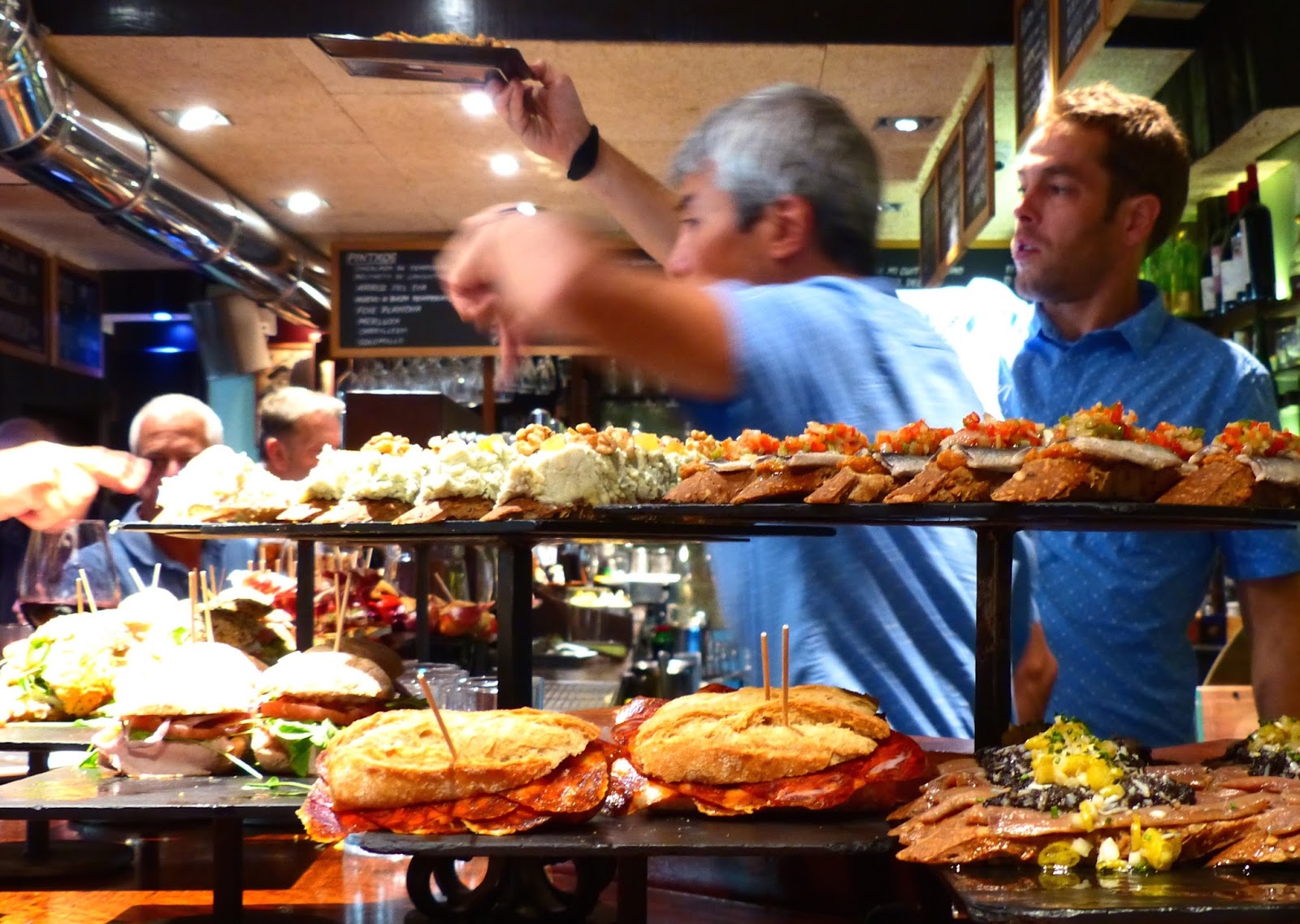
If you're at all into your food, the word you'll hear time and again in relation to Donostia is pintxos. (Pronounced peen-chos) People typically describe them as "Basque tapas" but they are far more sophisticated. Cold pintxos are much closer to the Danish smørrebrød; artfully prepared, open-faced, finger-sized sandwiches that are a work of art on their own. Hot pintxos require a bit more bravery as you actually have to order rather than self-serving from the bar, but reward you with a lesson in the locals' mastery over beef and pork.

It's no wonder that Adrià was at the forefront of the revolution that turned fine dining plates into works of art; many individual pintxos are as beautiful to look at as they are to eat. Forget the tapas comparison. Pintxos are closer to fine dining in miniature.

But a word of warning: vegetarians need not apply. This is a land in love with protein, whether from land or sea. Vegetables exist to supplement those glories, not to stand alone. If you don't at least eat fish, you're going to be reduced to plain bread, tortilla and plates of mushrooms. Though you'll have to specify the preparation on the latter, because they're likely to wrap a few in bacon and throw them in the deep fryer. Everything is, after all, better with bacon.

Dramatic landscape
The green, misty mountains come right to the sea. It's easy to see how right up until modern times there was little transit between towns unless you went by water. It's an hour's drive from the airport in Bilbao, and I spent most of the journey marvelling at the feat of building a highway through this landscape. The tough terrain breeds both tough, practical people and magnificent sailors. Who was the first ship's captain the circumnavigate the globe? You may remember the name Magellan, but he doesn't count as he didn't live to complete the journey. It was Basque Juan Sebastián Elcano, born just up the coast from Donostia.

And what an exquisite coast it is. Golden beaches alternate with dramatic cliffs of striated rock thrust heavenward by continental drift. Unsheltered beaches see dramatic waves and violently churning surf. The glory of Donostia, however, is a crescent-shaped beach called La Concha with an island blocking part of the entry from the sea. Bathers come here, while surfers head for the more agitated waters on the city's second beach to the east.

Not fussy
Given the legacy of the 19th century beach resort, I was prepared for something like Cannes. And though I've had a lot of fun in that city over the years, you can never shake off that feeling that it's the creation of supercilious French snobs who take vast pride in two centuries of over-charging the English for their holidays. Donostia's only real resemblance to the French Riviera is the Belle Epoque architecture. The natives are gracious, cheerful and delighted to be helpful. Though they will make it clear that they have their own way of doing things. Trying to take a Kindle into the spa or being too creative with a pintxos order may earn you a firm but polite rebuke.

Though both the people and the architecture are fantastically elegant, there's a laid-back, casual vibe to the place. You get the feel of a practical people who take life as it comes and enjoy every day. Our guide explained that the Basques have a long history of both egalitarianism and women's rights; the class system and excessive formality are things that came with Castilian nobles parachuted in by a distant government.

Shopping
In a planet marching towards the uniformity of global brands, Donostia is a delight. For every logo you recognise, there are two or three independent boutiques. Clothing boutiques are elegant little collections of individual taste, usually hung by colour so you can get a sense of how to put an outfit together. In these shops I saw no recognisable brands, and several boasted of clothes designed and made in the region. The clothing was beautifully constructed, often with distinctive design elements and gorgeous fabrics. They even ... quite remarkably for the Iberian peninsula ... had some sizes for the generously proportioned. We found sales people who were wonderfully skilled at quickly figuring out your taste, then pulling stuff out that would look great on you. For the best example of this, check out Minimil.

Small jewellery stores featured makers at work benches and one-of-a-kind creations in the windows. Bookshops basked in Art Nouveau splendour, bristling with hand-written recommendations on shelf fronts. The fish market will make you weep that you don't have a kitchen. Home stores and galleries are filled with quirky decorative items and beautiful works of craftsmanship. And, even with the abysmal Euro-to-Pound exchange, prices weren't excessive. The combined forces of the annual girls' trip haven't done this much shopping in many years.

WHERE TO STAY

We splurged on the Hotel Villa Soro, a boutique hotel in a converted 19th century mansion about a mile and a half from the heart of the old town. This delivered exactly what we were looking for: extreme comfort, attentive staff and plenty of cozy public spaces to lounge around when we weren't sightseeing. There's a main house and a modern block across a small courtyard behind it. We upgraded to the house and I suspect it was that plus our five-night stay that saw us in what must be the two best rooms in the house. Rooms 12 and 14 are at the front corners, with 18-foot ceilings and grand windows overlooking the front lawn. 14 has a large patio we put to good use on sunny days.

The decor is a gentle mix of Spanish late-19th century (there's a stained glass ceiling above the entry hall and a stained glass holy family illuminating a little room I assume was once a chapel on the landing of the grand stair), English country house and modern (striking abstract sculpture in key locations). The enormous sitting room could comfortably seat three to five distinct groups without crowding, though we were almost always on our own there. While we settled in, other guests ... mostly American and a few Germans ... tended to stay for only a night or two. Villa Soro provides limited restaurant facilities, but acknowledges that in a town with such good food you're probably only going to bother with them if you're simply too tired to go out. They put on a fine breakfast in their two-room dining area, including plenty of cooked options. However, the quality of bread (the tumeric-flavoured was fantastic), pork products, local cheese and fresh fruit meant that we skipped the cooked options most mornings.

The staff came through with excellent restaurant recommendations and managed to get us a table at one well-known spot that was booked up through regular channels. Taxis arrived quickly, there were bicycles to borrow, the barman made top gin and tonics and the bathroom was stocked with Molton Brown products. It's worth noting that the photos on the web site have been artfully shot to disguise the fact that the house is in a densely-packed area on a main road. I was initially worried about traffic noise but outside of rush hour all was quiet. Getting to the centre of town is a 20-minute walk or a 10 euro taxi ride; we tended to walk in (it's a gentle slope down) and taxi back. The steep hills behind the house held my favourite restaurant of the trip, Zelai Txiki, and closer than the Old Town is the trendy Gros district and the pounding breakers of Zurriola beach, the surfers' favourite.