Saturday, 31 October 2020

World’s best for autumn colour? Stourhead has a claim.

The English class system has done a lot of damage over the centuries, but we can also bless it for its impact on architecture and interior design. In the success-obsessed United States, new money has tended to splash out on bling-drenched conspicuous consumption. In England, while the consumption might be equally prodigious, self-made fortunes seek the best in establishment tastes and bend over backwards to rub off any taint of the new.

In just the past few months, the trend has shown up on this blog in articles about Harewood House and Bovey Castle. And here, on a crisp autumnal day en route to the West Country, the glorious Georgian mansion and landscape garden at Stourhead.

Stourhead was the country pile of the unfortunately-named Hoare banking family. They never quite washed the taint of trade off their hands. Though they kitted out a lavish bedroom for Queen Victoria she never visited, thinking the family too far beneath her. Presumably the Hoare’s had the last laugh, since they’re still in charge of the oldest private bank in the country and Victoria’s kingdom is now heavily dependant on financial services to survive. Had the queen lowered herself to a visit she would have discovered not only a house very much to her husband’s Italianate tatstes, but one of the two best examples of a classical landscape garden in the country. (The other is Stowe, bigger but, IMHO, not as dramatically beautiful.)

Wealthy tourists in the 18th century would return from the continent ... usually Italy ... laden with treasures that showed off what they'd seen, and fired with a passion to re-create some of the magic at home. Most houses of the time will feature Roman statuary in the gardens, or showy pieces of furniture inlaid with semi-precious stones (called pietra dura) from Florence, or a few paintings of Venice by Canaletto. That balanced approach wasn't enough for Henry Hoare, who was obviously obsessed to something bordering madness by all things Italian. 

The house is a stately Palladian cube, rather small as grand country houses go, packed to the gunnels with paintings of classical stories and Italian landscapes, plaster ceilings and decorations taken from Roman temples and Italian style furniture. Obelisks, classical statuary, collections of Roman seals and lofty gods and goddesses run amok. There are few masterpieces on the walls, but the theme is clear. Hoare was re-creating Italy in the England.

But the house wasn't enough. He went on to re-create the countryside itself. Ironically it was three Frenchmen of the time ... Claude Lorrain, Nicolas Poussin and Gaspard Dughet ... who became most famous for painting imagined scenes of Italian antiquity. Gods, heroes and historic figures play out their adventures in deep, romantically-wooded valleys dotted with classical temples. There's almost always a lake to reflect the architecture and the action. Many English tourists decided they'd try to re-engineer their gardens to evoke this look, but nobody did it as thoroughly as Hoare.

This Lorrain painting in Stourhead’s collection is thought to be a direct inspiration for the garden

He was lucky enough to have the wooded valley beneath his house as a foundation, but no lake. So he dammed a stream and time did the work for him. Once the valley floor was appropriately flooded, the temple building began.  There's a miniature pantheon, an ancient and stolid temple of Flora and a magnificently bonkers domed and columned temple of Apollo on a hillside. 

A gracious Palladian bridge links the two, purely for visual effect since it's bridging an inlet you could walk around in three minutes. 

Each is designed to look out over at least one of the others, all set in a carefully chosen mix of trees. The lake is a mirror to add another dimension to your views. 

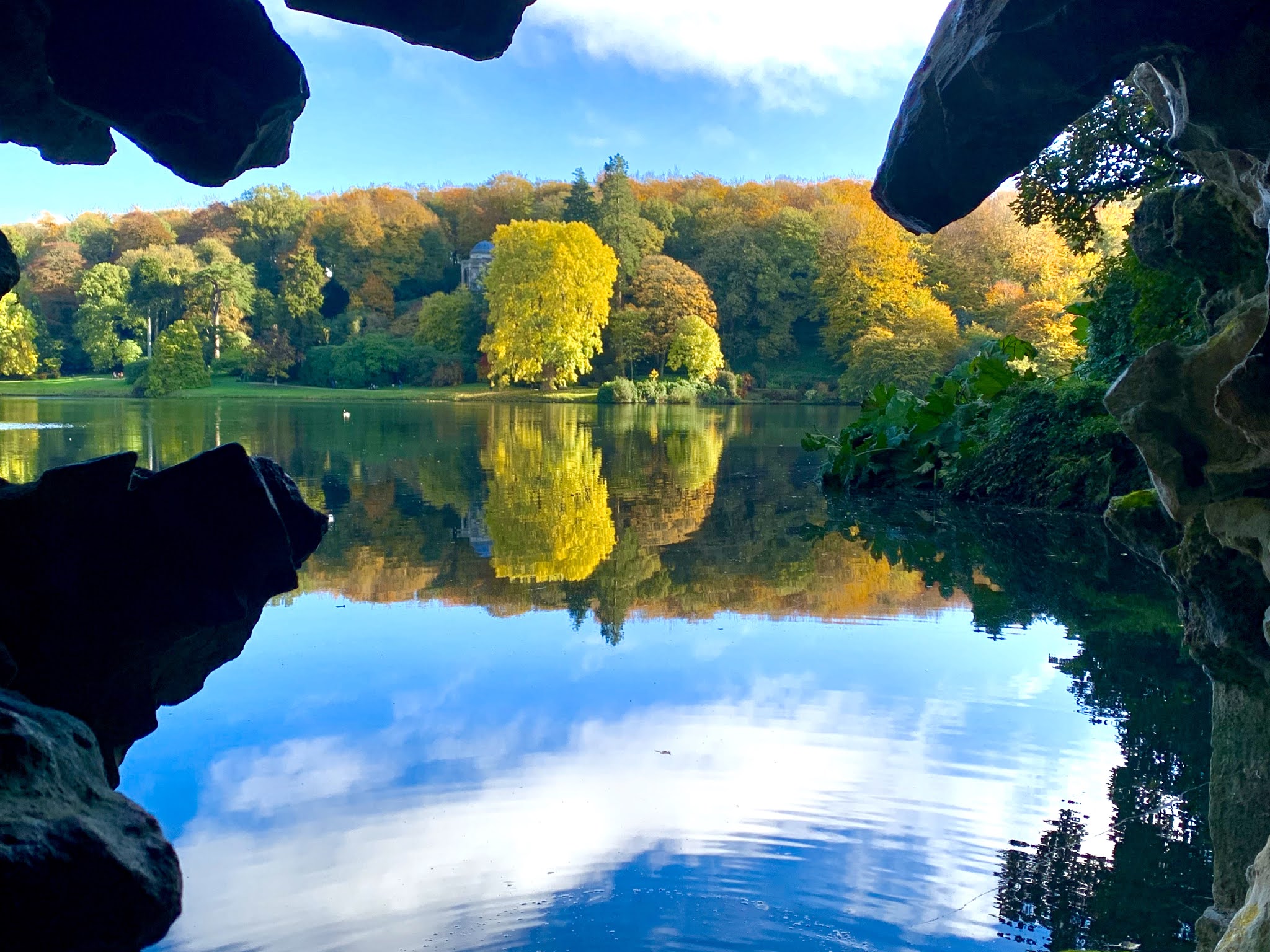
At one point, the path brings you into a dark cave where the sound of dripping water beckons you to a grotto where a water nymph and river god lounge in alcoves while carefully planned gaps in the wall conjure more artistic views across the lake to other temples. 

A towering obelisk adds to the classical antiquity, not near the lake but at the top of the hill with a long grassy avenue cleared through the trees to allow an impressive vista. In modern terminology the place is, as one of my friends proclaimed, top Instagram porn.

Despite the Hoare family’s obsession with the classical world, they couldn’t resist a few other passions of the time. There’s a sweet little cottage called The Hermitage with gothic windows and a thatched roof, playing on the passion for hermits and dark mysteries that came with the rise of gothic literature. A little over two miles from the lake stands King Alfred’s Tower, a 161-foot construction that looks rather strangely Germanic with its crenellations and pepper pot roof. It marks the spot where King Alfred was supposed to have mustered his troops in 878 before his success at Edington. Love of the gothic also led the family to rescue Bristol’s market cross, a glorious spire that was unloved and would have been destroyed by the town’s improvers had it not found a second life as a garden ornament. 

The cross marks the transition between the garden and what’s left of Stourhead village. A picturesque row of cottages, a parish church, a Georgian pub and an aristocratic stable block now mostly cater to tourists’ needs, with the cottages all B&B or holiday rental and space in the stables let out to shops and snack bars. The Spread Eagle Inn also offers accommodation, with its ground floor given over to picture-postcard pubbage. On the sunny afternoon we visited, the pub had extended service to tables in the stable courtyard and had a full menu from light pub classics to full three-course meals. I gave high marks to my ploughman’s but three of us all envied the fourth’s towering Waldorf salad, studded with local, seasonal apples, walnuts and cheddar.

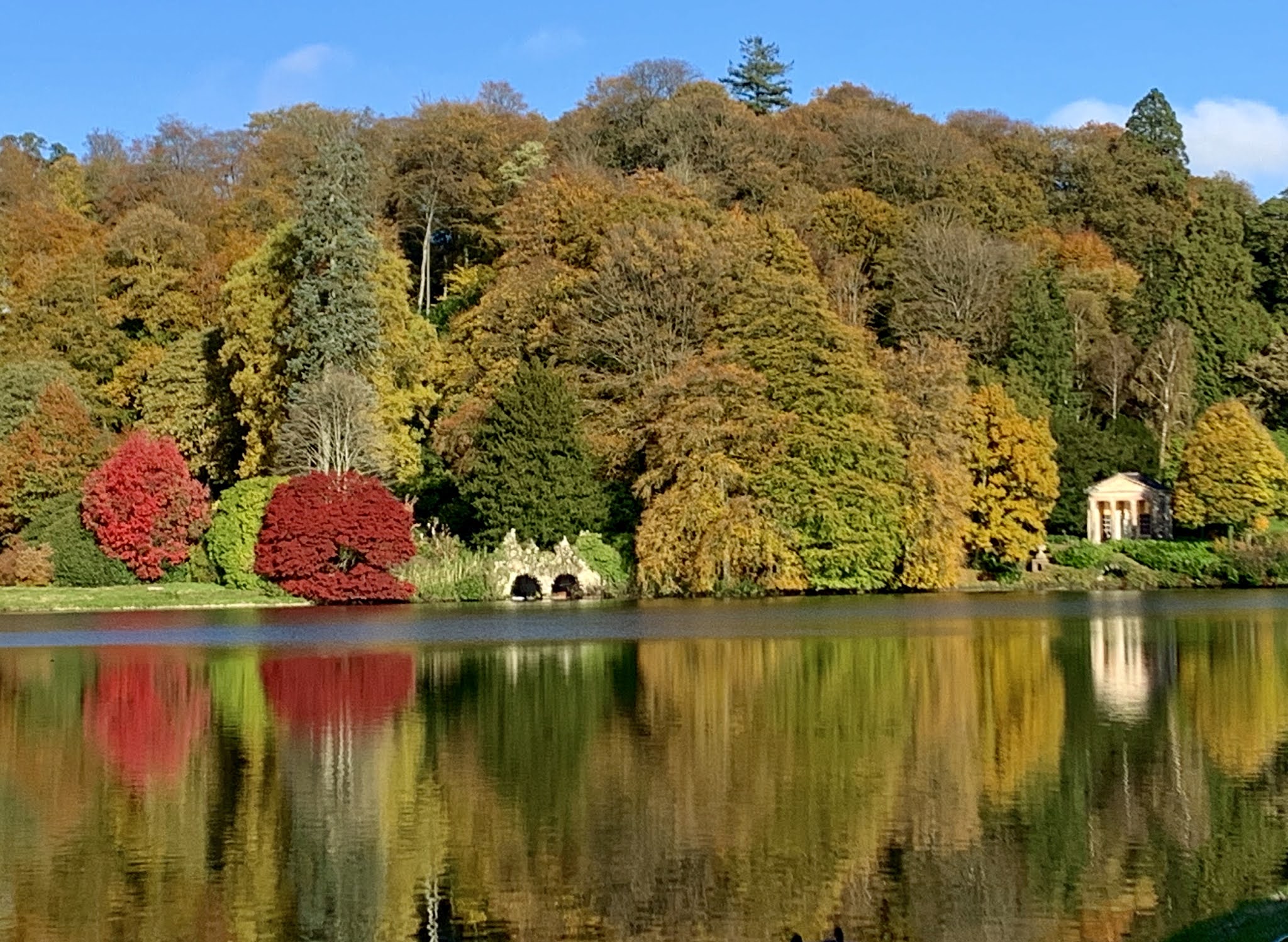
I have been to Stourhead many times, in all seasons, but there’s no question in my mind it’s at its best in the autumn. And we couldn’t have timed our visit better. Oaks, maples, alders and chestnuts were blazing in a merry range of yellows, oranges and vivid scarlets, bearing miraculous testimony to the people who designed this planting scheme but wouldn’t live to see it mature. These trees weren’t put in haphazardly, but purposely placed so their autumnal foliage would create a living painting. It is, with blue skies in late October, quite simply one of the most beautiful places on Earth.

You’ve missed this year’s autumn show but the garden is open all year and the local National Trust managers do a fine job of programming special events for all ages. Winter illuminations run from 27 November to 3rd January. You can get tickets here.

Wednesday, 28 October 2020

The focus shifts to luxury hotels as the annual Girls’ Trip stays home

 I should have been reporting from Krakow.

Over the years my annual girls’ trip, now in its 19th year with the original trio of Northwestern University friends at its core, has brought this blog to some of Europe’s most intriguing vineyards, historic townscapes and magnificent dining experiences. We’ve even stretched to the beaches of Florida and the vast drama of Iceland. Not this year.

Once our flights to Poland cancelled, we decided that the combination of shifting COVID-19 regulations with the scheduling pressures of (now) four intensely busy professional women made foreign travel impractical. It was time for a staycation. Devon and Cornwall beckoned. Fortunately, though diagnosed illnesses were rising across the UK and much of the country was heightening restrictions as the trip approached, the infection rate in the West Country remained low. And with the money we’d save on that cancelled travel, we could splash out on some properly luxurious hotels.

Our destinations: two nights at the Bovey Castle Hotel in the windswept drama of Dartmoor National Park and three at British hotelier and designer Olga Polizzi’s famed Tresanton in the achingly charming Cornish fishing village of St. Mawes. The first was a triumph on every front, including an unexpectedly lavish seven-course tasting menu. The second, though a tour de force of location and exquisite interior design, fell down on enough basic service points to leave me questioning the value I got for my money. I’d happily return to Bovey Castle, but another trip to St. Mawes would see me trying other options in the village.

BOVEY CASTLE

Arts and Crafts designer Detmar Blow created the neo-Jacobean pile for the W. H. Smith family in 1907. Though it looks a thoroughly aristocratic establishment, the architecture doth protest too much. Blow’s traditional designs were countering the very new money that came from the owner’s stationery business. The property’s old-world scale quickly proved impractical and by 1930 it was already being run as a hotel, a status the castle has retained ever since through a procession of owners. 

The original country house is still very much at the heart of the experience. Guests have the run of a variety of aristocratic settings for genteel relaxation, from a dark-panelled bar that could be a Shakespearean stage set to a towering great hall with minstrels gallery and enormous oriel window taking in the moor. 

There’s a whole sitting room’s worth of overstuffed sofas beneath the grand staircase with its hunting lodge-style chandelier of stag’s antlers, a library that feels like Jeeves and Wooster just popped out, and a brighter, more delicate Georgian-inspired drawing room no doubt designed for the ladies to withdraw into after dinner. We lounged in front of at least three live fires across our two-night stay, with tweed-clad staff members regularly nipping by to add logs and see if we needed more drinks. 

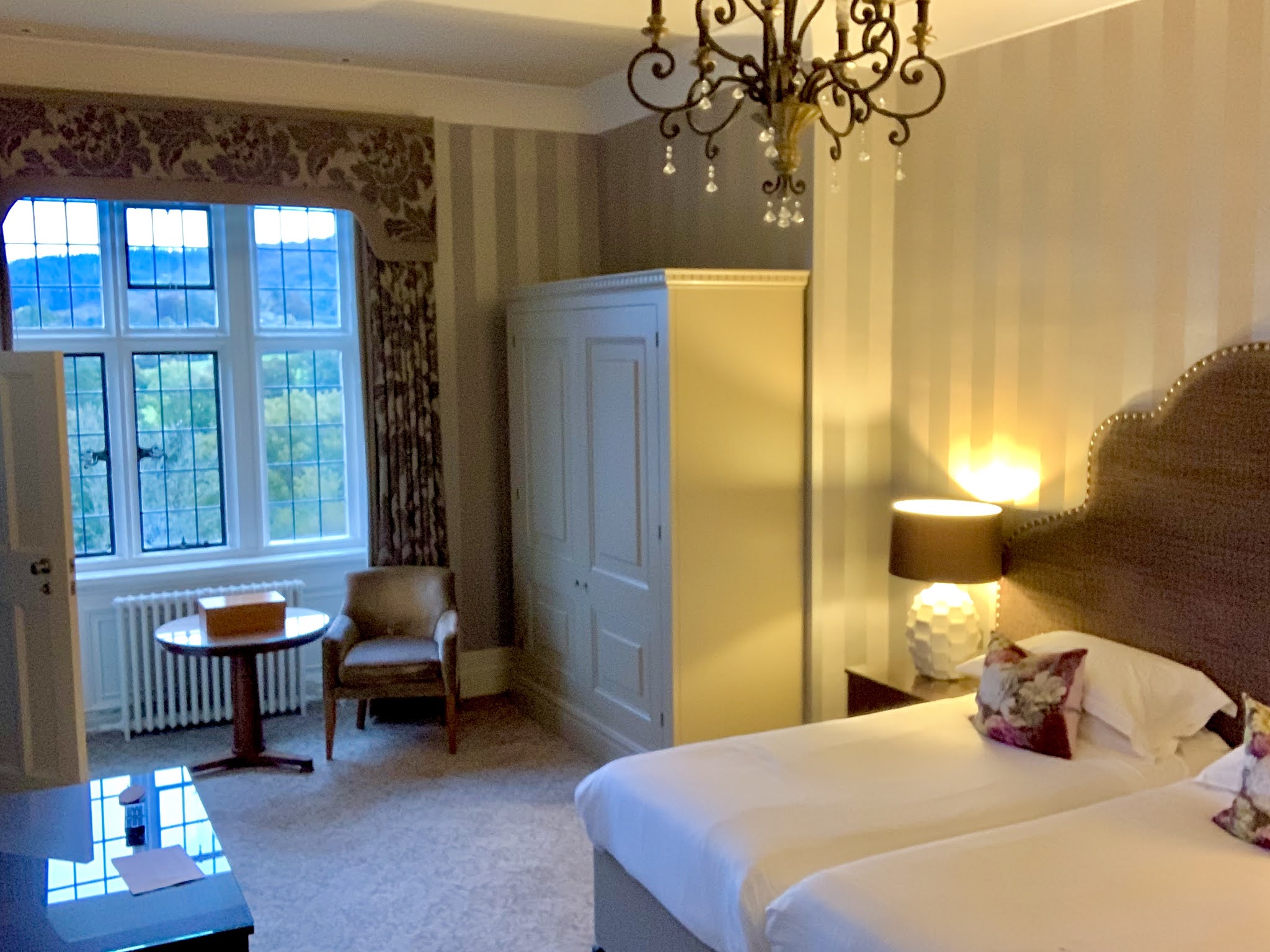
Our rooms were all on the first floor of the main house with high ceilings and atmospheric leaded window frames, but the lower key decor that went for a more modern elegance. Extensions and subsidiary buildings bring the number of rooms to 60. There are also self-catering lodges in the grounds, which include beautiful gardens and an award-winning golf course. Even though the place seemed to be operating at or near full capacity, we never felt crowded by others and could always make enough space not to hear other group’s conversations. That’s always a bonus but feels particularly relevant when trying to holiday during a pandemic.

Dartmoor is one of the few places that feel like real wilderness in England. The landscape is vast, rugged and sparsely inhabited. This is Hound of the Baskervilles country. Storms crash across the moors with little to stop them and the few roads that traverse the national park are either lonely ribbons disappearing into miles of fern- and heather-covered grazing land, or narrow tracks sunk between hedgerows with limited visibility. In short: it’s not the kind of place you want to go driving around in at night. We ate both dinners in.  

There’s a modern brasserie at one end of the main building and a warren of more formal, inter-connected dining rooms forming the Great Western restaurant at the other. Limited pandemic options mean pre-booking is essential and fine dining is only available Friday and Saturday nights, limited to a seven-course tasting menu. This was no sacrifice, dear reader. We could have easily grazed across the brasserie’s menu multiple nights, and the culinary extravaganza on Friday was on par with any of the fancy nights out we’ve enjoyed over years of Girls’ Trip culinary excess. The hotel had only recently re-opened the Great Western so the staff was positively giddy with enthusiasm. By the end of the evening we were on first-name terms with our sommelier Richard, whose wine flights were well judged and inventive, and our lead server Emma. We were delighted by the local sourcing of the food and the time the team took to tell us about it. Autumnal liver and mushroom pate, a creamy artichoke veloute, and the estate’s own venison in a velvety red wine sauce are, frankly, exactly the kinds of things you should be eating in a firelit castle while the wind howls outside.

The weather isn’t always frightening on Dartmoor and there’s a wealth of things to do here, including hiking across dramatic views, villages with a high proportion of interesting gift shops and galleries and a vast number of tourist attractions from worthy National Trust houses to child-pleasers like Pixieland and the House of Marbles. We ventured out briefly but spent most of our visit simply enjoying the facilities. This includes a beautiful Art Deco-style pool with deep blue tiles, a built-in jacuzzi and a glass wall taking in more of that sweep of moorland. Access to that and the gym is included with your room, though these days must be pre-booked. The castle also has a range of country activities including shooting, archery, fishing and carriage rides that can be booked for an additional fee.

We were all sorry to leave, but the promise of an even more lavish experience lay ahead.

TRESANTON

Hotel Tresanton is one of those places that’s acquired the status of legend amongst affluent London executives. Spoken of with the same reverence people lavish on the Soho House properties, the members’ club at Skibo or the Ivy’s private dining room back when there was only one “The Ivy” in the UK, designer and hotelier Olga Polizzi’s laid-back beach club in Cornwall has been a go-to choice for the great and the good’s seaside holidays since it opened in the late ‘90s. Its exquisite interiors have probably featured in every British design magazine and it regularly turns up in the luxury escapes features of publications like the Financial Times’ “How to Spend It” or Country Life’s travel supplements. 

We were expecting a lot. 

We were disappointed.

Tresanton is nearly 40% more expensive than Bovey Castle and yet the Dartmoor hotel beat it on every front; most particularly on service and on pandemic management that made us feel safe. Tresanton has the feeling of a place resting on its laurels, so sure of the adulation of fashionable London that it doesn’t have to try very hard. That may be the case at the moment, when pandemic-constrained people are dying to get back to familiar places, foreign travel is curtailed and executive home workers are flush with the cash they haven’t spent on commuting and foreign holidays. But it’s a dangerous strategy for a travel industry in crisis. All four of us left with the same conclusion: we’d return to St. Mawes but not to Tresanton, and we’d warn people away from repeating our mistake.

Let me start with the positives. Location. Location. Location. St. Mawes is the kind of adorable fishing village that feels like it’s been cooked up to stage an Agatha Christie detective story or charming little film scripted by Richard Curtis. It snakes around a small, peaceful inlet like an inverted question mark near the entrance to the Fal estuary. A Tudor castle guards one side of the inlet, a lighthouse the other. A jumble of houses ring the harbour and run up the hills behind it, almost all of architectural merit and as pristine as a Disney park. Pastel walls are freshly painted, thatch roofs fairly new, pristine pots spill over with flowers and clean windows sparkle. Tresanton’s windows, balconies and terraces take all of this in. At the edge of the village by the castle, the hotel is far enough away from the centre of things to enjoy the quiet, but a 10 minute stroll will take you to the bustling little harbour with two excellent pubs, a wind-sheltered beach, gift shops and a regular ferry service to Falmouth. There’s loads to do in the surrounding area but you can easily sink into the local scene and abandon your vehicle in the hotel’s hidden car park until it’s time to leave.

Tresanton lives up to its design icon status. Polizzi won plaudits for mixing casual and formal, antique and modern, print with pattern. Most of the place feels like an eclectic and tasteful private home assembled over generations rather than a commercial establishment. There are sisal carpets, slouchy overstuffed down sofas and chairs, piles of intriguing holiday reading and eclectic mixes of art, from African tribal masks to local legend Barbara Hepworth's prints. The restaurants is a cheery blend of blues and whites with aquatic mosaics on the floor and sea shell shaped lighting giving the room a grotto feel. Polizzi arguably established what’s now the standard for high-end boutique hotels. Alnwick’s Cookie Jar, my favourite boutique hotel of recent years, is a direct descendant of what started here. 

The design ethos wasn't uniform, however. Though our twin-bedded room had a glorious bathroom with marble tub and glass shower cube, the girls in the singles reported "identikit Hilton bathrooms with cheesy plastic shower curtains." Loos off public spaces had high end toiletries to wash your hands but cheap paper towels to dry them. Rooms had toilet paper but no tissue. A wall unit in a downstairs hall offered Wellington boots to borrow for tramps along the beach, but some had been put away muddy so were hardly enticing. The longer we stayed, the more we noticed these little gaps in attention to detail.

Our biggest problem with the hotel came from the lack of indoor space, however, exacerbated by a cavalier attitude toward the pandemic. Tresanton is a complex of multiple buildings climbing a hill, with exquisite courtyard gardens and balconies framed by sub-tropical gardens. There was only one indoor sitting room available for 30 guest rooms. Bovey Castle has double the rooms but probably 10 times the indoor lounge space. Tresanton's sitting room (below) is clustered tightly with sofas and chairs and fully packed at meal times when the restaurant adds outside diners to residents. Though staff wear masks the guests can remove theirs as soon as they order drinks. None of us had been with this many strangers in such close proximity since the pandemic started, and we were distinctly uncomfortable. 

The dining room was also packed tight without any of the now-standard Perspex screens to offer some protection when tables are too close for comfort. The food is certainly not worth the sacrifice. Though pleasant, it was inferior to, and more expensive than, meals we had in the village.


The crowding sent a clear message: making money took priority over guest safety.

Even without a pandemic, at this lofty price point you expect more public space to lounge. There was an additional function room behind the lounge and a secondary bar at beach level that could have made extra room, but they were shut tight. Tresanton hadn't adapted any of the outdoor spaces to inclement weather use. No marquees, no canopies. We saw heaters and umbrellas but they weren't deployed. Excusable if we were in Greece but this is Cornwall, where changeable weather should be factored into any plan.

Service was average to indifferent, an impression exacerbated by just how exceptional it had been at Bovey Castle. Interaction was pleasant but perfunctory. There seemed to be no real interest in how we were enjoying our stay (until we checked out) and no desire to chat with us to discover our plans and suggest recommendations. An offer of drinks once settled in the only lounge could take up to an hour. There were no tea and coffee making facilities in the room and a delivery of the request took 40 minutes one morning. When assembled as a foursome we'd ask for water or coffee and it would come with a drinking vessel only for the requestor unless we specified for all of us. Little things, but things that a top boutique hotel hosting our group in the past would figure out after the first interaction. 

We were also intrigued that other than the front desk staff most of the service team seemed to have originated from either Eastern or Southern Europe. While we're used to that in London, it seemed odd in a distant county where employment is so heavily dependant on tourism. Boutique hotels usually put local staff front and centre to show off the nature of the place and provide those insider tips only the natives know. You'll get none of that here.

In reflection, I realise that what bothered me most about Tresanton was the feel it wasn't Cornish at all, but a seaside-themed bubble transported intact from Knightsbridge with all the capital's quirks. The not-quite-on-their-game-yet staff of young immigrants, the crowding, the aloof urban attitude. 

At a lower price point we could have let the irritations ... other than feeling unsafe ... slide in favour of enjoying the views. But let's lay it on the line here: our spacious double with a sea view was £370 per night.  In any circumstance I expect a flawless experience for that price. These days, I also want excessive care of my health and a feeling that the establishment isn't resting on its laurels, but finding ways to innovate and excel through changing times. 
 

Monday, 12 October 2020

Crowd-limited British Museum is a rare treat for advance bookers

Under normal circumstances, it's hard to get a good look at the Rosetta Stone. Sure, admission to the British Museum is free and it stands in its own display case in a prominent location. But the tourists are usually 10 deep. School children block the way with notebooks they hold before them to complete class assignments. Group tours are shepherded around it by guides. Aggressive photographers elbow you out of the way to get the right shot. It's been years since I've bothered to take a good look at this monumental bit of history. The crush just wasn't worth it.

No longer.

One of the silver linings of Covid-19's cloud is the visitor experience at cultural attractions. Though pre-booking is a hassle and the limited numbers are killing institutional finances, the situation has created an idyllic environment for the thoughtful visitor.  The British Museum is a case in point. 

The limited number of tickets per time slot ensures plenty of distance between you and other visitors, meaning galleries are sparsely populated and ... since the UK's "rule of six" eliminates the possibility of school groups ... remarkably quiet. Though I'm a British Museum member and know the place well, the circumstances revealed new wonders. I usually push through the ground floor Egyptian galleries on my way somewhere else; they're always too noisy and crowded to enjoy. This time, I could stand alone in pools of dappled sunlight, look into the faces of long-dead pharaohs and have space to contemplate. 

I lingered with the Elgin marbles appreciating the nuances of drapery over the human form. I took time in the Enlightenment Gallery to peer onto shelves and read labels. I still moves fast through the Aztec section, where bloodthirsty gods in dim lighting are even creepier when you're alone with them.

The real genius of the current situation, however, may be the enforced one-way system, which drives traffic through some galleries that most visitors usually race through in their determination to cover the star sights, or skip altogether. (Detail-oriented readers may remember I've raged against set museum routes in the past, particularly at the Uffizi, but in the current circumstances this works.) The route includes the oft-missed early Greek galleries, where a massive and rare terracotta sarcophagus deserves more fame, the never-missed Elgin marbles, and the stately Neried monument. Sitting in front of the last is a fascinating modern work by Grayson Perry called the Tomb of the Unknown Craftsman, which imagines a ceremonial burial ship for all of the nameless artisans who made the treasures in the collections here. The ship is clad with plaster casts that echo masterpieces from around the museum, bringing every artistic tradition together in the celebration of the act of creation itself. It's spectacular.

On the other side of the building you can explore the Americas gallery where you can see an array of Native American costumes and artefacts that many museums in the "Wild West" would envy. There are those spooky Aztecs, and the Enlightenment Galleries which were originally built for George III and represent the museum's collections in miniature. 

But the greatest triumph of the enforced route will be increased traffic through the African galleries, often missed because of their basement location. 

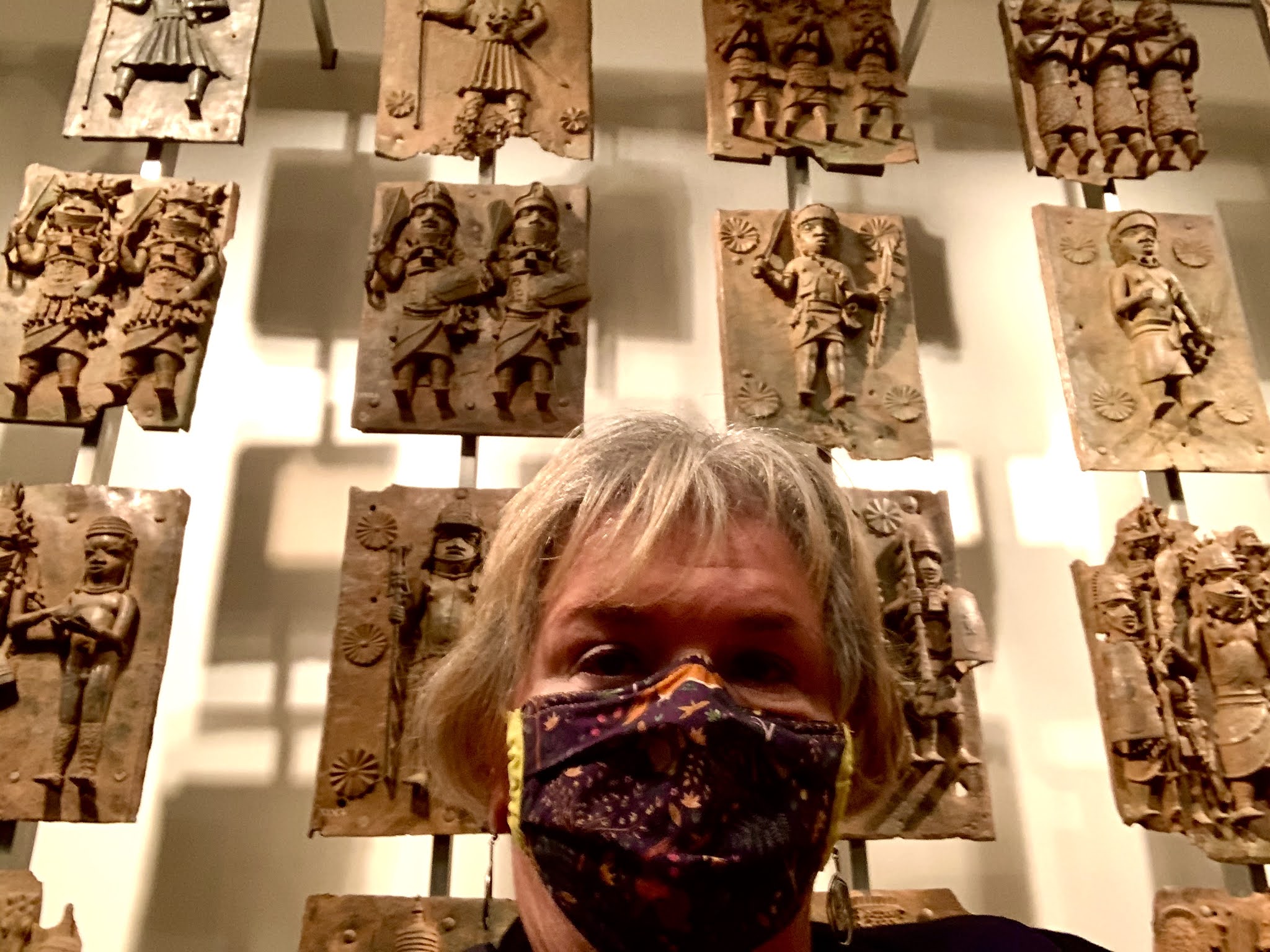
These rooms bring together art, furniture and textiles from across the continent, though they're light on Egypt and Islamic North Africa since those cultures are amply represented in their own galleries. The greatest masterpieces here are the Benin Bronzes, gorgeous casts of human heads, animals and ceremonial scenes created in the 1500s. The most remarkable are a set of plaques showing palace life and ritual that once decorated the palace of the king. They're also probably the most contentious of all objects in the museum as, unlike the legally purchased Elgin Marbles, these were undeniably the legacy of an aggressive campaign of looting at the end of violent conflicts in the late 19th century. 

More than 80 museums around the world ... but outside Nigeria ... now own treasures removed in those wars. An organisation called the Benin Dialogue Group, in which the British Museum plays an active role, is working with the government of Nigeria to care for the treasures, raise their profile and knowledge of the culture that produced them and discuss repatriation. However you feel about how the bronzes got here, and where they should live today, if you live in London and haven't seen them you're doing yourself a real disservice. 

I find the clothing and textiles particularly beautiful. The workmanship is exquisite and the patterns remind you of just how much traditional African patterns have influenced Western design. I'm particularly fond of a display of hats and headgear which is not only enormously fun in the way they seem to float in their glass case, but show off in a very tangible way just how diverse the cultures of the continent are. There's no shying away from the historic conflicts that have, and still do, rip those cultures apart, but there are some good news stories here. One of my favourite pieces is The Tree of Life a sculpture of a tree brimming with wildlife made completely from decommissioned arms turned in at the end of Mozambique's civil war.

There's more than history down here. Unlike most of the rest of the museum, these galleries feature modern craftsmanship that rotates through on a regular basis, so you're never sure what you're going to find. There's currently a display of some of the most spectacular masquerade costumes I've ever seen, combining venerable traditions with modern metalwork to give us something I suspect most humans born before 1700 might have mistaken as gods. 

There's also an abstract stone sculpture of a woman that's reminiscent of the African artist's booth at the annual Hampton Court Flower show. For a bit of an investment, you too could have something worthy of a museum gallery.

The big drawback of the current pre-defined route is that it takes you through just a tiny percentage of the collection. The entire first floor and the whole northern building, with the exception of an exit route, are closed off, as are side galleries on the ground floor. You won't see anything from the European collections. No palace walls from Ninevah. The Sutton Hoo treasure remains in splendid isolation, as do the recently renovated Arabic galleries and all the Chinese and Japanese collections. Most important to note, should you be contemplating a visit with the younger generation, is that the galleries of child-enchanting mummies are out of bounds.

Don't let any of that dissuade you from reserving tickets. Your visit may be limited, but the quality of the viewing experience more than makes up for the quantity of sights available. And if it encourages you to spend some time in those African galleries, you will have found a real silver lining to this pandemic's cloud.


Saturday, 19 September 2020

A famous gardener and a now-exotic London outing make this birthday/anniversary special

My husband is not typically a creative gift giver. Like many men, he likes the safety of working off a list provided by the recipient, and loved the efficiency of having something delivered direct from Amazon ... not minding if it’s sans card or gift wrapping. Thus it was quite a shock this year when, for my birthday and our anniversary ... which happen on the same day ... he came through with a customised surprise to make the most romantic gesture seem trivial: a 45-minute private garden consultation by Zoom with Alan Titchmarsh.

American readers may need some context here. Imagine hanging out with Martha Stewart to get home style tips, receiving batting coaching from Albert Pujols, or rap instruction from Lin Manuel-Miranda. Titchmarsh is the UK's favourite gardener, a humble, working-class lad from Yorkshire who went from flower beds to horticultural journalist to TV star. When I moved to the UK in the late '90s he was omnipresent, hosting the annual Chelsea Flower Show coverage, running a wildly-popular garden makeover show called Ground Force and hosting the weekly broadcast (and national institution) of Gardeners' World. Now 71, Titchmarsh has moved solidly into national treasure territory, and is in theory semi-retired though he still hosts a radio show on ClassicFM, writes garden columns, produces the occasional novel, pops up on TV and promotes charitable causes.

It's the combination of charity and ClassicFM that provided the opportunity for my birthday present. He'd donated the consultation to the station's charity auction and my husband spotted his opportunity to procure a gift to make his wife swoon.

My call was far more than just a brush with fame. Titchmarsh's experience is abundant and he delivers it with the skills of a master consultant. He manages to tell you what's wrong without implying an ounce of criticism to your gardening skills. In fact, his praise of my efforts thus far made me bloom with pride at the same time he was able to tell me exactly what I'd done wrong and how to fix it. It was all terribly appropriate, since much of the knowledge I used to design and take care of my garden has come from his broadcasts and columns over the years. He also radiates a genial kindness that marks him out as one of the true good guys in this world, a hunch confirmed by a friend who used to work with him at the BBC.

So what's wrong with my garden? The same thing I've been hired to fix at work. Too many things competing for attention. I need to do more with less. It's ironic that I can see and attack the problem so clearly in my professional life, but didn't spot it in my own herbaceous borders. But, as my new best friend and horticultural coach consoled me, when you truly love plants and don't have a lot of room, you try to pack in everything possible. 

This autumn will see me stripping out about a third of my plants and making a few tweaks to create bigger blocks of colour. The same applies to my pond, which already looks better after sending armloads of reeds, water lilies and oxygenating plants to the compost heap. My least successful bed (pictured below) lacks a strong focal point; I'll be digging the whole thing out, investing in the recommended Japanese maple and planting around it. And while there's no rescuing my espaliered apple tree (planted in too shady a spot and now too established to move), the west-facing wall I've ignored until now could support three carefully-chosen fruit trees.

My date with Alan Titchmarsh took place several weeks before my birthday, leaving the day itself for other treats. I went up to London for the first time since the world shut down in March to meet a friend for lunch (in a nice parallel, the same one who used to work with him at the BBC). The experience was a bit surreal, at once both familiar and alien. I long ago lost count of the number of times I’ve gone from Basingstoke to Green Park station, and the Wolseley is one of London’s most comforting, long-running, establishment venues for a business lunch. And yet the trains running 1/3 full, the empty, echoing corridors of Underground stations, the blank advertising spaces and the closed up shops felt like I was walking through the zombie apocalypse. London without foreign tourists is an oddly alien place and, frankly, glorious. But not economically sustainable; at least not as it was at the year’s opening.

The Wolseley, always a favourite with a traditional English crowd, was having no issues. Every table was packed, with a time limit to prepare for the flip to afternoon tea. They might have moved the tables a bit further apart, but one of the advantages of the Wolseley for business meetings has always been the generous space between tables so it was hard to tell. The most obvious signs of these plague times were an airport-security style contraption you had to face off to have your temperature taken before preceding to your table, and the individual portion of hand sanitiser waiting atop the crisp linen napkin. 

This is one of the grandest dining rooms in London. A glorious testimony to the madness of boom and bust cycles in the 1920s, it was originally built as a car showroom. The opulent Venetian/Florentine palazzo inspiration is a reminder that motor cars were originally the preserve of the super-rich. The black-and-white marble floors, black marble columns, white vaulted ceilings, shining brass railings and grand chandeliers are properly palatial. Wolseley Motors went bankrupt in five years, however, so Barclays took the building on as its Mayfair branch. The original architect returned to update the decor with Japanese lacquer and other Oriental gewgaws that were high fashion by the late ‘20s. It’s a bizarre but merry combination that works particularly well in the afternoon when the place is functioning as a high class tea room. 

Food here is inspired by the grand cafes of Europe, with a menu very similar to that of sister restaurant The Delauney. They’re particularly known for their oyster and shellfish bar and for having breakfast favourites like eggs benedict and kedgeree on the menu 24/7. My friend swears by their chopped salads (hers did look tempting), while I opted for a classic steak tartare. Schnitzel is always on the menu as is a proper baked cheesecake. 

One of the reasons the Wolseley has remained so popular with punters since it opened in 2003 is its pricing. The prix-fixe menu is only £19.95 for two courses and £24 for three, and main courses tend to be in the mid £20s. Sure, you can have a blow out with lobster, chateaubriand and champagne, but you can also enjoy grand elegance and feel like you’ve had proper value for your money with most choices. Which is actually far truer to the English establishment who once dominated Mayfair than the Ritz across the street, which has pumped up the gold gilt, escalated prices to the stratosphere and targets cash-splashing conspicuous consumers. Who are rarely English, and seldom old establishment.

Back home, my husband celebrated our anniversary by cooking dinner ... the next night. The breakfast bar in the kitchen where we normally eat might fall short of the Wolseley’s decor and our plating is too generous to be called fine dining, but I think our black and white granite counters are a bit grand and Mr. B’s salmon en croute with a lemon cream sauce wouldn’t be out of place in a grand European cafe. 

Yes, he’s a keeper. Even before the Titchmarsh consultation. Maybe I should take him to the Wolseley.


Sunday, 13 September 2020

The show must go on ... and West Green makes it happen

England's legendary country house opera season is yet another victim of the COVID-19 crisis. From internationally-acclaimed productions at Glyndbourne and Longborough's renowned Wagner interpretations, to many small, humbler efforts, everyone got shut down this year. As prohibitions loosened some outdoor performances became possible, and while full operas couldn't be rehearsed and organised (or made to break even) in the circumstances, venues sprang into action to take advantage of any opportunity they could.

Our nearest, West Green House near Hartley Witney, Hampshire, managed to whip up a six-concert summer season in August and September, of which we took in the last: Mozart in Love.

It's hard to overstate just how glorious is was to hear live music again, surrounded by the soft murmur of an appreciative crowd. Even if that music was limited to one singer and a pianist, and the pre-booked attendees had been channeled into appropriately sized boxes chalked onto the lawns, socially distanced from their neighbours. 

Soloist Kirsty Hopkins (who also co-developed and directed the whole series) delivered an hour-long programme of 10 of Mozart's best soprano arias, from the heart-wrenchingly poignant Dove Sono I Bei Momenti to the enraged passion of Ah. Chi mi Dice Mai! Each came with anecdotes and back stories from Hopkins, adding context to the simple but powerful performance. She returned with an encore of the Alleluia from the Exsultate Jubilate, the music we used for the registry signing at our marriage. It always turns both our knees to jelly, but was particularly powerful in this rare event for 2020, just days before our anniversary, with the sun shining and swans gliding across the nearby lake.

With gates opening at 11am, music at noon and the ability to linger in the gardens until 4pm, the concert series allowed for one of the raisons d'etre of country house opera: elegant picnics. We were actually slumming it a bit, as many others had shown up with tables, cloths and full place settings, while we made due with plates on laps. But I'd wager our bbq chicken, arancini, barley salad and lime tarts were on par with anyone else's culinary efforts.

Of all the country house opera venues I've explored, West Green has the finest garden. (Yes, better even than Glyndbourne.) That's probably because opera here is a recent addition to venerable and well known horticultural efforts. At its heart is an enormous Victorian walled garden, with outlying paths, a lake, water features and follies. It's not a big place, but one where thoughtful design has given every section impact and clever vistas and borrowed landscape make it seem larger. Its most distinctive feature, however, is a light-hearted sense of humour.

Vegetables grow side-by-side with flowers. The palatial chicken coop has an Imperial Chinese theme, including willow-pattern water bowls.

A section of grassy mounds along a pathway looks like a recently-abandoned hobbit village. Classical portrait busts lurk at ground level amongst the greenery. 

Most amusingly, if you’re made aware of the joke or if your Latin is particularly good, there’s a column with a Latin inscription noting “this monument was built with a great deal of money which otherwise someday would have been given into the hands of the tax collector.”

The snarl against excessive inheritance tax came from former owner Alistair McAlpine, a Tory grandee in the 1980s responsible for the initial renovation of the garden. These days credit goes to Marylyn Abbott, an Australian immigrant who’s both a keen gardener and the former marketing manager of the Sydney Opera House. It’s she who started the opera tradition here. 

Both leased the house from the National Trust, which still owns the place and allows members into the gardens for free. (Others £9 and extra charges for events, of course.) It’s not the typical NT property, however. The lovely, Georgian brick house isn’t open to the public and is relatively modest in size, more like the places you see for sale in Country Life than the sprawling historic piles of the tourist trail. The Abbotts are regularly present for events and take a very personal hand in running the place. This also means there’s a more creative run of events than the usual NT property, with apple festivals, a car show, craft workshops and Christmas illuminations all on offer later this year. 

If COVID-19 allows, of course...


Sunday, 6 September 2020

Fancy cocktails with the aristocracy? Keep an eye on the real Downton Abbey

Our recent holiday to Yorkshire and Northumberland glittered with visits to notable film sets. Much to our surprise, we continued the trend when we got home. 

Inspired by Harewood and Alnwick, we’d started streaming Downton Abbey ... filmed at both ... from our hotel room on holiday evenings. Highclere, “the real Downton Abbey”, is local to us. While familiarity certainly has not bred contempt, we haven’t given the place the hallowed ground status our American visitors accord it. For us, it’s most notable for its annual Battle Proms, sadly cancelled this year. (I’ve mentioned the event several times in this blog; here’s the best overview.) But with Downton and film set tourism on my brain, I thought I’d check out Highclere’s website to see what else we could appreciate at this local gem. 

Which is how we ended up quaffing cocktails with the earl and countess of Carnarvon on their lawns on Friday night. Compared to the thousands thronging the grounds for their Battle Proms, there were only about 20 of us at the event, and we’d swept up the drive to park immediately in front of the house rather than queuing to occupy the pastures. Yet another surprisingly delightful opportunity thrown up by the oddities of COVID-19.

Highclere Gin sparked this one. By now we’re all familiar with the sad stories of people who’ve launched products or businesses in the past year to have their whole plan ... and sometimes life savings ... endangered by the global pandemic. Here’s another. More than a year of development preceded last year’s Highclere Gin launch and 2020 should have been filled with marketing events; particularly in America and to its visiting citizens. The idea came from an American gin producer who the Carnarvons then worked in partnership with, and they’ve prioritised US distribution channels.

Not only are the Americans still obsessed with Downton Abbey but, as the earl pointed out on Friday, their gin market is far less saturated. A visit to our local (Basingstoke) Majestic validates his point, with three shelves of gins from Hampshire and Surrey on offer. It’s a tough market to attempt to penetrate with something new, especially when the pandemic eliminated the promotional possibility of live events, bars and restaurants.

The Carnarvons responded with Facebook live broadcasts on Friday nights during lockdown (photo above), inviting viewers into rooms so familiar from Downton to share virtual cocktails. Our event evolved social media into the real world, offering guests the chance to try the gin and chat with the earl and countess face to face. (With proper social distancing, of course.) 

The videos that inspired the parties ... especially the early ones ... are charmingly authentic. No slick marketing production, no obvious edits, just two very authentic people and the occasional dog talking about what they’re drinking and sharing cocktail-related stories. As a cocktail lover, I’m entertained by their videos and have found the recipes on their Facebook page a real treasure trove. As a marketer, I’m impressed and more than a bit amused that an earl and countess in a venerable stately home ... people you’d think would be the last to grasp the power of peer-to-peer marketing and social media .... are embracing it in a way that many corporate execs in cutting edge companies with abundant marketing resources at their command are not. Most business pundits agree that it’s the people who flexed their business models quickly and tried new things during the COVID-19 crisis who will come out ahead; the team at Highclere certainly deserves to. 

At £75 per ticket and a cash bar after the first drink this wasn’t a cheap night out. But I still haven’t normalised not needing to commute, so the £150 weekly “bonus” I’m getting from not paying Southwestern Railway logically transfers to treats like this. 

Entry included the first cocktail from a varied menu heavy on classics from the ‘20s and ‘30s, a light dinner and a copy of the countess’ At Home at Highclere book which is a combination of recipes, lavish photos and stories about the house. I was expecting perfunctory corporate event nibbles, so was particularly impressed by the food. Luscious, velvety onion and black truffle soup, cured salmon and one of the best scotch eggs I’ve tasted (avoiding the usual mistake of too much breading) made an excellent dinner. These were followed by a particularly elegant take on Eton mess and a chocolate pot with a butterscotch base and popping candy top that could trigger a diabetic coma, but might be worth the health crisis. As you might expect, the service was top notch and the team made you feel like a proper house party guest rather than a paying punter.

Of course, what you’re really buying at events like this is exclusive access. For frequent visitors to big events here, there’s a real high to parking in front and walking around to the private bit of the house. Though the skies were a bit gloomy, it wasn’t raining and it’s hard to beat quaffing cocktails on emerald green lawns below remarkable architecture. Having the family’s 1930s Rolls Royce parked on the lawns added to the atmosphere. I suspect the earl and countess had hoped for more than 20 guests, but the small numbers gave each guest plenty of quality time with them.

What’s the gin like? Created to reflect the estate, the most notable aromatics are lavender ... a staple at Highclere going back to the Middle Ages ... and citrus inspired by what’s grown in the Victorian orangery. There are also, uniquely, oats, reflecting the current earl’s work as a producer of precision-milled oats for racing thoroughbreds. I couldn’t pick it up on the nose or the tongue, but the idea of it being in there is great fun. 

At £37.50 it’s on the high end of the gin price range. Despite the Carnarvons excellent insight into the world of cocktails, it feels like a waste to hide such high-end stuff in the strong flavours of a negroni or an aviation. I’d stick to a simple martini or a gin and tonic, where you can better appreciate the balance of aromatics. I might pair it with a mild cured salmon on oat cakes to see if I can bring out those interesting grains.

And what’s it like to spend time with a real earl and countess? Not that much different than anyone else, to be honest, though I did feel my years of reading Country Life and listening to The Archers probably gave me a conversational advantage. Lord and Lady Carnarvon both have an easygoing charm, skill at talking to strangers and an ability to make people feel comfortable that they share with anyone who makes their living interacting with the general public. In fact, they reminded me much more of the rugby stars, ex-politicians and famous authors I’ve worked with putting on corporate events than any stereotype of staid, formal English aristocracy.

Personal exposure has only boosted my admiration for how the Carnarvons have parlayed their Downton Abbey association into a variety of business lines that will, hopefully, keep this historic estate thriving ... and employing locals ... for decades to come. I came away with new cocktail recipes and a characterful Christmas gift idea for friends, particularly Downton-crazed Americans. Not bad for a local Friday night out.

Saturday, 29 August 2020

Saying goodbye to man’s best friend never gets any easier

The first week back from holiday is normally notable for ploughing through the work email backlog, washing piles of laundry and vowIng to maintain your newly-heightened levels of activity while knocking off alcohol intake. This time, sadly, it was dominated by the precipitous decline of our elder dog, Datchet, who we had to put down yesterday.

As this blog has become the “newspaper of record” for my life, I couldn’t let what will inevitably be one of the most significant happenings of 2020 go by without acknowledgment.

Datchet was particularly special because he started life as my mother’s dog. Her first request after being diagnosed with terminal cancer was that we take the then 8-month-old puppy from St. Louis to England when her time came. Datchet’s unusual early years marked his life and ours. Though Mom, barely ambulatory after heavy chemotherapy treatments, couldn’t walk him and could barely care for herself, she refused to give him up. Unwavering canine adoration was as good as drugs when it came to helping her face both her medical trials and her impending death.

Lack of enough exercise, however, made Datchet a runner, and his early years were filled with panicked neighbourhood mobilisations to find him after he slipped his lead to escape at high speed. The closest I’ve ever been to a heart attack was probably a madcap sprint after him as he dashed for the main road by Mom’s house; I heard squealing breaks on my approach and broke through the trees to find a trembling, frozen pup sat in the middle of the road staring at the SUV that had managed to hit is brakes just in time.

Datchet’s first three years saw prolonged stays in kennels and with friends when Mom was in hospital, and during those good periods when she embarked on her bucket-list travel before the end. It made him more aloof and less of a snuggling lapdog than the average cavalier King Charles spaniel, and certainly wary of his new life when we brought him to England in 2011.

We joked that he was the most expensive cavalier in Hampshire, given the £2,000+ in transport fees plus other incidentals we racked up getting him here. But for me, it was like having a little piece of my Mom still around after she’d gone. And for my husband, who was never forgiven by my first cavalier Mr. Darcy for becoming the alpha male in the house, Datchet could be our dog. His presence certainly softened the blow when Darcy went to the grave just four months after my mother.

Since then, Datchet’s had an existence that outstrips the quality of life standards of 80% of the human population. The exchange, of course, is that he consistently made our lives better ... as dogs do ... whether with simple companionship, a warm snuggle on the couch or his fierce, wildly amusing, attempts to do battle with swans, sheep and wood pigeons. He even forgave us for bringing Bruno into the house, though I think his attitude would be characterised as “long suffering” rather than happy playmate.

We could have upped the price tag on Hampshire’s most expensive dog significantly. After being active and seeming healthy throughout our trip to the North, 12 1/2-year-old Datchet collapsed with exhaustion when we got home. Within 48 hours he had lost the use of his back legs. Our vet suspected a spinal injury and suggested we could consider an MRI and a canine neurologist. (Yes, they exist.) I thought about it, despite the thousands it would rack up. But within another 48 hours his front legs weren’t working either, and an enormous lump was rising beneath his rib cage. While he wasn’t in obvious pain, he was clearly exhausted and we had no doubt there were multiple, fatal things wrong.

This is the third time I’ve had to make the decision to end a beloved pet’s life, but I had no doubt it was the right and humane thing to do. It’s funny how dogs’ deaths tend to be more humane than human ones. He went to sleep gently in my arms, and was no doubt then racing at high speed towards his first owner. The greatest consolation in his loss is believing that they’re together again.